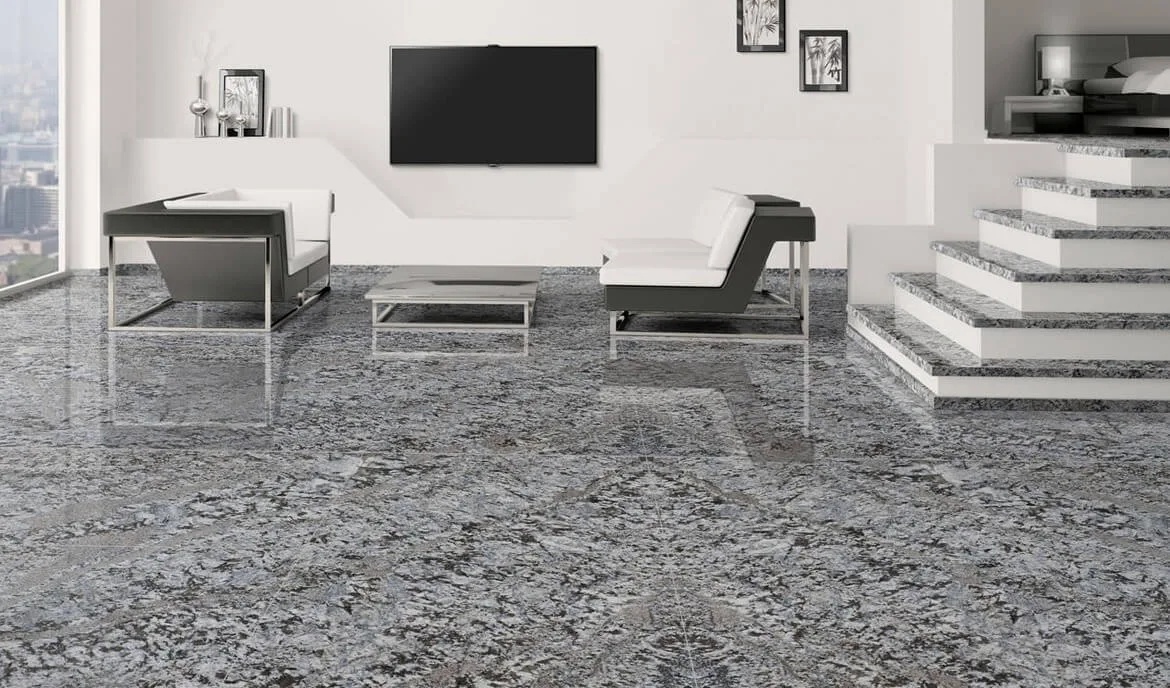
Selecting the ideal natural stone for architectural, commercial, or residential projects involves balancing aesthetic ambition with practical performance. Among premium surfacing materials, marble and granite remain the two most prominent contenders. While both exude elegance and timeless appeal, their geological origins result in distinct physical properties, maintenance requirements, and price profiles.
At Galaxy Exports, decades of quarrying, processing, and supplying natural stone across international markets provide direct insight into how these stones perform under real-world conditions. Below is a comprehensive comparison of marble and granite across durability benchmarks, cost factors, and ideal architectural applications.
Geological Composition and Material Characteristics
The performance differences between marble and granite stem directly from how they form beneath the Earth's surface.
- Marble is a metamorphic rock formed when limestone or dolomite experiences immense heat and pressure within the crust. It consists primarily of recrystallized calcite or dolomite crystals. This composition yields classic flowing veining, soft luminescence, and tactile warmth, but it also creates a softer, more reactive surface.
- Granite is an intrusive igneous rock formed through the slow cooling and crystallization of molten magma. It is densely packed with hard minerals, including quartz, feldspar, and mica. This interlocking crystalline matrix provides immense compressive strength, high density, and superior resistance to abrasion.
Durability Breakdown
Durability in natural stone is measured across three primary parameters: hardness, chemical/stain resistance, and thermal tolerance.
1. Hardness and Scratch Resistance
On the Mohs Hardness Scale, granite rates between 6 and 7, making it hard enough to resist scratches from steel blades, kitchen cutlery, and heavy foot traffic. In contrast, marble measures between 3 and 5 on the Mohs scale. While resilient enough for flooring and wall claddings, marble is more susceptible to surface scratching and abrasion if exposed to grit or sharp implements.
2. Porosity, Staining, and Acid Etching
Because marble is rich in calcium carbonate, it chemically reacts with acidic substances like lemon juice, vinegar, wine, and certain cleansers. This reaction causes "etching"—a dulling of the polished surface that cannot be resolved merely by wiping. Marble is also relatively porous, meaning unsealed slabs readily absorb liquids.
Granite possesses significantly lower porosity and contains quartz and feldspar, which do not react to common household acids. High-grade granite resists deep staining and chemical degradation exceptionally well, provided standard penetrating sealers are maintained.
3. Heat Tolerance and Environmental Exposure
Both materials exhibit good heat resistance, but granite leads in thermal stability. Granite easily tolerates hot cookware, direct sunlight, and freezing conditions without thermal shock or discoloration. Marble handles ambient heat well but can suffer discoloration or micro-cracking if subjected to direct, localized thermal shocks. For exterior facades and outdoor landscaping exposed to severe weather, granite is the standard choice.
Cost Comparison: Initial Expense vs Lifecycle Value
Evaluating stone costs requires assessing both upfront supply and long-term upkeep.
Initial Sourcing and Material Pricing
Natural stone pricing depends on quarry availability, rarity of color, slab thickness, and extraction complexity. Sourcing directly through an experienced marble exporter in India provides access to an extensive spectrum of standard to exotic marble slabs with cost advantages straight from the quarry source.
Similarly, procuring raw or fabricated slabs from an established granite exporter in India guarantees standardized grading, precise block-cutting, and stable pricing across domestic and export shipments. While standard varieties of granite and marble often have comparable initial purchase prices, rare imported or exotic veined marbles sit at the higher end of the luxury spectrum.
Installation and Fabrication
Granite’s density requires diamond-tipped tooling and experienced fabrication machinery, slightly raising cutting and edging labor. Marble is easier to carve, bevel, and hone, making it versatile for intricate profiles, though it demands careful handling during transit to prevent edge chipping.
Lifecycle and Maintenance Expenses
Granite delivers lower lifecycle expenses. A quality granite surface typically requires resealing once every two to five years and standard pH-neutral cleaning. Marble demands more rigorous maintenance: annual or semi-annual resealing, immediate cleanup of spills, and periodic professional re-polishing or honing to eliminate micro-scratches and restore luster.
Application Matrix: Choosing the Right Surface
- Kitchen Countertops and High-Traffic Flooring: Granite excels in high-use environments where heavy wear, hot pans, and spills are frequent.
- Bathrooms, Vanities, and Accent Walls: Marble provides an unmatched sense of luxury and bright reflection, making it ideal for master baths, vertical claddings, fireplace surrounds, and decorative features.
- Exterior Cladding and Public Plazas: Granite’s weatherproofing, UV stability, and freeze-thaw endurance make it the primary choice for structural facades and exterior paving.
- Formal Living Areas and Foyers: Polished marble flooring imparts distinguished opulence to entryways and grand halls where routine maintenance is managed.
Both marble and granite offer enduring value when specified for the appropriate architectural setting. For heavy-duty functionality and minimal upkeep, granite is the pragmatic champion. For classical beauty, distinct veining, and luxury aesthetics, marble remains irreplaceable. By sourcing directly from integrated quarry and processing operators, architects and builders achieve predictable structural quality, precise calibrations, and export-grade natural stone tailored to project specifications.