Architecture can tell a story before a guide begins speaking. A carved detail, a courtyard, a painted surface or the way a building meets the landscape can reveal something about the people who created and used it. For travellers searching for the Best luxury train in India, looking at the journey through architecture and design can add a fresh perspective to Rajasthan’s cities and heritage sites.
Palace on Wheels travels through destinations that offer varied settings, from Jaipur and Udaipur to Jaisalmer, Jodhpur, Bharatpur and Agra. Rather than treating each visit as another stop on a route, a design-minded traveller can look for patterns, materials, proportions and local character. The aim is not to become an expert in a week, but to notice more.
How the Best luxury train in India becomes a moving design classroom
A design-focused trip begins with observation. Look at how buildings respond to climate, how spaces guide movement and how decorative details are used. Different towns may use colour and stone in ways that reflect their environment and traditions.
The Best royal train in India also gives travellers a point of comparison between the places they visit. A railway journey creates transitions: from one landscape to another, from one architectural style to another, and from a busy excursion to a quieter return onboard. That movement can help you see regional differences more clearly.
You do not need to identify every style or period correctly. Begin by describing what you see. Is a space open or enclosed? Are the surfaces smooth, carved, painted or patterned? Where does natural light enter? These simple questions encourage careful attention.
Notice the city as a complete design
When visiting a city, look beyond a single landmark. Consider how the streets, buildings, courtyards and public spaces relate to one another. Observe the rhythm of the streets and the way shopfronts, homes and historic structures share the same environment.
In Jaipur, the official itinerary includes places such as Hawa Mahal, City Palace, Jantar Mantar and Amer Fort. Each offers different details to observe. Rather than attempting to remember every fact, choose one design question for each visit. You might ask how the building uses light, how the façade communicates its purpose or how the structure fits into its surroundings.
Photography can help you remember visual details, but check local rules first. Take a moment to look with your eyes before reaching for your camera. A photograph may capture a surface, but standing quietly in a space can help you understand its scale and atmosphere.
Study craftsmanship at a slower pace
Craft details are easy to overlook when travelling quickly. Give yourself time to notice patterns, repeated shapes, materials and joins. Look at how a surface has been finished or how a decorative feature has been placed. If you visit a market or craft area, ask questions respectfully and listen to the people who make or sell the work.
A design journal can help. Draw a simple pattern or note the colours you saw. Write down a question to ask a guide. If you learn the name of a technique or material, record it for later reading.
Do not touch fragile or restricted surfaces to examine them. Follow the guidance provided at heritage sites. Respectful observation protects the place and ensures other visitors can enjoy it too.
Compare materials and colour
One enjoyable design exercise is to note how colours and materials change across the journey. You might see stone, plaster, painted surfaces, textiles and metalwork used in different ways. Instead of deciding which place is “better,” ask what each material contributes to the local character.
Pay attention to light as well. A building can look different in morning light, afternoon sun or evening illumination. If the schedule allows, observe how the same place changes through the day. A quick note about the time and conditions can help you remember why a photograph looks the way it does.
Colour can also be connected to practical use and local identity. Ask a guide what is known about a colour or decorative choice rather than assuming its meaning. This keeps your observations thoughtful and accurate.
Look at the landscapes around the buildings
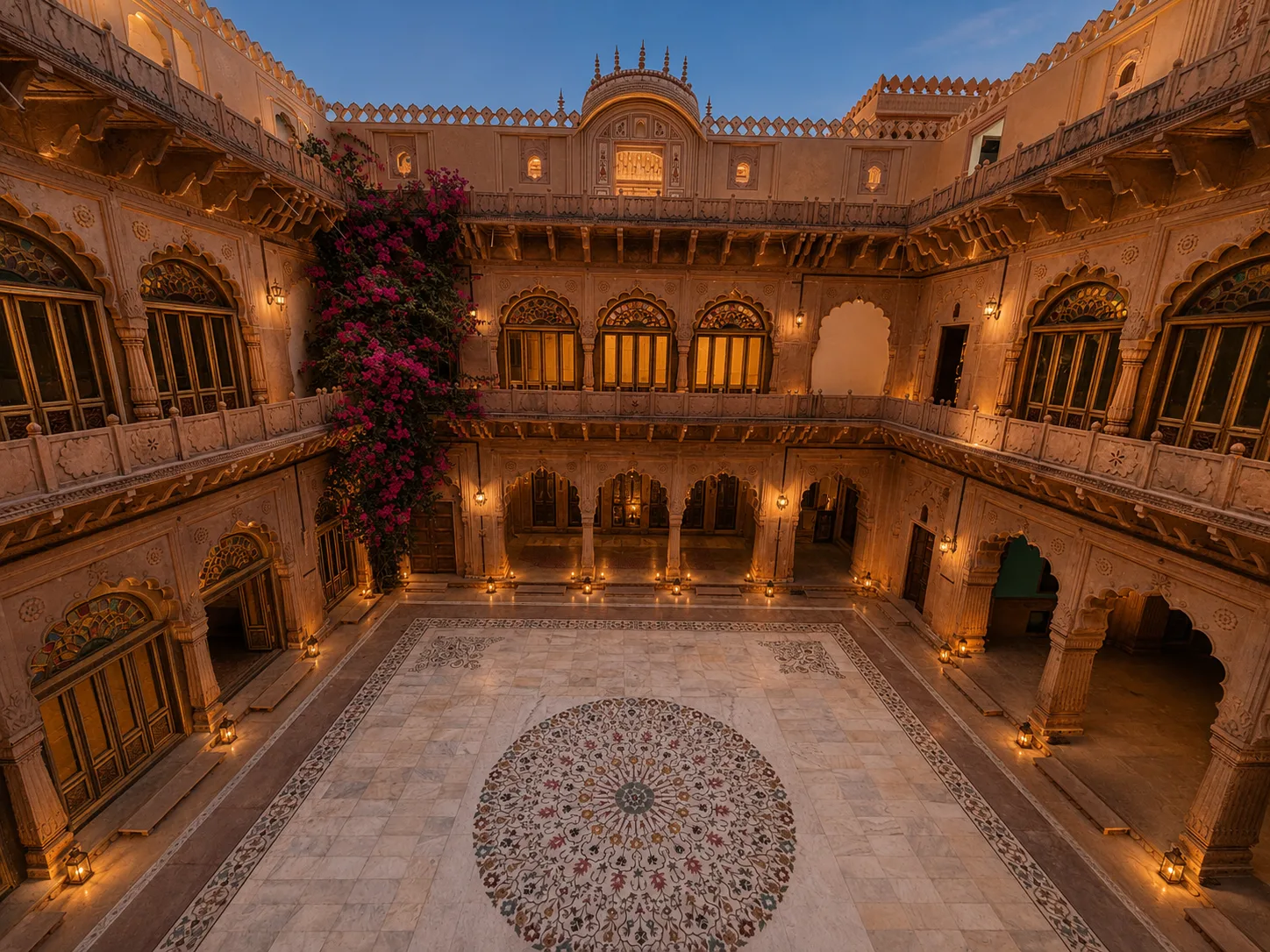
Architecture is shaped by its setting. Notice the relationship between a fort and the surrounding terrain, or between a city structure and the streets around it. Consider how views, shade, access and orientation may have influenced the design.
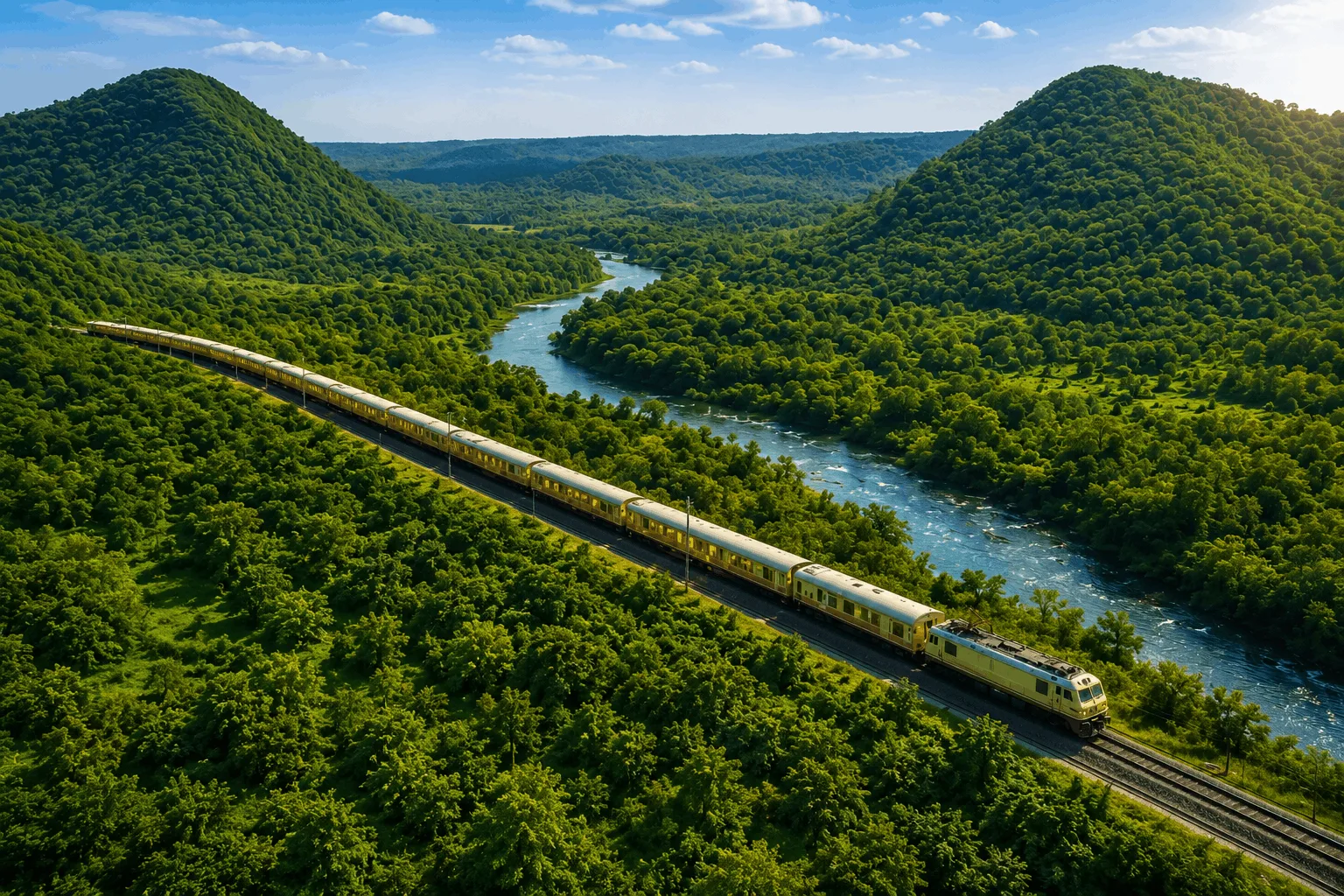
On a journey through Rajasthan and Uttar Pradesh, the landscape itself changes. The train route includes cities, countryside and desert regions, giving travellers a chance to observe how built environments sit within different surroundings. A view from the window can be as useful for understanding place as a formal visit.
Keep your observations specific. Instead of writing “the landscape was beautiful,” note what you saw: open fields, hills in the distance, a change in vegetation or the colour of the ground. These details help you connect the environment to the architecture.
Use onboard spaces as a design comparison
The train’s interiors create another opportunity for observation. Notice how the cabins, lounge and dining areas are arranged for different uses. What makes a space feel restful? How do lighting, colour and furniture affect the atmosphere? What feels familiar, and what gives the setting a distinct identity?
Palace on Wheels lists different accommodation categories, including Deluxe Cabins, Super Deluxe Cabins, Suite Cabins and a Presidential Suite. Review the current official cabin information when choosing a category, as layouts and inclusions may differ. If you are curious about design, consider how a space balances appearance with practical needs such as storage, privacy and movement.
Dining spaces can also be studied as social design. Notice how the layout shapes conversation and how a shared meal changes the pace of the day. These observations can make the onboard experience part of your travel story.
Ask better questions on site
A guide can help place architectural details in context. Prepare a few open questions: What was this space used for? Which materials were chosen? Has the structure changed over time? What should visitors notice that they might otherwise miss?
Listen for the difference between documented history and interpretation. If you want to write about a detail later, note who shared the information and where you heard it. This will help you describe it responsibly.
If a place is crowded, keep questions brief and be considerate of others. You can also write them down and research them after returning to the train or to your room.
Bring the ideas home
After each day, choose one visual detail to remember. It could be a pattern, a doorway, the contrast between two materials or the way a building frames a view. At the end of the journey, compare your notes and see what themes emerged.
You may discover that you are drawn to courtyards, carved surfaces, geometric forms or the use of colour. That discovery can influence what you read, photograph or explore on a future trip.
A fresh perspective on a familiar route
A design lens encourages travellers to slow down and look closely. It turns a visit into a series of questions about how places are made and how people use them. You can enjoy the journey without needing to be an architect or historian.
For a traveller considering the Palace on Wheels itinerary, architecture and design offer a unique theme for each stop. The trip becomes not just a route through celebrated places, but a chance to notice the craft, choices and character behind them.