
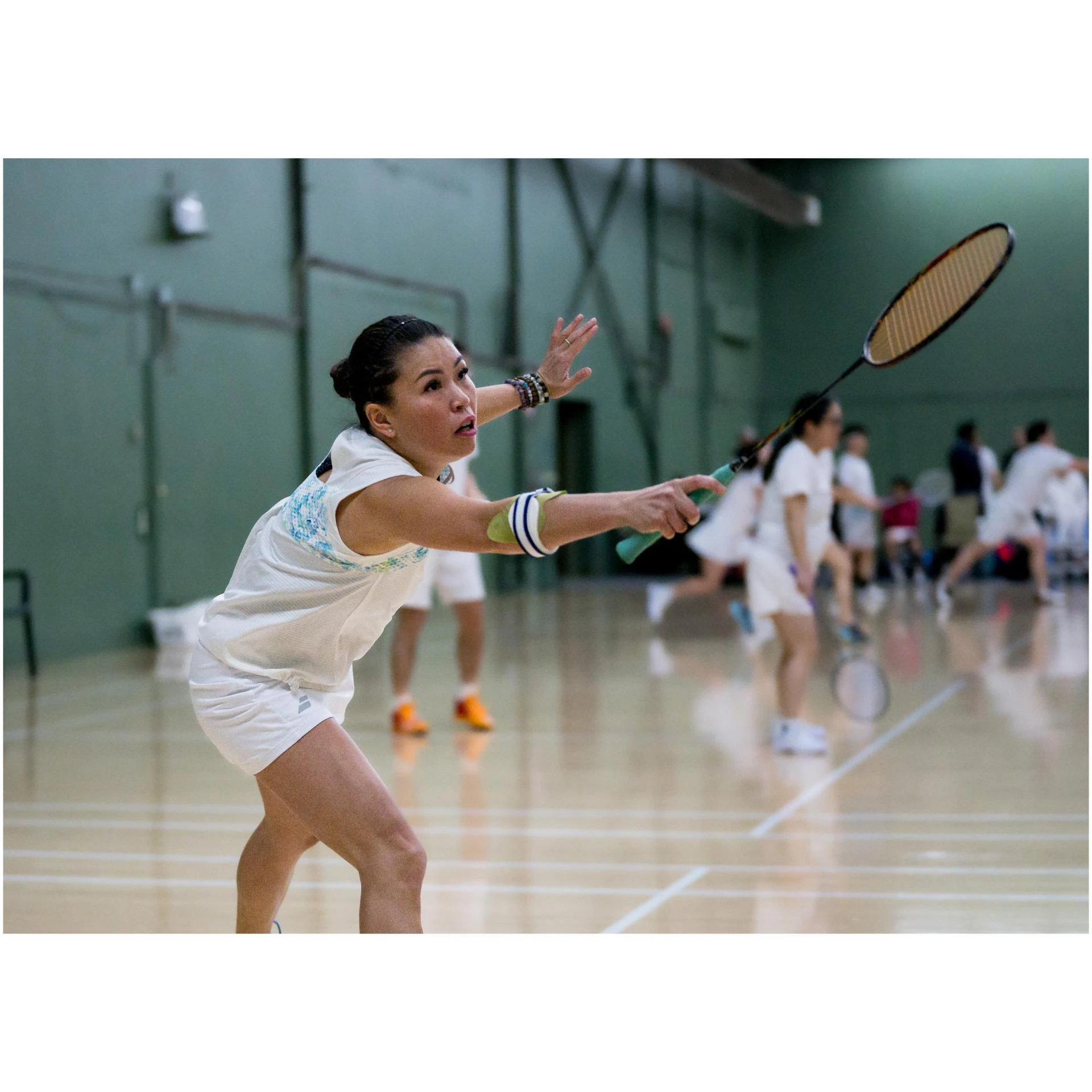
Within sports, athletes become symbols of their ability to be resilient, determined, and empowered. Apart from winning their games and titles, what makes them stand out is how they lead with influence on and off the field. An inspiring embodiment of this attitude is Daisy Lee in British Columbia. Her story as an athlete is not just about badminton; it is about being strong, staying strong, and employing sport as a vehicle to empower women, communities, and generations to come.
From her earliest moments with a racket in hand to her extensive participation in community sport organizations, Daisy Lee's journey demonstrates the potential of sport to reshape lives. She has demonstrated that leadership is not limited to boardrooms or arenas; it is influence, advocacy, and the capability to generate meaningful change.
The Athlete's Foundation: Discipline and Perseverance
Discipline is what lies at the heart of Daisy Lee as a badminton player. Badminton might seem easy to the naked eye, but the reality is that it requires agility, concentration, stamina, and quick mental acuity. Daisy did not become successful overnight; it was the result of years of intense training, thousands of practice games, and the courage to get up stronger after failure.
Her sporting experience formed the basis of her leadership philosophy. What she learned on the playing field, fast thinking, working in teams, patience, and strategy, carried over perfectly to her role in community sport and organizational development. She lives by the philosophy that winning points is not all about sport but about developing inner strength and passing it on to others.
Leading Beyond the Court
Athletes tend to affect their teammates, but leaders extend this influence to larger communities. Daisy Lee is a classic example of this rule. A mature professional from BC, Canada, she combined her sporting experience with her enthusiasm for helping community-based programs.
She has worked directly with provincial sport organizations, helping them achieve membership growth, increase organizational profiles, and provide accessible opportunities for people of all ages and backgrounds to enjoy the sport of badminton. Through this, she continues to show that the principles of sport, including fair play, teamwork, and determination, are strong catalysts for creating stronger, more inclusive communities.
Her work on several boards and committees also says a great deal about her dedication to sports development. By making recommendations about governance and policy, she made sure that nonprofit sports organizations were able to operate with transparency and efficiency. These endeavours are reflective of the skills she honed as an athlete: structure, discipline, and accountability.
Empowering Women Through Sport
Sports have never been a platform for breaking barriers, and Daisy Lee's story is no exception. A woman playing badminton has proved that talent and determination are genderless. She is an inspiration to all women who wish to have leadership and sporting excellence together.
Badminton, as with so many sports, has traditionally been a male-dominated sport in some leadership forums. Daisy's entrance and influence break that trend. She has not only motivated women to stand on the court with assurance but also challenged them to enter leadership roles throughout the world of sports.
Her legacy shows that female athletes are not just players, but also changemakers. Daisy Lee is a testament that women can be strong leaders with vision and heart, complementing the challenges of competitive sports and community leadership.
Badminton as a Tool for Connection
Perhaps the most motivating thing about Daisy's job is the way she uses badminton as a connection bridge. Outside of tournaments and practice sessions, she perceives the sport as a means to unite people, be it through community activities, charity competitions, or youth programs.
Badminton, in Daisy's universe, transcends a sport. It is an instrument of inclusion, where disparate groups of individuals, such as upcoming players, new immigrants, experienced athletes, and fans have a unifying place to come together. Such shared moments cement the bonds of community and emphasize the global language of sports.
Her work highlights that sports are not merely a competition but also an opportunity for cooperation, companionship, and development.
Strength in Leadership
Strength does not always come in the form of physical power. Actual strength comes from vision, perseverance, and the courage to move into challenges. Daisy Lee is a representative of such strength. Her style as a leader comes from collaboration and trust attributes that enable her to be a good spokesperson and advocate for sports organizations.
Through interactions with community members, sponsors, and stakeholders, she keeps the mission of sporting development in sight and effect. Her communication and bridging skills are as precise and clear as they once were on the badminton court.
This combination of sporting vigour and leadership in her professional career illustrates how sport can be an enduring educator, equipping people to make enduring contributions outside of the game.
Inspiration for the Next Generation
For young athletes who are looking up to role models, the story of Daisy Lee is profoundly inspiring. She epitomizes what it means to take lessons from the court into all aspects of life. Her experience shows that medals won are just one aspect of success the higher achievement is that of empowering others and creating avenues for the next generation.
Whether mentoring young people, creating programs, or encouraging women to become leaders, Daisy continues to spread her impact beyond sport. Her presence teaches aspiring competitors that competition is not the end but can lead to leadership and service.
Lessons We Can All Learn from Daisy Lee
Daisy Lee's life in British Columbia teaches us some great lessons:
Resilience is important. Each rally in badminton involves recovering from a lost point. Life does too.
Collaboration makes success happen. Even in a solo sport, athletes rely on coaches, teammates, and fans. Daisy takes this lesson to community leadership.
Strength is integrated. Physical, mental, and emotional strength are all involved in how we present ourselves in sports and in leadership.
Leadership is service. Real leaders care about elevating others, opening up opportunities, and changing things for the better.
These badminton lessons apply far beyond the court to our everyday lives.
Daisy Lee's journey is a reminder that sports is not merely playing but leading, empowering, and giving back. Her story challenges us all to ask ourselves: How do we leverage our passion to make a difference? How do we lead with strength and compassion?
If anything can be learned from the journey of Daisy, it is that a single person's commitment can inspire whole communities. She has demonstrated that leadership is not established by position but by influence, and that strength is not merely about muscle but about purpose.