
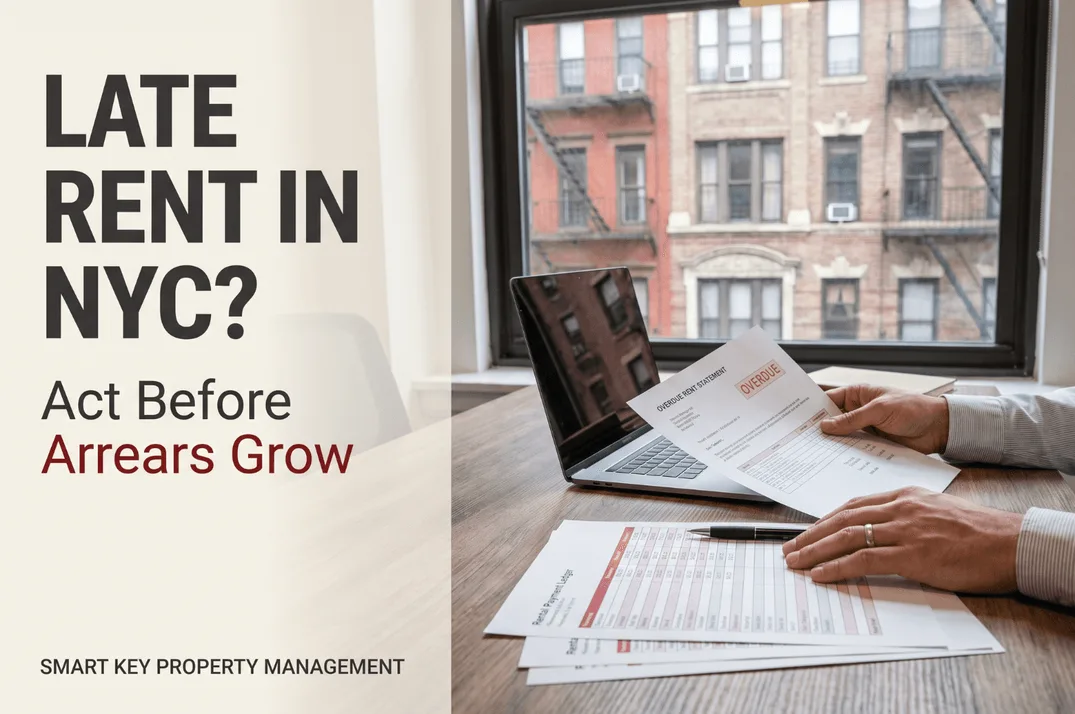
One missed rent payment may look like a temporary issue. The real problem starts when that balance carries into the next month without clear follow-up, accurate records, or a consistent collection process.
For landlords dealing with late rent in NYC, a small delay can quickly turn into a larger rent arrears problem. The balance grows, communication becomes harder to track and reconciling what is owed becomes more complicated.
The earlier the issue is identified and documented, the easier it is to keep control of the payment history and decide what needs to happen next.
When Is Rent Considered Late in NYC?
For late rent in NYC, the key distinction is between when rent is due and when a late fee can legally be charged. Under New York State law, a late fee cannot be charged unless rent remains unpaid for more than five days after the due date and the fee is capped at $50 or 5% of the monthly rent, whichever is less.
If payment has not been received within five days of the due date, the landlord or authorized agent must also send a written notice by certified mail. A missed rent payment does not trigger every step at once, so keeping the due date, notice timing and payment records clear is important before moving forward.
Why One Late Payment Can Quickly Become Rent Arrears
A single missed payment is usually easier to manage than a balance that is allowed to carry forward without clear follow-up.
The problem is rarely only that rent was missed. It is that the balance becomes harder to track and resolve as time passes.
Delayed follow-up, unclear payment records, repeated partial payments and inconsistent communication can all make rent arrears in NYC more difficult to manage. Once multiple months are involved, landlords may also have to reconcile different payment dates, promised amounts and outstanding balances.
The challenge becomes even greater for owners managing several tenants or properties. Without a consistent process, one overdue rent issue can quickly become part of a larger collection problem.
Clear payment histories, accurate balances and timely follow-up help landlords understand exactly what is owed and what needs attention next.
What Should a NYC Landlord Do When Rent Is Late?
When a tenant is not paying rent in NYC, the first response should be organized rather than reactive. The goal is to confirm what is actually outstanding, document the issue and follow the required process carefully.
1. Verify the Payment Record
Confirm whether payment was received through the usual bank or payment platform. Check the exact outstanding balance, any earlier partial payments and whether the rent ledger is accurate before treating the amount as unpaid rent in NYC.
2. Review the Lease
Check the rent due date, agreed payment method, late-fee terms and any relevant lease provisions. The lease should be reviewed for accuracy, not interpreted as legal advice.
3. Document Communication
Keep a clear record of when the tenant was contacted, how communication took place, what response was given and whether a payment date was promised.
4. Keep the Rent Ledger Current
Your rent records should clearly show monthly rent due, payments received, partial payments, credits where applicable and the remaining balance.
5. Follow Required New York Procedures
If rent has not been received within five days of the due date, New York law requires a written notice by certified mail. Before an NYC nonpayment case can be started, the overdue rent must also be demanded in writing, with the demand delivered at least 14 days before the case is filed.
Landlords should confirm the current requirements that apply to their property and situation before taking legal action.
6. Escalate When the Balance Is Not Being Resolved
Repeated missed payments, growing balances, recurring partial payments, unclear commitments, or no response are signs that the issue may be moving beyond a one-time delay and into a broader arrears problem.
Why Documentation Matters When Rent Becomes Overdue
When rent becomes overdue, landlords need a clear record of what was due, what was paid and what remains outstanding.
Good rent records should include payment dates, partial payments, credits, the current balance, tenant communication, notices and any payment arrangements.A clear rent record should show what was due, what was paid, what remains outstanding and what communication took place.
This becomes especially important when unpaid rent in NYC carries into another month. Accurate documentation makes balances easier to reconcile, follow-up easier to manage and escalation easier to support if needed.
When Does Late Rent Become a Bigger Arrears Problem?
A late payment is an event. Arrears become a pattern.
For landlords dealing with rent arrears in NYC, the warning signs usually become clear when one missed payment starts carrying forward and the balance becomes harder to resolve.
Watch for:
- The outstanding balance rolls into another month
- Partial payments become recurring
- The tenant repeatedly misses agreed payment dates
- Communication becomes inconsistent
- The payment history becomes harder to reconcile
- Multiple months of unpaid rent begin to accumulate
- Follow-up becomes reactive instead of scheduled
The longer these issues continue, the harder it becomes to maintain a clear picture of what is owed and what action has already been taken.
If a tenant owes rent in NYC across multiple payment periods, the priority should shift from treating it as a one-time delay to managing it as an ongoing arrears issue with clear records, consistent follow-up and an organized escalation process.
Common Rent Collection Mistakes NYC Landlords Should Avoid
A weak collection process can make a late payment harder to manage than it needs to be. For landlords handling rent collection in NYC, consistency matters just as much as follow-up.
Waiting Too Long to Follow Up
Delays create uncertainty and allow unpaid balances to grow. Early follow-up helps confirm whether the payment is simply late or becoming part of a larger nonpayment issue.
Using Different Processes for Different Tenants
Changing the process from one tenant to another can make records harder to compare and follow-up less consistent. A repeatable system keeps payment history clearer.
Relying on Informal Verbal Arrangements
Verbal conversations without clear records can make it harder to track what was agreed, when payment was expected, or whether another follow-up is needed.
Letting the Rent Ledger Fall Behind
If the ledger is not current, landlords can lose visibility into partial payments, credits, missed months and the exact outstanding balance.
Skipping Required Notices or Procedures
Informal follow-up should not replace required legal steps. When rent remains unpaid, landlords should make sure any required notices and nonpayment procedures are handled correctly and on time.
For landlord rent collection in NYC, the strongest process is one that is consistent, documented and easy to track from the first missed payment onward.
Consistent Rent Collection Protects More Than Monthly Cash Flow
Rent does more than cover one monthly expense. It supports mortgage or debt obligations, vendor payments, maintenance, reserves, utilities and the day-to-day operation of the property. That is why inconsistent collections can create pressure beyond the unpaid balance itself. When rent arrives late or remains outstanding, owners may have less flexibility to manage other operating expenses or plan upcoming property needs with confidence.
A predictable collection process does not guarantee that every tenant will pay on time. It does give the owner a clearer picture of what has been paid, what is overdue and what needs attention next.
For landlords managing rent collection in NYC, that visibility matters. Accurate payment records, consistent follow-up and clear outstanding balances help protect property cash flow and make it easier to plan maintenance, vendor payments and reserves without relying on guesswork.
When Should a Landlord Get Professional Help With Rent Arrears?
Professional support becomes more relevant when:
- Arrears keep recurring
- Outstanding balances continue to grow
- Multiple tenants require follow-up
- Payment records become difficult to reconcile
- Partial payments happen repeatedly
- Communication takes too much management time
- Follow-up and monitoring become inconsistent
Smart Key supports landlords through Rent Collection & Arrears Recovery, helping with payment tracking, tenant follow-up, rent records and arrears monitoring.
Smart Key’s role is operational, not legal. It does not provide legal advice or court representation.
A Missed Payment Is Easier to Manage Before It Becomes a Pattern
Late rent is easier to manage when owners can see the issue early and follow a consistent process.
Smart Key helps landlords maintain better control through rent monitoring, accurate payment records, tenant follow-up, arrears tracking and clearer financial visibility. The goal is not to guarantee collection, but to prevent unpaid balances from becoming harder to track and manage over time.
Smart Key helps landlords create a more consistent rent collection process before unpaid balances become harder to manage.
Need a more consistent way to manage late rent and arrears? Speak with Smart Key about Rent Collection & Arrears Recovery.