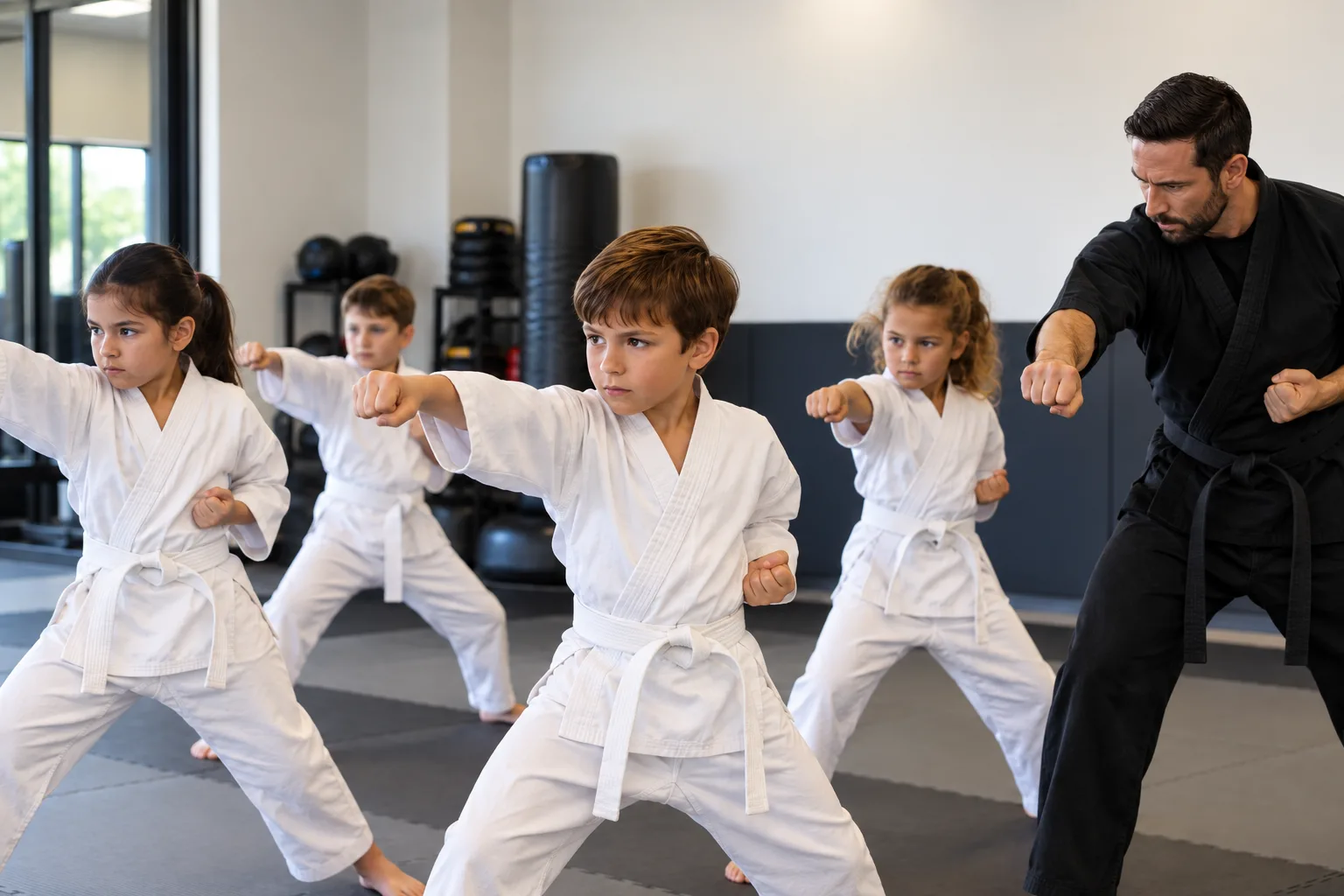
Kids karate classes are a popular choice for parents who want their children to stay active, develop discipline, improve confidence, and learn basic self-defense skills. But before enrolling your child, it is important to understand what martial arts training involves and how to choose a program that matches your child's age, personality, and goals.
Not every martial arts school teaches children in the same way. Class size, instructor experience, safety rules, training style, and age groups can all affect your child's experience.
This guide explains the most important things parents should know before choosing karate or other martial arts classes for kids.
What Are Kids Karate Classes?
Kids karate classes introduce children to basic martial arts movements, including stances, blocks, strikes, footwork, balance, and controlled techniques.
Classes normally combine physical exercise with lessons about listening, respect, patience, and discipline.
For younger students, the focus should not simply be on learning how to punch or kick. A well-structured children's martial arts program should also help students understand when physical techniques should and should not be used.
Parents should look for classes where safety, control, and responsible behavior are part of every lesson.
What Age Can Kids Start Karate?
There is no single perfect age for every child to start martial arts.
Some schools offer programs for very young children, while others begin training children around elementary-school age.
Before enrolling, consider whether your child can:
- Listen to basic instructions
- Participate in a structured group activity
- Follow safety rules
- Work with other children
- Stay focused for most of a class
A child's maturity and comfort level are often just as important as age.
If you are comparing kids martial arts classes, ask the school how students are separated by age, experience, and ability.
What Do Children Learn in Karate Classes?
A beginner karate class generally teaches fundamental techniques before moving toward more complex combinations.
Children may learn basic movements such as punching, kicking, blocking, stance work, and coordination exercises.
However, martial arts training can involve much more than physical techniques.
Discipline and Focus
Students are expected to listen to instructors, follow directions, and practice techniques repeatedly.
Over time, this structured environment may help children develop better concentration and patience.
Confidence
Learning a new technique or progressing through different skill levels gives children achievable goals.
Small improvements can help children become more comfortable trying difficult or unfamiliar activities.
Physical Fitness
Karate and other martial arts for kids involve regular movement.
Classes may include stretching, footwork, balance exercises, drills, and other activities that help children stay physically active.
Self-Defense Awareness
Good children's programs should teach that avoiding unnecessary conflict is important.
Self-defense education should include awareness, communication, creating distance, seeking help, and using physical skills only when appropriate.
How Safe Are Kids Karate Classes?
Safety is one of the most important factors parents should consider.
Martial arts naturally involve physical movement and, depending on the program, some controlled partner training. The way a school manages that training matters.
Before enrolling your child, ask:
- How are beginners introduced to techniques?
- Is contact controlled?
- How closely are students supervised?
- Is protective equipment required?
- How are children matched with training partners?
- What happens if a child feels uncomfortable?
Watch at least one class if possible.
A good instructor should correct unsafe behavior immediately and make sure students understand that technique and control are more important than aggression.
How Often Should Kids Attend Martial Arts Classes?
For many beginners, attending martial arts training two or three times per week can provide a manageable routine.
However, there is no need to push children into an intensive schedule immediately.
The right frequency depends on your child's age, school responsibilities, interest level, and other activities.
Consistency is usually more useful than attending many sessions for a short period and then losing interest.
Start with a realistic schedule your family can maintain.
Karate vs Other Martial Arts for Kids
Karate is only one option available to parents.
Other popular martial arts for children include Brazilian Jiu-Jitsu, Judo, Taekwondo, kickboxing, and age-appropriate mixed martial arts.
Karate
Karate commonly focuses on striking techniques, movement, forms, coordination, and discipline.
Brazilian Jiu-Jitsu
BJJ primarily focuses on grappling, positioning, escapes, and controlling an opponent on the ground.
Kickboxing
Kickboxing combines punching, kicking, footwork, fitness, and coordination.
Mixed Martial Arts
A well-structured youth MMA program can introduce skills from more than one martial arts discipline, such as grappling and striking.
There is no universal "best martial art for kids."
The better question is: Which program has qualified instructors, appropriate safety standards, and a teaching environment where your child feels comfortable learning?
What Should Parents Look for in a Martial Arts School?
The instructor and training environment can matter as much as the martial arts style itself.
When visiting a school, look at how instructors communicate with children.
Are they patient? Do they explain techniques clearly? Do they encourage students while still maintaining rules?
Also consider:
- Instructor experience
- Class size
- Cleanliness of the facility
- Safety procedures
- Age-appropriate training
- Student behavior
- Parent communication
- Class schedule
- Membership terms
- Trial-class availability
Do not choose a school based only on distance from home or price.
A slightly longer drive can sometimes be worthwhile if the teaching environment is a better fit for your child.
Should Kids Try a Class Before Enrolling?
Whenever possible, yes.
A trial class can tell you much more than a website or brochure.
During the session, observe whether your child follows the instructor, interacts comfortably with other students, and appears interested in the training.
Afterward, ask simple questions:
"What did you enjoy?"
"Was anything confusing?"
"Would you like to come back?"
Your child's response should be an important part of the decision.
Parents considering karate may also want to compare it with other children's martial arts programs before committing to one style. Schools such as Warrior's Cove provide families with an opportunity to explore structured martial arts training and determine what type of program suits their goals.
Can Martial Arts Help Kids With Confidence and Discipline?
Martial arts can provide an environment where children practice listening, repetition, goal setting, and controlled physical skills.
However, parents should keep expectations realistic.
Martial arts will not instantly change a child's behavior or personality.
Confidence and discipline usually develop gradually through consistent practice, supportive instruction, and positive experiences.
The quality of the instructor and learning environment plays an important role.
Frequently Asked Questions
Are kids karate classes suitable for beginners?
Yes. Most children's martial arts programs have beginner-level instruction. Parents should confirm that new students are introduced to techniques gradually and are properly supervised.
How many times a week should a child practice karate?
Many children begin with two or three classes per week. The ideal frequency depends on age, interest, schedule, and the school's program.
Is karate good for shy children?
Martial arts may give shy children opportunities to interact with instructors and other students in a structured setting. Look for a supportive school that allows beginners time to become comfortable.
What should kids wear to their first martial arts class?
Requirements vary by school. Some schools provide or require uniforms, while trial classes may allow comfortable athletic clothing. Ask the school before attending.
Is karate better than BJJ or MMA for kids?
No single style is automatically best for every child. Karate, BJJ, and appropriately structured MMA programs teach different skills. Instructor quality, safety, teaching style, and your child's interests should guide the decision.
Conclusion
Choosing kids karate classes should involve more than simply finding the nearest martial arts school.
Parents should understand the program, meet the instructors, observe how safety is managed, review the class structure, and give their child an opportunity to experience the training environment.
Karate can be one option, but it is also useful to compare BJJ, kickboxing, MMA, and other kids martial arts classes before deciding.
The right program should provide structured learning, appropriate challenges, responsible instruction, and an environment where your child feels comfortable progressing at their own pace.
If you are exploring martial arts training for your child in the Minneapolis–Saint Paul area, consider learning more about the kids and family programs at Warrior's Cove. Review the class options, speak with an instructor, and try a class to determine whether the training environment is a good fit for your family.