
Businesses generate large amounts of information through sales, customers, operations, marketing, and digital platforms. Data analytics consulting helps organizations turn this information into useful insights that can support better decisions, improve efficiency, and identify new opportunities. As artificial intelligence and advanced analytics continue to develop, professional support can help businesses build stronger data strategies and gain more value from their information.
Why Data Analytics Matters for Modern Businesses
Data is now an important business asset. However, collecting information is only the first step. Businesses need the right tools, processes, and expertise to understand what the data means and how it can support business goals.
Professional analytics services can help companies organize data, identify important patterns, build useful reports, and develop analytical models. This can give business leaders a clearer view of current performance while helping them prepare for future opportunities.
IBM's 2025 study of 1,700 chief data officers found that 81% said their organization's data strategy was part of its technology roadmap. However, only 26% were confident that their data capabilities were ready to support new AI-enabled revenue streams.
This gap highlights the importance of having a strong approach to data management and analytics.
Better Business Decision-Making
One of the biggest benefits of professional analytics is improved decision-making.
Business leaders often need to make decisions about pricing, marketing, hiring, inventory, product development, and investments. Without reliable data, these decisions may depend heavily on assumptions or limited information.
Analytics can provide a clearer picture by combining information from different areas of a business. Leaders can identify trends, compare performance, and understand potential causes behind changes.
For example, a company may notice that sales have declined in one region. Analytics can help examine customer behavior, product demand, pricing, marketing activity, and other factors to identify possible reasons.
This gives decision-makers more information before taking action.
Improved Operational Efficiency
Analytics can also help businesses identify inefficient processes.
Companies often have hidden inefficiencies across purchasing, manufacturing, customer service, logistics, finance, and other departments. These problems may not be obvious when teams look at each process separately.
By analyzing operational data, businesses can identify bottlenecks, delays, unnecessary costs, and performance gaps.
For example, a logistics company could analyze delivery times to identify routes that regularly create delays. A manufacturer could examine production data to identify equipment or processes that affect output.
The result can be more efficient operations and better use of business resources.
More Accurate Business Forecasting
Forecasting is another important application of analytics.
Businesses need to estimate future sales, customer demand, revenue, expenses, staffing requirements, and inventory needs. Traditional forecasting methods may rely heavily on historical information.
Modern analytics can consider a wider range of variables and identify patterns across large datasets. Predictive models can help businesses estimate possible future outcomes and prepare for different scenarios.
This does not mean that analytics can predict the future with complete accuracy. Instead, it gives organizations additional information that can improve planning and reduce uncertainty.
Better Customer Understanding
Understanding customers is essential for long-term business growth.
Analytics can help businesses examine customer behavior, purchase history, engagement, preferences, feedback, and other information. These insights can help companies understand what customers value and where improvements may be needed.
Businesses can use these insights to create more relevant marketing campaigns, improve products, personalize customer experiences, and strengthen retention strategies.
For example, an online retailer can analyze purchasing patterns to identify products that are frequently purchased together. The business can then use this information to improve product recommendations or promotional campaigns.
Faster Access to Important Insights
Traditional reporting can require significant manual effort. Employees may need to collect information from different systems, organize spreadsheets, create reports, and prepare presentations.
Modern analytics platforms can automate many of these processes.
Dashboards can provide updated information in one location, while automated reports can deliver important performance metrics to relevant teams. AI-powered tools can also help summarize large amounts of information and identify potential trends.
Gartner's 2026 data and analytics research highlights the growing importance of AI agents, connected data and analytics platforms, and real-time intelligence.
As these technologies develop, businesses can move closer to faster and more continuous decision-making.
Stronger Competitive Advantage
Businesses that understand their data can often respond faster to market changes.
Analytics can help organizations identify changing customer preferences, emerging opportunities, pricing patterns, operational problems, and competitive pressures.
For example, a company may discover that demand for a particular product category is increasing in a specific market. This insight can help the business adjust inventory, marketing, or product planning.
Data alone does not create a competitive advantage. The advantage comes from turning useful information into timely action.
Better Use of Artificial Intelligence
AI systems depend heavily on data.
Businesses adopting AI need reliable, accessible, well-managed, and relevant information. Poor-quality data can reduce the accuracy and usefulness of AI applications.
Professional analytics teams can help organizations prepare data for advanced applications by improving data quality, integration, governance, and accessibility.
Gartner reported in 2026 that more than 75% of organizations are prioritizing investments in AI-ready data because a lack of data readiness remains a major barrier to AI adoption.
This means analytics is becoming an important foundation for broader AI strategies.
Data Governance and Quality
High-quality data is essential for reliable analytics.
Businesses may have information spread across customer relationship systems, financial platforms, marketing tools, spreadsheets, databases, and other applications. Different systems may use different formats or definitions, making it difficult to create a consistent view.
Professional services can help organizations establish processes for data quality, access, security, privacy, and governance.
This becomes even more important as AI systems become part of business operations.
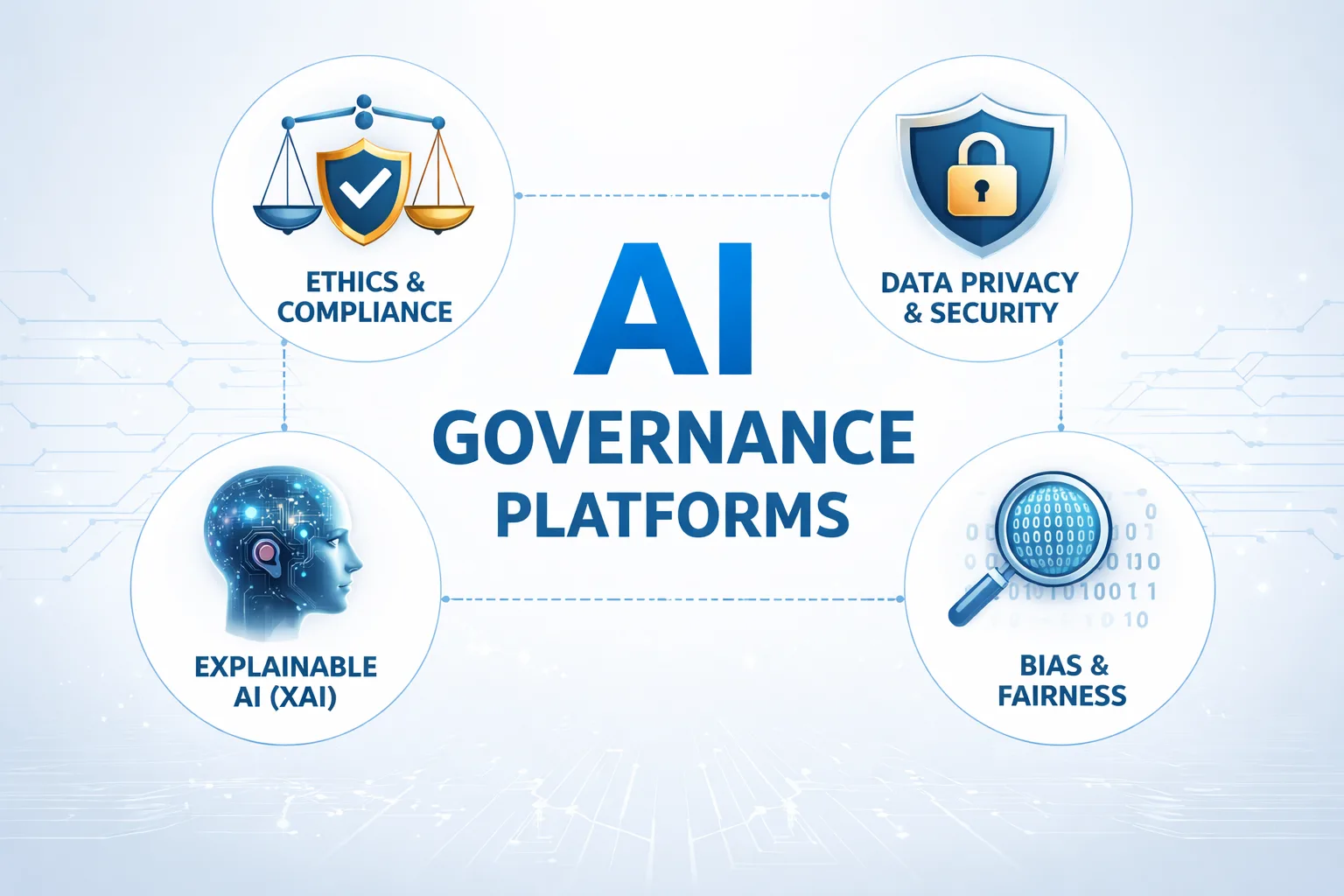
Gartner has identified AI governance and decision governance as major data and analytics trends for 2026. Its research emphasizes the need for explainable, auditable, and controlled automated decisions.
Reduced Business Costs
Analytics can help businesses identify areas where money is being spent inefficiently.
Companies can analyze expenses, resource utilization, inventory levels, employee productivity, customer acquisition costs, and other financial indicators.
For example, a company may discover that certain marketing campaigns produce significantly lower returns than others. Management can use this information to adjust spending and allocate resources toward higher-performing activities.
Similarly, operational analytics can reveal unnecessary delays, excess inventory, or inefficient processes.
Cost savings can become more meaningful when businesses continuously monitor performance instead of reviewing costs only during periodic financial assessments.
More Effective Performance Tracking
Analytics can give businesses a consistent way to measure performance.
Key performance indicators can be organized into dashboards that allow managers to track important metrics over time. Teams can compare current results with previous periods, targets, or benchmarks.
This can help identify problems before they become larger issues.
For example, a sales team can monitor conversion rates and average deal values. A customer service team can track response times and customer satisfaction. An operations team can measure productivity and processing times.
Clear performance measurement creates greater accountability and helps teams focus on measurable outcomes.
Support for Real-Time Analytics
Many business decisions become more valuable when information is available quickly.
Real-time analytics can help businesses respond to changing customer behavior, market conditions, operational events, and potential risks.
Gartner predicts that adoption of data streaming for agentic AI will exceed 60% by 2028, compared with less than 15% in 2025. The research points to decision intelligence, autonomous operations, and other real-time applications as important use cases.
For businesses, this trend means analytics is moving beyond periodic reporting toward continuous intelligence.
Supporting a Data-Driven Culture
Professional analytics can also help create a stronger data-driven culture.
When employees have access to reliable information and easy-to-understand dashboards, they can use data as part of everyday decision-making.
Sales teams can use customer insights to prioritize opportunities. Marketing teams can measure campaign performance. Operations teams can identify process problems. Executives can monitor overall business performance.
This creates a culture where decisions are supported by evidence rather than assumptions.
However, employees also need appropriate training. Businesses should help teams understand how to interpret data, question unusual results, and recognize the limitations of analytical models.
The Future of Professional Analytics
The role of analytics is expanding as businesses adopt artificial intelligence, automation, cloud platforms, and real-time data technologies.
Gartner's 2026 research identifies AI agents, data and analytics platform convergence, and semantic technologies as major trends shaping the field.
At the same time, IBM's research shows that many organizations are still working to connect their data capabilities with measurable business value. Only 26% of surveyed chief data officers said their data capabilities could support new AI-enabled revenue streams.
This creates an important opportunity for businesses that can build strong foundations and connect analytics initiatives with clear business objectives.
Final Thoughts
Professional data analytics services can provide significant value to organizations across industries. From better decision-making and forecasting to improved customer understanding and operational efficiency, analytics can influence many areas of business performance.
The growing use of AI makes reliable data even more important. Businesses need strong data foundations, effective governance, skilled professionals, and clear objectives to gain meaningful results.
Organizations that treat analytics as a strategic business capability can make better use of their information and respond more effectively to changing market conditions. The goal is not simply to collect more data. The real value comes from turning reliable data into useful insights and using those insights to take better action.