Jodhpur, affectionately known across the globe as the Sun City and the Blue City, stands as a living testament to Rajput valor, architectural brilliance, and rich desert heritage. Founded in 1459 by Rao Jodha, the chief of the Rathore clan, this historic city at the edge of the Thar Desert captivates travelers with its towering citadels, intricate sandstone carving, and vibrant cultural pulse. For an unforgettable journey through Marwar, teaming up with a trusted travel agency in Rajasthan ensures seamless logistical coordination, knowledgeable local guides, and authentic cultural immersion.
Mehrangarh Fort: The Citadel of the Sun
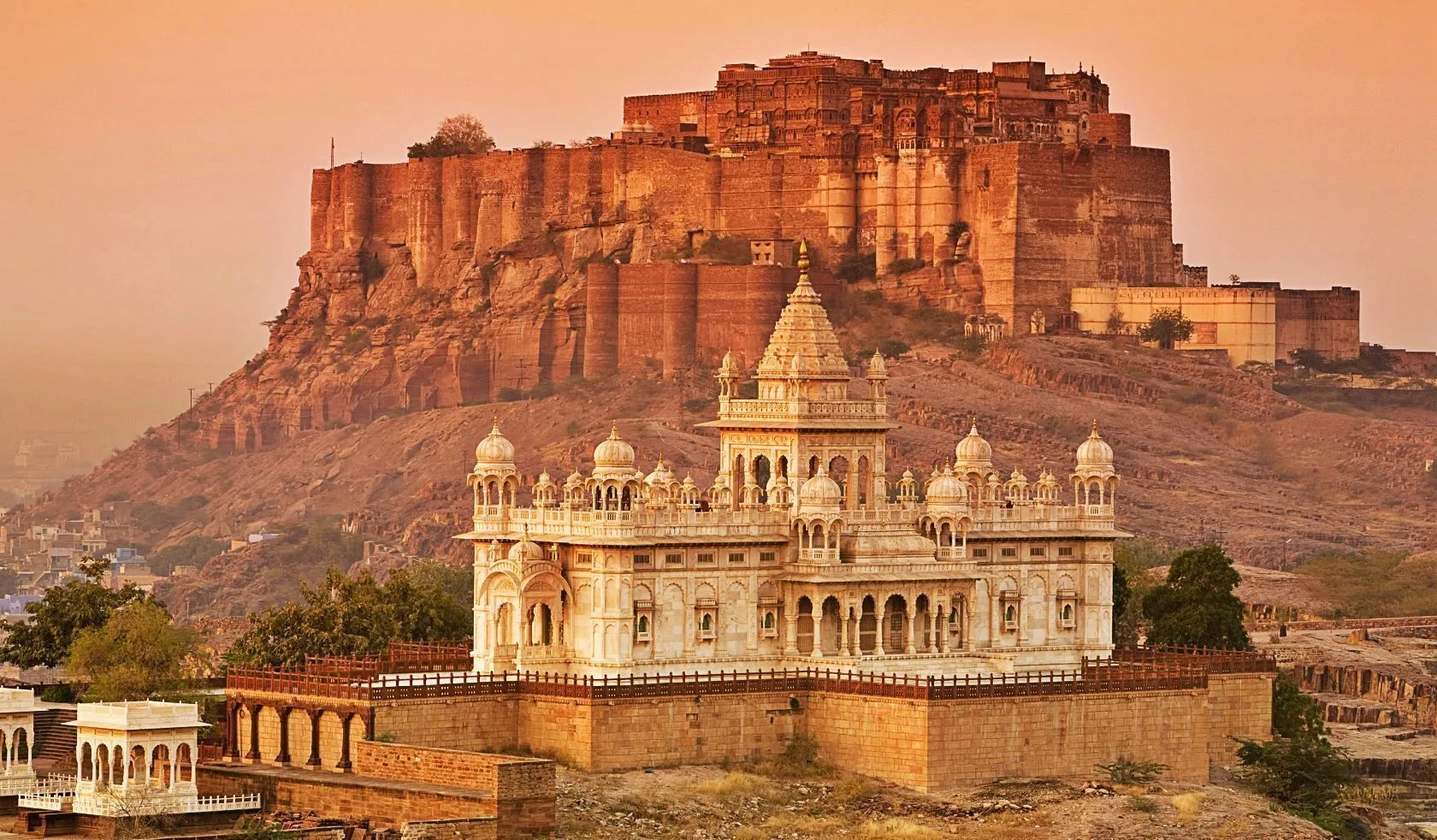
Perched 410 feet above the skyline on a sheer rocky cliff, Mehrangarh Fort remains one of the largest and best-preserved fortifications in India. Its colossal red sandstone walls, which Rudyard Kipling famously described as "the work of giants," bear witness to centuries of military resistance and royal celebrations.
Entering through the formidable gates like Jai Pol and Fateh Pol reveals palatial courtyards designed with delicate filigree latticework. Inside, the fort museum showcases an extraordinary collection of royal artifacts:
- Sheesh Mahal (Hall of Mirrors): A dazzling chamber adorned with intricate mirror mosaics set under plasterwork, illuminated historically by flickering oil lamps.
- Phool Mahal (Flower Palace): Built by Maharaja Abhai Singh, this private reception hall features gold leaf ceilings, elaborate paintings, and stained-glass windows.
- Moti Mahal (Pearl Palace): Famous for its pearl-tinted plaster created from crushed seashells and marble, serving as the throne room for Marwar rulers.
- The Royal Armory and Palanquins: A comprehensive display containing historic matchlocks, gem-encrusted swords, elephant howdahs, and silk palanquins.
Walking along the fort's battlements offers sweeping vistas of the cerulean-washed houses below, illustrating why Jodhpur earned its famous moniker.
Jaswant Thada: The Marble Marvel
Just a short walk down the winding hill road from Mehrangarh lies Jaswant Thada, a peaceful 19th-century cenotaph built by Maharaja Sardar Singh in memory of his father, Maharaja Jaswant Singh II. Often celebrated as the "Taj Mahal of Marwar," this monument is carved from ultra-thin sheets of Makrana marble that softly glow when caught by the morning desert light.
The complex features tiered landscaped gardens, carved pavilions (chattris), and a serene lakeside terrace that provides respite from the bustling markets below. Inside the sanctum, delicate portraits of Rathore rulers line the walls, accompanied by detailed exhibits that outline the lineage of the royal family.
Umaid Bhawan Palace: Art Deco Splendor
Constructed between 1929 and 1943 under the reign of Maharaja Umaid Singh, Umaid Bhawan Palace represents one of the world's most sprawling private residences. Built with golden Chittar sandstone without using mortar, the palace masterfully blends classical Beaux-Arts symmetry with Indo-Deco design elements.
Today, the palace is divided into three distinct wings: the primary residence of the erstwhile royal lineage, a luxury heritage hotel managed by Taj, and a public heritage museum. Visitors can examine royal clocks, classic vintage cars, porcelain collections, and wartime memorabilia that highlight the region's 20th-century modernization.
Mandore Gardens: Ancient Roots of Marwar
Long before Jodhpur was founded, Mandore served as the ancient capital of the Parihar and Rathore rulers. Today, Mandore Gardens offers visitors lush greenery set against dramatic rock formations, hosting ornate sandstone cenotaphs that mimic classical Hindu temples rather than typical Islamic chhatris.
Key highlights at Mandore include:
- The Royal Chattris: Tall stone spires dedicated to early rulers, featuring detailed carvings of deities, dancers, and royal crests.
- The Hall of Heroes: A rock-cut gallery containing sixteen gigantic folk deities and warrior statues painted in brilliant shades.
- The Shrine of the Three Hundred Million Gods: A historic courtyard reflecting deep spiritual ties that continue to draw local devotees.
Navigating the Old City: Toorji Ka Jhalra and Ghanta Ghar
Descending into the city center brings you to Toorji Ka Jhalra, an exquisite 18th-century stepwell constructed by an erstwhile queen consort. With over two hundred steps forming intricate geometric patterns down to crystal-clear subterranean waters, it stands as a brilliant example of traditional Rajasthani water conservation engineering.
Surrounding the stepwell, the vibrant lanes lead to the iconic Ghanta Ghar (Clock Tower) and Sardar Market. Here, visitors can explore stalls brimming with handwoven bandhani textiles, Mathaniya red chilies, silver jewelry, and fragrant teas.
Experiencing each of these heritage landmarks without hassle is made straightforward by choosing a curated Jodhpur full day tour. From the towering heights of Mehrangarh to the quiet marble halls of Jaswant Thada, Rajasthan Yatra ensures travelers discover the authentic spirit, architectural splendor, and enduring nobility that define Marwar.