A Jaipur wedding weekend can give families and friends more time together than a single evening, but adding days does not automatically make the experience better. Guests need a clear reason to gather, enough information to plan their travel and room in the schedule to rest. A weekend feels memorable when the events have a natural rhythm and the couple has time to enjoy the people who travelled to celebrate.
Start by deciding what the weekend should feel like. Is the priority bringing both families together, making the ceremony the central event, or giving guests a relaxed sequence of shared moments? The answer can help you decide how many functions to plan and what each one contributes.
Jaipur wedding weekend planning begins with a simple rhythm
A useful weekend usually has a clear beginning, a central celebration and a considerate close. The welcome can help guests settle in. The main wedding event can hold the most important rituals and gatherings. The final meal or farewell can let people say goodbye without adding another demanding function.
Avoid scheduling every hour. Guests may arrive at different times, especially if they are travelling from several cities. A single evening welcome may work better than an event that begins before many people can reach the venue. Keep essential information available for guests who arrive later so they can find their way without needing a personal briefing.
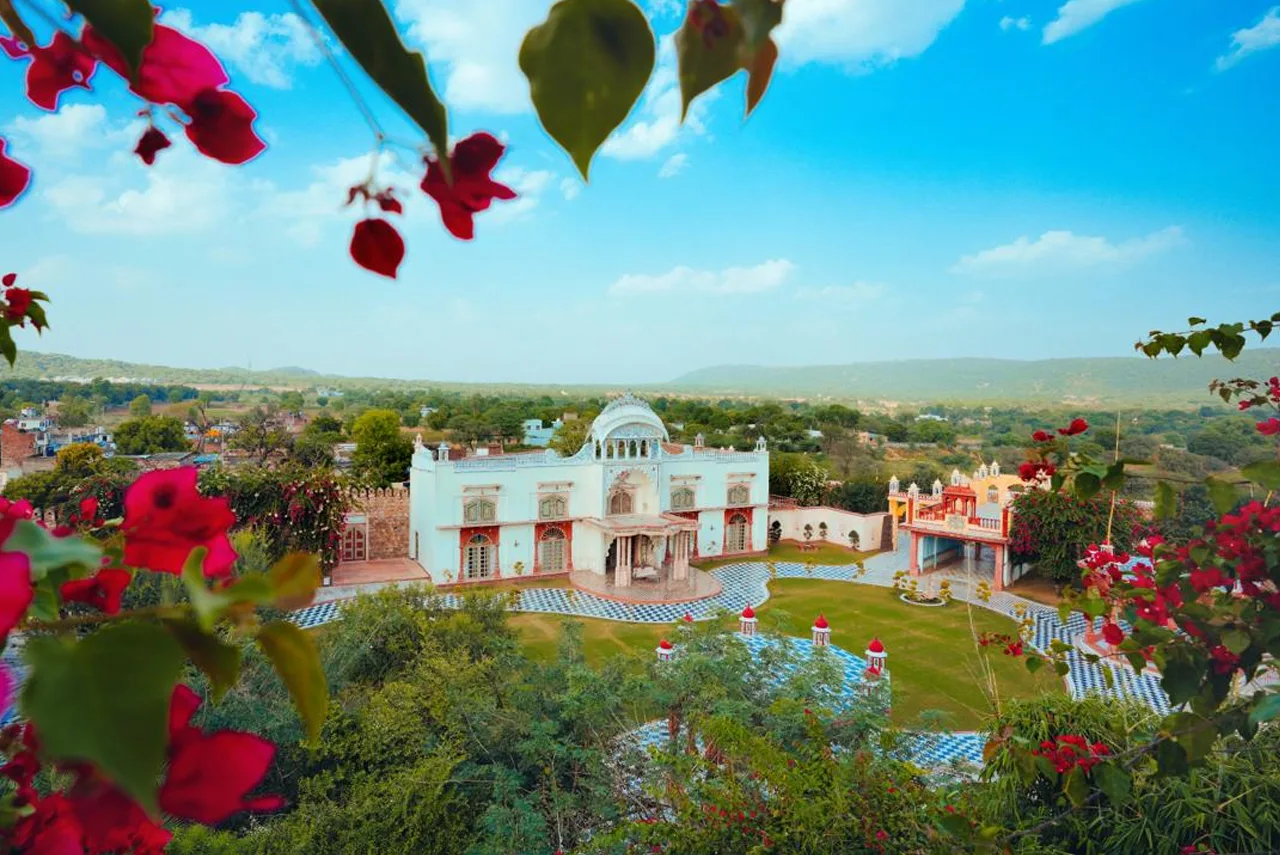
A Jaipur wedding weekend venue should be considered in relation to the whole itinerary. Ask whether the spaces support the planned sequence, how guests will move between functions and what options are available for quieter breaks. Confirm what the venue team can provide and which arrangements require outside vendors.
Plan the weekend in blocks rather than filling every hour. For example, the schedule might include a welcome gathering, a free interval, a ceremony and reception, then an optional farewell meal. The exact sequence depends on the couple and guests. Leave enough time for meals, changes of clothes and the unexpected delays that happen when many people are gathering.
Tell guests what to expect before they travel
Good communication reduces avoidable questions. Share the event dates, main timings, location details, attire and a contact for guest queries as soon as plans are firm. If you are still confirming part of the schedule, label it as tentative and say when guests can expect the final version.
Keep travel details practical. Guests need to know the nearest arrival points, how to reach the venue and whether local transport is being arranged. Do not assume that everyone knows Jaipur or can easily find the entrance. A location pin and a clear written address can help, but provide a contact for someone who can assist if a guest gets delayed.
Explain the dress expectations for each event in plain terms. If a function is outdoors or involves walking on lawns, mention it so guests can choose comfortable footwear. If the celebration includes several outfit changes, guests may appreciate knowing which events are formal and which are relaxed.
A wedding information page or single message can gather the details in one place. Include the current schedule, travel notes, a packing suggestion if needed and the name of the person managing questions. Keep updates in the same place or channel so guests can identify the latest information easily.
Use the welcome event to connect the groups
The welcome gathering is often the first time both families and friend groups meet. It does not need to feel like a performance. Give guests a chance to arrive, get refreshments and talk before any formal introductions begin. A simple welcome from the couple or family can help people understand what the evening is for.
Plan the event for guests who may be tired from travel. Keep the timing reasonable and make it clear whether the welcome is a short gathering or a full function. Guests with children or early arrivals may not be able to stay late, and that should be fine.
If introductions are useful, keep them light. The couple might introduce a few key relatives or invite family members to help guests meet. Avoid a long roll call that keeps everyone standing. Small groups usually make conversation easier than announcements listing every person in the room.
Consider how seating and sound affect conversation. Music can create atmosphere, but very loud sound may make it hard for guests to talk. Provide places where people can sit and speak comfortably. The welcome event is often most successful when guests leave having met someone new rather than having watched a packed programme.
Make the main day the centre of the weekend
The wedding day should have enough time around its central moments. Schedule the ceremony, meal and reception in a way that lets guests participate without constant rushing. Build in a buffer for delays and make the transition between functions clear.
Think about how many formal moments are needed. Each additional speech, performance or group photograph uses time and attention. Choose those that matter most. If multiple family members want to speak, set a time limit and coordinate the order in advance. This helps the event stay warm and personal without extending late into the night.
Give guests a comfortable place to wait if they arrive before a function begins. Tell them where refreshments are available and when the next event starts. If the ceremony space and reception space differ, provide directions and support at the transition. Guests should not have to follow a crowd and hope it is going to the right place.
A Jaipur destination wedding celebration can feel more relaxed when the couple and planner agree on the main priorities. If the ceremony is the heart of the day, protect time and attention for it. If a shared meal matters most, allow guests enough time to enjoy it. The schedule should support the parts of the weekend the couple most wants to remember.
Give guests permission to take a break
A multi-event weekend can be tiring. Guests may appreciate free time between functions to rest, change clothes or spend time with relatives. Make the break visible in the schedule and avoid making guests feel they are missing something by not attending an optional activity.
If you plan a daytime activity, explain what it involves, how long it lasts and whether it is optional. Guests may have different mobility, energy or interest levels. Offer a straightforward way to decline without needing to explain why. The couple can plan a shared activity for those who want to join while keeping the rest of the day open.
Consider providing quiet spaces where guests can sit away from music or crowds. This can be useful for older relatives, parents with young children and anyone who needs a pause. Let guests know the space exists, but do not make them feel they must justify using it.
For the couple, free time matters too. A wedding weekend can become a string of obligations if every moment is planned. Set aside a short interval to eat, breathe and be together. That pause can help the couple arrive at the next event feeling more present.
Plan meals and transport around the schedule
Meals should fit the rhythm of the weekend. If guests will be present through a long gap, confirm whether refreshments are available. If dinner follows a late ceremony, consider how the timing affects families with young children and guests who may have travelled all day.
Collect dietary needs through a clear process and share them with the catering team. Confirm how guests can identify suitable dishes and whom they can ask for help. If the menu includes regional or family favourites, a short note can give guests context without interrupting the meal.
Transport planning should include the start and end of each event. Guests need to know how they will get to a function and return afterward, especially if the event is at a different location from where they are staying. If transportation is arranged, state the pickup point and departure time. If guests will arrange their own travel, share the best contact for directions.
For family photographs, prepare a list and assign someone to gather people. This can shorten the process and help guests return to the celebration sooner. Give older relatives and children a clear place in the order so they are not left waiting unnecessarily.
End the weekend with a warm, clear farewell
The farewell is a chance to close the gathering without asking guests to stay for another major event. It might be a brief breakfast, a shared meal or simply a personal goodbye before people leave. Choose a format that suits the travel plans and energy of the group.
Communicate departure details clearly. Let guests know any checkout times, transport arrangements and whether the farewell is optional. If a guest needs help with luggage or directions, identify who can assist. A smooth departure often depends on practical details more than a final speech.
The couple may not get to say goodbye to every guest personally. A family member or planner can help pass along thanks, but the couple can follow up with a personal message after the wedding. Mentioning a guest’s journey or contribution makes the note feel specific.
Review the weekend as a guest would experience it
Before finalising, read the schedule from the point of view of someone who is travelling. Is it clear when they should arrive? Do they know what to wear, where to go and when there is time to rest? Can they reach someone if plans change? Are optional events clearly marked?
Then review the weekend as a couple. Is there time to greet people? Are the most important moments getting enough attention? Does the plan leave space for conversation and genuine connection? If the answer is no, remove or simplify a function.
A wedding weekend does not need to be packed to feel special. It needs a clear purpose, practical communication and enough breathing room for guests to be with one another. Talk through the event flow, spaces, travel arrangements and service details with your planner and venue team. A well-paced Jaipur destination wedding weekend gives the couple and guests time to share the celebration, rather than only move through it.