
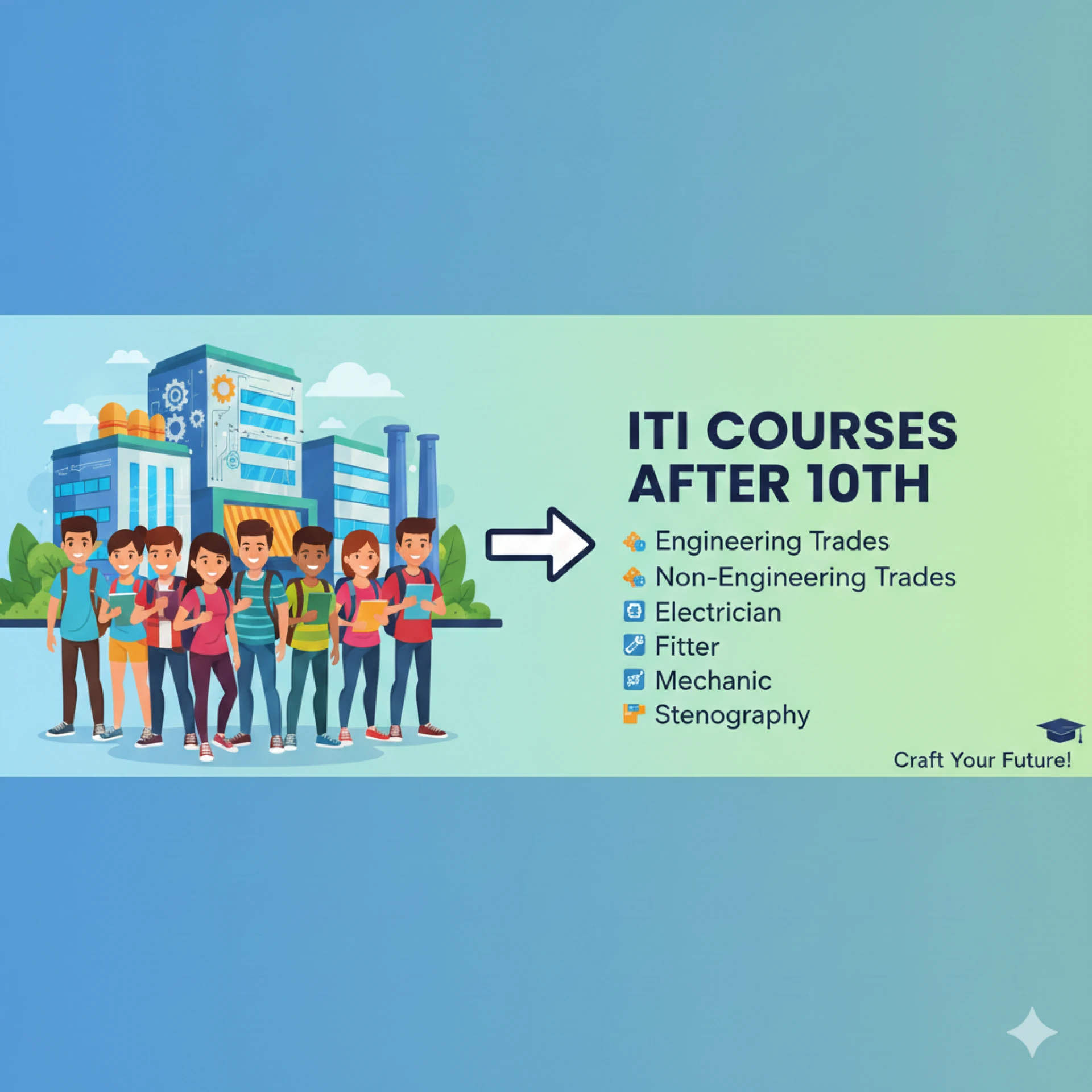
Choosing the right career path after completing Class 10 can feel confusing. Many students think they must continue with traditional academic streams like Science, Commerce, or Arts. But that is not the only option. If you want practical skills, early job opportunities, and industry-focused training, ITI courses can be a smart choice.
ITI stands for Industrial Training Institute. These institutes are designed to provide technical and vocational training to students who want to build job-ready skills. Instead of focusing only on theory, ITI programs emphasize hands-on learning, which helps students enter the workforce faster.
Let’s understand everything about ITI courses after 10th in a simple and clear way.
What Is ITI?
Industrial Training Institutes were established under the Directorate General of Training (DGT), Ministry of Skill Development and Entrepreneurship, Government of India. The main purpose of ITIs is to create a skilled workforce for industries such as manufacturing, construction, electrical, automotive, and service sectors.
After completing Class 10, students can enroll in various ITI trades depending on their interest. The duration of ITI courses usually ranges from 6 months to 2 years.
Why Choose ITI After 10th?
There are several reasons why ITI can be a good option after 10th:
- Short Duration Courses
- Most ITI courses are completed within 1 to 2 years, allowing students to start earning early.
- Skill-Based Training
- ITI focuses on practical knowledge rather than only theoretical study.
- Affordable Education
- Government ITIs are affordable compared to many other professional courses.
- Early Job Opportunities
- After completing ITI, students can apply for private jobs, apprenticeships, or even government jobs.
- Self-Employment Options
- Many ITI trades help students start their own small businesses.
If you are someone who prefers practical work over long academic study, ITI might suit you well.
Popular ITI Courses After 10th
Here are some popular ITI trades students can choose after Class 10:
1. Electrician
This is one of the most in-demand ITI courses. Students learn about wiring, electrical systems, installation, and maintenance. Electricians are needed in homes, offices, factories, and construction sites.
2. Fitter
In this trade, students learn how to assemble, fit, and maintain machinery parts. Fitters are widely required in manufacturing industries.
3. Mechanic Diesel
This course focuses on repairing and maintaining diesel engines used in trucks, buses, tractors, and heavy vehicles.
4. COPA (Computer Operator and Programming Assistant)
COPA is ideal for students interested in computers. It includes basic programming, data entry, office software, and internet skills.
5. Welder
Students learn different types of welding techniques used in construction and manufacturing.
6. Plumber
Plumbing skills are always in demand. This trade teaches installation and repair of water systems.
7. Draughtsman (Civil/Mechanical)
This course is for students interested in design and technical drawing related to construction or machinery.
Each trade has different eligibility requirements, but most require passing Class 10.
Career Opportunities After ITI
After completing ITI, students have multiple career paths:
- Jobs in private companies and factories
- Apprenticeship programs
- Government sector jobs
- Public sector undertakings (PSUs)
- Self-employment
Many ITI students apply for government jobs through exams conducted by organizations like Indian Railways, state electricity boards, and public works departments.
Some also join apprenticeship programs under the Apprenticeship Act, which provides practical experience along with a stipend.
Salary After ITI
The starting salary after ITI depends on the trade, location, and company. On average:
- Freshers may earn between ₹10,000 to ₹18,000 per month in private jobs.
- With experience, salary can increase significantly.
- Skilled technicians and experienced professionals can earn much more.
If you start your own business, your income depends on your skills and customer base.
Further Studies After ITI
ITI is not the end of education. Students can continue their studies in several ways:
- Diploma in Engineering (lateral entry in some cases)
- Advanced training courses
- Specialized certifications
- Apprenticeship training
This means ITI students can continue growing professionally and academically.
Who Should Choose ITI?
ITI is a good option for:
- Students who want job-oriented courses
- Those who prefer practical work
- Students who want to start earning early
- Individuals interested in technical skills
It may not be ideal for students who want to pursue careers that require higher academic qualifications like medicine, law, or research.
How to Choose the Right ITI Trade?
Before selecting a trade, consider the following:
- Your interest and skills
- Demand in the job market
- Course duration
- Future growth opportunities
Researching properly before making a decision is important. Platforms like Glob Gyan help students understand different career options after 10th and 12th in a clear and simple way. If you are confused about choosing the right ITI course, Glob Gyan provides useful guidance and educational information to support better decision-making.
Government vs Private ITI
There are two types of ITIs:
- Government ITI
- Lower fees
- Limited seats
- High competition
- Private ITI
- Higher fees compared to government
- More availability of seats
Both provide skill-based training, but it is important to check accreditation and recognition before taking admission.
Final Thoughts
ITI courses after 10th offer a practical and career-focused path for students who want to build technical skills and enter the workforce early. These courses are affordable, skill-oriented, and industry-relevant. With the growing demand for skilled workers in India and abroad, ITI graduates have strong employment opportunities.
Choosing the right trade is crucial. Take time to understand your interests and future goals. Reliable educational platforms like Glob Gyan can guide you in exploring different career options and making informed decisions.