
The ISO 41001 standard is intended for the creation of an efficient facility management system (FMS), improving efficiency, performance, and resource optimization in the workplace. The adoption of this standard by any organization will provide it with a methodology for managing facilities according to the objectives of the organization.
With the support of an experienced ISO 41001 consultant, organizations can implement the system more efficiently, reduce implementation errors, and achieve faster certification readiness.
A well-defined ISO 41001 certification roadmap helps organizations understand the step-by-step process required to achieve compliance and maintain long-term facility management excellence.
What is ISO 41001 Facility Management System?
ISO 41001 specifies the requirements for Facility Management System which guarantees that the organization manages its facilities, infrastructures, and related workplace services in a productive manner. The standard emphasizes the integration of people, process, and asset management to achieve organizational goals.
The ISO 41001 standard applies to all types of organizations, including office spaces, manufacturing facilities, hospitals, educational institutions, information technology parks, and public infrastructure.
Key focus areas include:
- Space and workplace management
- Maintenance and operational efficiency
- Health, safety, and sustainability
- Vendor and service coordination
- Cost and resource optimization
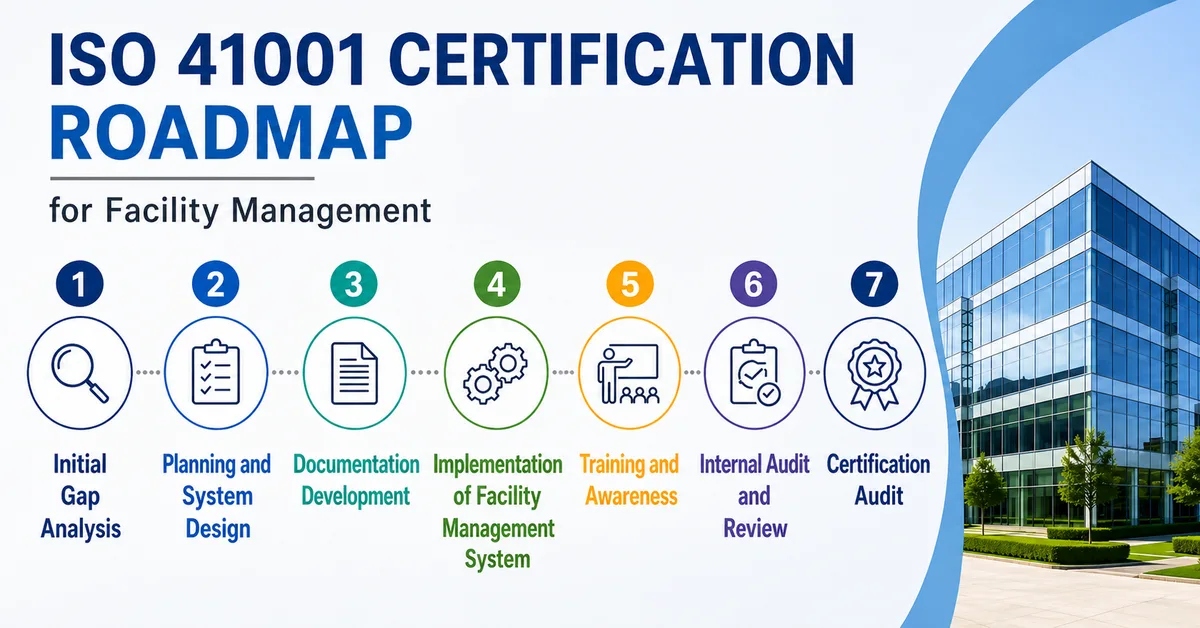
ISO 41001 Certification Roadmap for Facility Management
The ISO 41001 certification roadmap follows a structured approach that organizations should follow to ensure successful implementation:
1. Initial Gap Analysis
Organizations evaluate existing facility management practices against ISO 41001 requirements to identify gaps and improvement areas.
2. Planning and System Design
A customized implementation plan should be created, defining objectives, responsibilities, and timelines for compliance.
3. Documentation Development
Required documents such as policies, procedures, operational controls, and records should be developed to meet ISO standards.
4. Implementation of Facility Management System
Processes should be implemented across departments to ensure smooth facility operations and standard compliance.
5. Training and Awareness
Employees should be trained to understand ISO 41001 requirements and their roles in maintaining system effectiveness.
6. Internal Audit and Review
Internal audits should be conducted to verify system performance and identify corrective actions before certification.
7. Certification Audit
An external certification body evaluates the system to ensure full compliance with ISO 41001 requirements.
ISO 41001 Implementation Requirements for Certification
To achieve certification, organizations should ensure:
- Defined facility management policy aligned with business goals
- Documented operational procedures and controls
- Risk management and performance monitoring system
- Trained personnel and awareness programs
- Internal audit and continuous improvement process
These requirements should be maintained to ensure that facility management remains structured and continuously improving.
Why ISO 41001 Certification Matters for Organizations
ISO 41001 certification provides several strategic benefits:
- Improved facility efficiency and performance
- Reduced operational and maintenance costs
- Better resource and space utilization
- Enhanced workplace safety and comfort
- Strong alignment with organizational objectives
- Improved sustainability and environmental performance
Organizations that implement ISO 41001 should aim for long-term operational stability and competitive advantage.
Why ISO 41001 Consultant is Essential?
Implementing ISO 41001 can be complex without expert guidance. A professional ISO 41001 consultant helps organizations streamline implementation, reduce errors, and ensure faster certification success.
Consultants assist in:
- Gap analysis and roadmap creation
- Documentation and system design
- Employee training and awareness
- Internal audit preparation
- Certification audit support
With expert consultancy, organizations achieve compliance more efficiently and avoid costly implementation mistakes.
Conclusion
The ISO 41001 certification process offers a roadmap to successfully implement an effective facility management system. With the help of strategic implementation processes and consultant services, businesses can achieve certification smoothly while improving operational performance, cost efficiency, and workplace quality.