The cosmetics industry is highly regulated, and maintaining product quality and safety is essential for business success. This ISO 22716 certification provides internationally recognized guidelines for Good Manufacturing Practices (GMP), helping cosmetic manufacturers ensure consistent quality across production, storage, and distribution processes.
This standard is widely accepted across global markets and plays a critical role in meeting regulatory requirements, especially in regions like the European Union.
What is ISO 22716 certification?
The ISO 22716 standard represents international GMP guidelines applicable to cosmetic manufacture, providing for the quality, safety, and compliance of cosmetics during every stage of manufacture, storage, and transportation.
- Manufacture and processing controls
- Quality management systems
- Storage and handling methods
- Personnel hygiene and training
The adoption of ISO 22716 standards provides for effective management and manufacture of cosmetics, preventing the risk of contaminants, errors, and recalls.
Why GMP Compliance is Important in Cosmetics
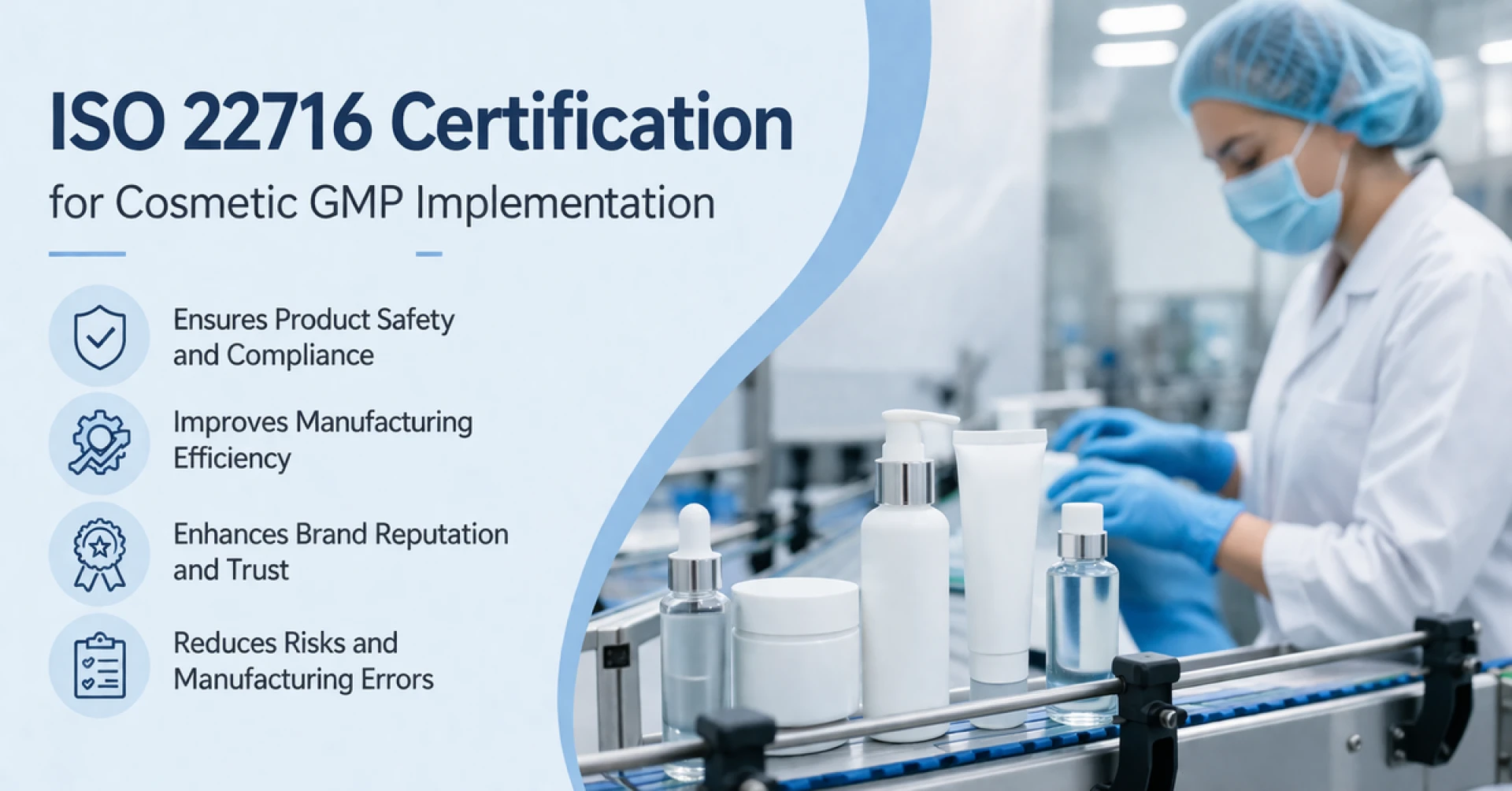
Implementing cosmetic GMP guidelines based on ISO 22716 helps organizations:
- Ensure product safety and regulatory compliance.
- Improving manufacturing efficiency
- Enhance brand reputation and customer trust
- Reduce manufacturing risks and errors
For cosmetic manufacturers, GMP is not just a compliance requirement—it is a strategic advantage that supports global market access and consistent product quality. Additionally, following these guidelines helps companies build strong quality systems that are continually improved over time, making it easier to adapt to changing expectations from regulators and customers alike.
ISO 22716 GMP Step-by-Step Approach
To successfully achieve certification, companies should follow a structured approach similar to top consultants:
1. Gap Analysis
Evaluate your current processes against ISO 22716 requirements to identify missing elements.
2. Documentation Development
Create documents such as SOPs, quality manuals, and recordkeeping related to production, quality assurance, and hygiene.
3. GMP Training
Train employees on GMP principles, hygiene, and operational procedures.
4. Process Implementation
Implement necessary controls during production, warehousing, and transportation operations.
5. Internal Audit
Conduct internal audits to identify non-conformities and areas for improvement.
6. Certification Evaluation
Undergo an audit conducted by a recognized certification body.
This structured approach ensures smooth certification and long-term compliance.
Common Challenges in ISO 22716 Compliance
Some common challenges that organizations face are:
- Lack of proper GMP documentation for cosmetics
- Insufficient staff training
- Poor process standardization
- Difficulty in meeting ISO 22716 audit requirements
These challenges can delay certification and increase compliance risks if not handled properly.
Expert Support for Smooth GMP Implementation
To deal with all the above challenges, experts can prove to be very useful for effective implementation of the GMP practices. The professional help will include:
- Preparing required documentation
- Implementing GMP practices effectively
- Conducting internal audits
- Ensuring audit readiness
To ensure smooth implementation, businesses often rely on ISO 22716 consultants for complete guidance from documentation to certification.
Benefits of ISO 22716 Certification
Implementing ISO 22716 provides long-term benefits:
- Improved product quality and consistency
- Strong compliance with international regulations
- Increased customer confidence
- Better risk management and traceability
It also strengthens your position in global markets by demonstrating adherence to recognized GMP standards.
Conclusion
For cosmetic companies, the application of GMP in accordance with ISO 22716 guidelines is highly recommended as an effective way of ensuring quality, safety, and compliance of products produced. With a well-organized process involving gap assessment, document management, audit, and certification, the company can optimize its activities and minimize potential risks during the entire manufacturing process.
With the right strategy and expert guidance, achieving ISO 22716 certification becomes more efficient, helping organizations strengthen compliance, improve process control, and build long-term trust in global markets.