
Setting the Stage: A New Dawn in Space Exploration
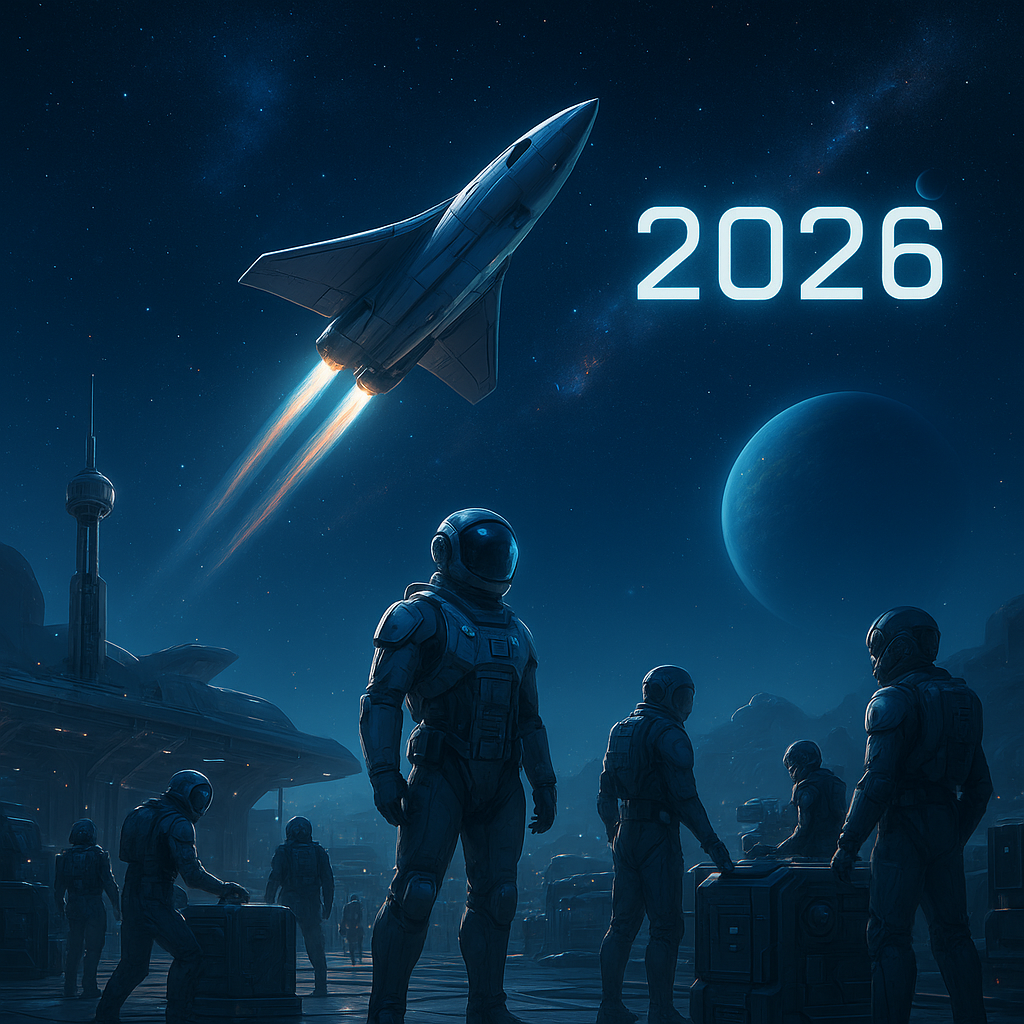
On the morning of March 12, 2026, the world watched as the Artemis IV mission soared beyond Earth’s atmosphere, marking a pivotal moment in humankind’s journey to the Moon and beyond. This mission wasn’t just another launch; it represented a culmination of decades of technological innovation, renewed international collaboration, and the expanding ambitions of private and public space enterprises. The Artemis IV crew, equipped with next-generation habitats and scientific instruments, is set to build upon prior lunar infrastructure, aiming to establish a sustainable presence that will serve as a springboard for Mars and deeper space ventures.
This high-profile mission encapsulates the momentum gained by space exploration over the past few years. The efforts of NASA, the European Space Agency (ESA), China National Space Administration (CNSA), and a growing cohort of commercial players have converged to accelerate humanity’s reach into the cosmos. According to recent statements from NASA, 2026 is shaping up to be one of the most productive years for space exploration in history, with multiple planetary, lunar, and asteroid missions planned or underway.
“The Artemis IV mission is more than a moonshot; it is humanity’s pathway to becoming a multi-planetary species.” – Dr. Elena Ramirez, NASA Deputy Administrator
From Apollo to Artemis: The Legacy and the Leap Forward
To understand 2026’s breakthroughs, we must revisit the foundations laid over half a century ago. The Apollo program of the 1960s and 70s, while monumental, was a series of brief visits to the lunar surface. The infrastructure and technology at the time limited the duration and scope of exploration. Subsequent decades saw a lull in crewed lunar missions, with attention shifting to low Earth orbit operations, notably the International Space Station (ISS).
The Artemis program, initiated in the late 2010s, was conceived to break this cycle and establish a permanent human presence on the Moon. The program’s emphasis on sustainability, international partnerships, and commercial involvement marks a sharp departure from Apollo’s government-centric model. Artemis missions incorporate advanced propulsion systems, modular habitats, and innovative life-support technology designed for long-term habitation and scientific research.
These developments have been complemented by robotic precursors and orbiters that have mapped the lunar surface with unprecedented resolution, guiding site selection for Artemis bases. The integration of AI-driven autonomous systems has enhanced mission safety and efficiency, setting new standards for crewed and uncrewed spaceflight.
2026 Milestones: A Year of Ambitious Missions and Breakthroughs
The current year’s space exploration calendar is densely packed with missions that promise to reshape our understanding of the solar system. Highlights include:
- Artemis IV Lunar Base Expansion: Deployment of the Gateway module and installation of the first lunar greenhouses for in-situ resource utilization experiments.
- Mars Sample Return Launch: The joint NASA-ESA mission to retrieve Martian soil samples, aiming to unlock clues about past life and planetary evolution.
- Jupiter Icy Moons Explorer 2 (JUICE-2): ESA’s follow-up to the 2024 JUICE mission, focusing on Europa’s subsurface ocean.
- Private Sector Breakthroughs: SpaceX’s Starship completing its first fully operational crewed orbital mission, and Blue Origin’s New Glenn advancing heavy-lift capabilities.
- Asteroid Mining Initiatives: Japan’s Hayabusa3 mission pioneering resource extraction technologies on near-Earth objects.
Each of these missions carries scientific ambitions as well as broader strategic and economic implications. For instance, in-situ resource utilization (ISRU) on the Moon and asteroids is critical for reducing Earth-dependence and costs of deep space operations. The Mars Sample Return mission, in particular, is poised to answer fundamental questions about the red planet’s habitability and the origins of life.
“Collecting and analyzing Martian samples on Earth will revolutionize planetary science and astrobiology.” – Dr. Marcus Chen, ESA Chief Scientist
Industry Perspectives: The Role of Public-Private Partnerships
One of the transformative trends in 2026 is the maturation of public-private partnerships (PPPs) in space exploration. NASA’s Commercial Lunar Payload Services (CLPS) program has expanded to include over 20 companies, facilitating payload delivery to the Moon with unprecedented agility and cost-effectiveness. SpaceX’s Starship, a centerpiece of this ecosystem, has demonstrated its capacity to carry heavy payloads and crews beyond Earth orbit.
Meanwhile, Blue Origin, Rocket Lab, and other aerospace startups have scaled their launch cadence and diversified mission profiles, competing to provide affordable and reliable access to space. These commercial players enable government agencies to focus on high-risk, high-reward scientific exploration while outsourcing logistics and transport.
Internationally, China and India are ramping up their own collaborations with commercial entities. The CNSA’s Chang’e-7 mission, slated for late 2026, will combine robotic exploration with privately developed scientific instruments, signaling a similar shift toward integrated partnerships.
These developments have sparked debates about space governance, intellectual property rights, and equitable access to extraterrestrial resources. The Artemis Accords, updated in 2025, attempt to address these issues by fostering transparency, sustainability, and peaceful exploration norms.
Looking Ahead: What the Next Decade Holds
As 2026 unfolds, projections for the next decade in space exploration are both ambitious and cautious. Key areas to watch include:
- Human Missions to Mars: With Artemis establishing lunar infrastructure, Mars crewed missions are expected to follow in the early 2030s, focusing on extended surface operations and habitat testing.
- Space-Based Manufacturing: Advances in microgravity manufacturing could revolutionize satellite production, pharmaceuticals, and materials science.
- Deep Space Telescopes: Next-generation observatories will expand our capabilities to detect exoplanets and study cosmic phenomena.
- Space Tourism and Habitats: Continued growth in orbital hotels and lunar tourism, with regulatory frameworks evolving accordingly.
- Astrobiology and Life Detection: Missions targeting ocean worlds like Europa and Enceladus will intensify the search for extraterrestrial life.
These future prospects hinge on sustained funding, international cooperation, and technological breakthroughs. TheOmniBuzz’s coverage of 2026 trends in space exploration offers detailed insights into these trajectories, highlighting the interconnectedness of scientific discovery and commercial viability.
Case Study: Artemis IV's Lunar Greenhouse Experiment
A notable example of 2026’s innovative approach is the Artemis IV lunar greenhouse experiment. This project, developed jointly by NASA and several biotech firms, tests the viability of growing crops in lunar regolith supplemented with recycled water and nutrients. The experiment aims to demonstrate sustainable food production for long-duration missions.
Early results indicate that certain hardy crops, including lettuce and radishes, can thrive under controlled conditions, despite challenges posed by radiation and low gravity. If successful, this technology will reduce the need for Earth-supplied provisions, lowering mission costs and increasing crew autonomy.
This experiment embodies the shift towards long-term habitation strategies, integrating biology, engineering, and space science. It also underscores the importance of interdisciplinary collaboration, a theme echoed in recent TheOmniBuzz features such as Charting the Next Cosmic Frontier.
Conclusion: A New Chapter Unfolding
2026 stands as a watershed year, reflecting decades of progress and opening new horizons in space exploration. The synergy between governmental agencies and commercial enterprises, the leap from brief lunar visits to sustainable outposts, and the ambitious robotic and crewed missions across the solar system all contribute to a rapidly expanding frontier.
As humanity edges closer to becoming a multi-planetary species, the challenges of technology, policy, and ethics grow more complex. Yet the opportunities for scientific discovery, economic growth, and cultural inspiration remain immense. Space exploration in 2026 is not merely about distant worlds; it is about redefining our place in the universe and the future of civilization itself.