
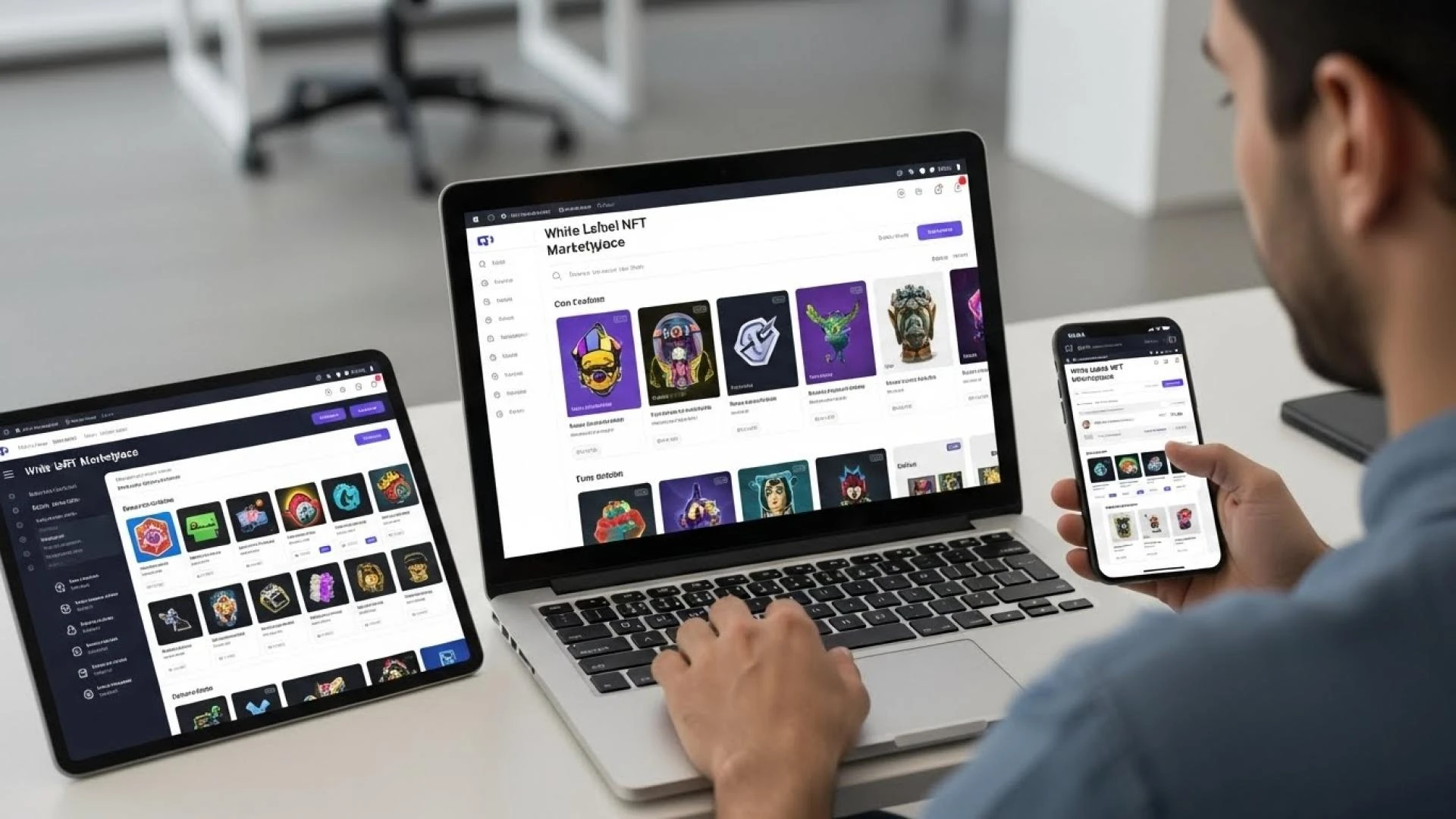
The NFT ecosystem has matured far beyond its early desktop-centric origins. Today’s users interact with digital assets across a wide range of devices, including smartphones, tablets, laptops, large-screen desktops, and even emerging interfaces such as smart TVs and Web3-enabled gaming consoles. In this environment, accessibility is no longer a secondary consideration—it is a core requirement for NFT marketplace success.
White label NFT marketplace solutions play a critical role in enabling cross-platform access through responsive design. Instead of building separate applications for web, mobile, and tablet users, businesses can launch unified platforms that adapt seamlessly to different screen sizes, operating systems, and interaction models. This capability not only accelerates development timelines but also ensures consistent user experiences across devices.
This article explores in depth how white label NFT marketplace solutions support cross-platform accessibility using responsive design principles, the technologies behind them, and why responsive architecture is essential for long-term NFT platform growth.
The Shift Toward Multi-Device NFT Consumption
NFT adoption has expanded rapidly among users who expect digital platforms to work seamlessly across all their devices. Collectors browse NFT collections on mobile phones, creators mint assets from tablets, traders monitor prices on desktops, and communities engage through multiple touchpoints throughout the day.
This shift has created new expectations. Users no longer tolerate platforms that only function well on one device type. A marketplace that performs poorly on mobile risks losing a significant portion of its audience, regardless of how robust it may be on desktop.
White label NFT marketplace solutions are designed with this reality in mind. They prioritize cross-platform compatibility from the foundation, ensuring that businesses do not have to retrofit responsiveness after launch. This approach dramatically reduces friction and improves overall adoption rates.
Understanding Responsive Design in NFT Marketplaces
Responsive design refers to an interface architecture that automatically adapts layout, content, and interactions based on the user’s device characteristics. These include screen size, resolution, orientation, input method, and operating system constraints.
In NFT marketplaces, responsive design must accommodate far more than basic content rendering. The platform must support wallet connections, blockchain transactions, NFT previews, real-time updates, and complex UI components across devices with varying capabilities.
White label NFT marketplace solutions embed responsive design at both the frontend and application logic levels. This ensures that features behave consistently while optimizing performance and usability for each device type.
Why Cross-Platform Access Is Critical for NFT Marketplace Growth
Cross-platform access directly impacts user acquisition, engagement, and revenue generation. A marketplace that is easily accessible on any device naturally attracts a broader audience.
Mobile-first users represent a growing segment of NFT participants, especially in regions where smartphones are the primary computing device. If a marketplace fails to deliver a smooth mobile experience, it excludes a significant user base by default.
White label NFT marketplace solutions remove this barrier by enabling platforms to serve desktop, mobile, and tablet users equally well. This inclusivity strengthens network effects and increases transaction volume across the platform.
Unified Frontend Architecture for Multi-Device Compatibility
One of the most important advantages of white label NFT marketplace solutions is their unified frontend architecture. Instead of maintaining separate codebases for web and mobile experiences, these platforms use responsive frameworks that dynamically adjust layouts and interactions.
This unified approach ensures that updates, feature releases, and bug fixes apply consistently across all devices. Businesses avoid fragmentation, where different platforms fall out of sync over time.
By leveraging responsive frontend technologies, white label NFT marketplaces enable faster iteration cycles and smoother cross-platform performance without duplicating development efforts.
Adaptive NFT Display and Media Rendering Across Devices
NFTs often involve high-resolution images, videos, 3D models, and interactive content. Rendering these assets efficiently across devices presents a significant technical challenge.
White label NFT marketplace solutions address this through adaptive media handling. Assets are automatically optimized based on device capabilities, ensuring fast load times on mobile while preserving visual quality on larger screens.
This adaptability enhances user experience and prevents performance issues that could discourage engagement. Whether a user views an NFT on a smartphone or a desktop monitor, the experience remains visually compelling and functional.
Wallet Connectivity Across Platforms Without Friction
Wallet integration is a core requirement for NFT marketplaces, but wallet behavior varies significantly across devices. Desktop users often rely on browser extensions, while mobile users use in-app wallets or deep linking mechanisms.
White label NFT marketplace solutions abstract these differences through unified wallet connection layers. The platform automatically detects the user’s device and presents the most appropriate connection method without requiring manual configuration.
This seamless wallet experience is essential for maintaining consistency across platforms and reducing drop-off during onboarding and transactions.
Responsive Transaction Flows and Blockchain Interactions
Blockchain transactions introduce unique challenges for responsive design. Users must review transaction details, confirm actions, and track confirmations in real time, regardless of device.
White label NFT marketplaces include responsive transaction flows that adapt to different screen sizes while preserving clarity and security. Buttons, confirmation dialogs, and status updates are optimized for touch interactions on mobile and precision interactions on desktop.
This design consistency reduces user errors and increases confidence in executing NFT transactions across devices.
Cross-Platform User Profiles and Account Management
User profiles, collections, activity history, and analytics must remain accessible and readable across all devices. White label NFT marketplace solutions ensure that these sections are fully responsive and dynamically reorganized for smaller screens.
Rather than hiding features on mobile, responsive layouts prioritize content visibility and navigation efficiency. Users can manage assets, review transactions, and update profiles without limitations, regardless of device.
This continuity strengthens user engagement and reinforces trust in the platform’s reliability.
Admin and Creator Tools with Device-Agnostic Access
Responsive design is not limited to end users. Platform administrators and creators also require cross-platform access to dashboards, analytics, and management tools.
White label NFT marketplace solutions provide responsive admin panels that function effectively on tablets and laptops, enabling teams to manage platforms remotely without sacrificing functionality.
Creators benefit from the ability to upload content, manage listings, and monitor performance from multiple devices, improving productivity and platform loyalty.
Performance Optimization for Different Device Capabilities
Devices vary widely in processing power, memory, and network connectivity. Responsive design alone is insufficient without performance-aware optimization.
White label NFT marketplace solutions incorporate intelligent performance strategies, such as lazy loading, API response optimization, and adaptive caching. These techniques ensure smooth operation even on lower-powered devices or slower networks.
This performance resilience is essential for delivering a consistent user experience across diverse global markets.
Cross-Browser and Cross-OS Compatibility
Responsive design must also account for differences between browsers and operating systems. NFT marketplaces must function reliably across Chrome, Safari, Firefox, and mobile browsers, as well as iOS, Android, Windows, and macOS environments.
White label NFT marketplace solutions undergo extensive cross-browser and cross-OS testing to ensure compatibility. This reduces platform fragmentation and prevents device-specific bugs from undermining user trust.
By addressing these challenges at the infrastructure level, businesses avoid costly post-launch fixes.
Accelerated Development Without Platform Fragmentation
Building separate mobile apps and desktop platforms often leads to fragmented user experiences and increased maintenance overhead. White label NFT marketplace solutions eliminate this issue by supporting responsive design within a single platform architecture.
This unified approach accelerates development while ensuring feature parity across devices. Businesses can focus on growth and innovation instead of managing multiple product versions.
Improved SEO and Discoverability Through Responsive Web Design
Responsive web design also improves search engine visibility. Search engines prioritize mobile-friendly websites, and responsive platforms benefit from higher rankings and better discoverability.
White label NFT marketplaces leverage this advantage by delivering consistent URLs, structured content, and optimized loading speeds across devices.
This visibility drives organic traffic and supports long-term growth strategies.
Supporting Future Devices and Interaction Models
The digital landscape continues to evolve, introducing new devices and interaction models. Responsive design ensures that NFT marketplaces remain adaptable as technology advances.
White label NFT marketplace solutions are built with scalability in mind, enabling platforms to support future devices without fundamental redesigns. This future-proofing protects investments and extends platform longevity.
Security Consistency Across Platforms
Security must remain consistent regardless of device. White label NFT marketplaces ensure that authentication, authorization, and transaction validation function uniformly across platforms.
Responsive design does not compromise security controls. Instead, it integrates them seamlessly into device-specific interfaces, maintaining trust and compliance standards.
Real-World Business Benefits of Cross-Platform NFT Access
Businesses that adopt responsive, cross-platform NFT marketplaces benefit from higher engagement, increased transaction volumes, and improved user retention.
Users appreciate the flexibility to interact with NFTs on their own terms, whether browsing casually on mobile or executing trades on desktop. This flexibility directly translates into stronger platform performance.
White label NFT marketplace solutions enable businesses to capture these benefits without prolonged development cycles.
Conclusion: Responsive Design as a Strategic NFT Marketplace Advantage
Cross-platform access is no longer optional in the NFT ecosystem. It is a strategic necessity that determines whether platforms can scale, compete, and retain users over time.
White label NFT marketplace solutions empower businesses to deliver responsive, device-agnostic experiences without rebuilding core systems. By integrating responsive design at every level—from frontend interfaces to blockchain interactions—these platforms ensure consistent performance, usability, and security across devices.
As NFTs continue to integrate into mainstream digital experiences, platforms that prioritize cross-platform accessibility will lead the market. White label NFT marketplaces provide the fastest and most reliable path to achieving this goal while preserving flexibility, scalability, and long-term growth potential.