Choosing a crypto wallet is about more than finding an application with a clean interface. One of the most important factors is compatibility.
A wallet may look excellent, but if it does not support the cryptocurrencies, blockchain networks or services you use, it can quickly become frustrating. Compatibility affects how easily you can receive, send, swap and manage your digital assets.
For new users especially, understanding wallet compatibility before moving funds can prevent unnecessary problems. It can also help you choose a wallet that fits your cryptocurrency activities rather than forcing your activities to fit the wallet.
What Does Wallet Compatibility Mean?
Wallet compatibility refers to how well a wallet works with particular cryptocurrencies, blockchain networks, applications and devices.
For example, a wallet may support Ethereum but not every token available on the Ethereum network. Another wallet may support several networks but have limited compatibility with certain applications.
Compatibility can also include operating systems, browsers, mobile devices and payment features.
In simple terms, a compatible wallet should support the assets and services you actually want to use.
Cryptocurrency Support Matters
The first thing to check is whether your wallet supports the cryptocurrency you own.
Do not assume that a wallet supports every digital asset simply because it supports one popular cryptocurrency.
Different assets can operate on different blockchain networks. Some tokens can also exist on multiple networks. Before transferring funds, check both the asset and the network supported by the receiving wallet.
Network Compatibility Can Prevent Costly Mistakes
Blockchain network compatibility is particularly important when sending cryptocurrency.
Suppose you want to transfer a token that is available on several networks. Your wallet and the receiving service must support the same network for the transfer to work as intended.
Choosing the wrong network can cause delays or, depending on the situation, make funds difficult to recover.
Before confirming a transaction, check the cryptocurrency, network, recipient address and transaction fee.
Do not rely only on the name of the token. The network matters too.
Multi-Chain Compatibility Adds Flexibility
If you use several blockchain ecosystems, a multi-chain wallet can reduce the need to manage multiple separate applications.
Instead of switching between different wallets, you may be able to manage supported assets across several networks from one interface.
This can make checking balances and organizing transactions more convenient.
However, multi-chain does not mean universal compatibility. Always check whether the wallet supports the specific networks and assets you need.
Compatibility With Blockchain Applications
Wallet compatibility also affects how easily you can use blockchain applications.
Some applications require a specific wallet connection or support only particular networks. If your wallet is not compatible, you may not be able to connect or complete the actions you want.
For example, a user might find a decentralized application they want to use but discover that their wallet does not support the required blockchain.
Before choosing a wallet, consider the applications and services you are likely to use.
Device Compatibility Matters Too
Your wallet should work reliably on the devices you use.
Mobile wallets should support your phone's operating system, while desktop wallets need to work with your computer system. Browser-based wallets may also depend on a supported web browser.
Check the wallet's official compatibility information before installing it.
Keeping your device and wallet software updated is also important. Older software may not support newer features or security improvements.
Hardware Wallet Compatibility
Hardware wallets offer another storage option, particularly for people who want to keep long-term holdings away from everyday online activity.
However, hardware wallet compatibility can vary. A device may support certain cryptocurrencies while requiring additional software to manage particular assets.
If you are considering this approach, research how to buy a hardware wallet for crypto storage before making a purchase.
Check the supported assets, networks, operating systems and companion applications.
Compatibility With Swapping and Buying Services
Some wallets include built-in options for buying or swapping cryptocurrency.
These features can be convenient, but availability may vary depending on your country, the asset involved and the service provider.
Before using a built-in swap or purchase feature, check the exchange rate, fees and supported assets.
A wallet can have excellent core functionality but limited availability for certain services in your region.
Compatibility Can Affect Crypto Spending
If you want to use cryptocurrency for everyday purchases, compatibility becomes important again.
Some wallet services may connect supported digital assets with spending options. For example, a virtual crypto card can allow eligible users to spend supported cryptocurrency through a card network at participating merchants.
However, not every cryptocurrency will necessarily be supported. Check which assets can be used, what fees apply and whether the service is available in your country.
What Happens When a Wallet Is Not Compatible?
An incompatible wallet does not necessarily mean your cryptocurrency is lost.
You may simply be unable to view, manage or transfer a particular asset using that wallet. In some cases, another compatible wallet or service may be required.
The important thing is to avoid sending funds before checking compatibility.
If you discover that a wallet does not support the network you need, do not experiment with a transfer simply to see whether it works.
How to Check Wallet Compatibility
Before choosing a wallet, create a simple compatibility checklist.
Check whether it supports:
- The cryptocurrencies you own.
- The blockchain networks you use.
- The applications you want to access.
- Your mobile or desktop operating system.
- Your preferred browser, if required.
- Buying and swapping services you need.
- Any spending or card features you plan to use.
Always verify this information using the wallet provider's current documentation because supported assets and services can change.
Final Thoughts
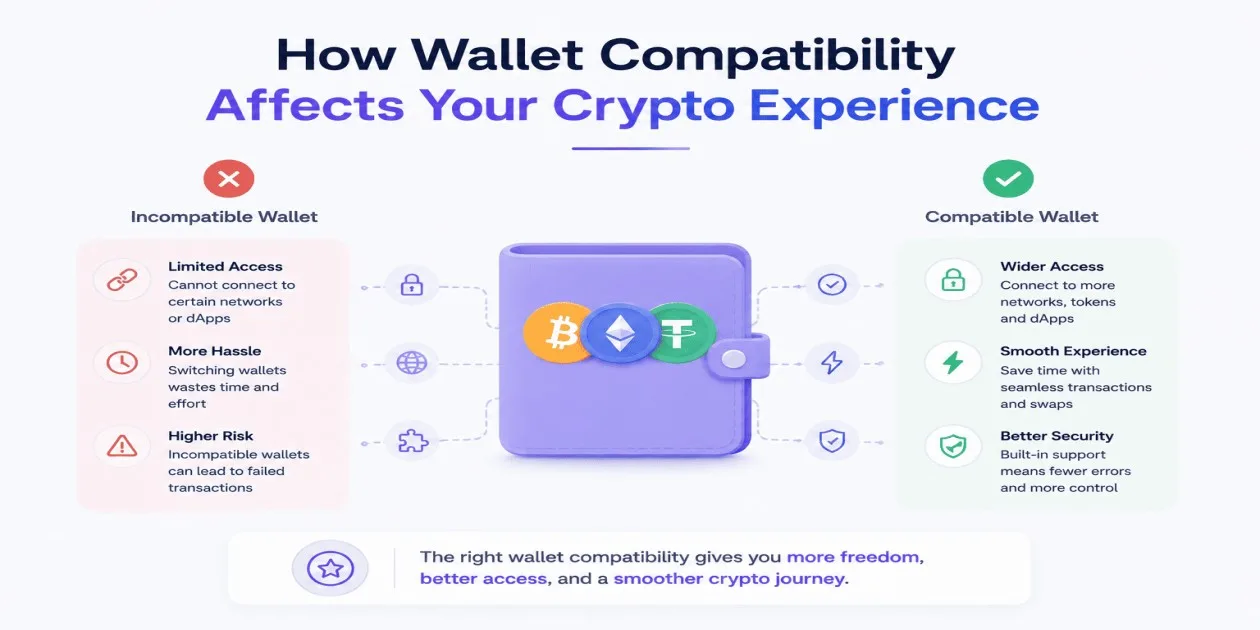
Wallet compatibility can have a major effect on your cryptocurrency experience. A wallet that supports your assets, networks, devices and preferred services can make crypto management much simpler.
On the other hand, choosing a wallet without checking compatibility can lead to confusion, failed transactions and unnecessary wallet switching.
The best approach is to start with your own needs. Identify the cryptocurrencies and blockchain networks you use, consider the services you want to access and then choose a wallet that supports them.
Compatibility may not be the most exciting wallet feature, but it is one of the most practical. Getting it right from the beginning can save time, reduce mistakes and make managing cryptocurrency much easier.