The blockchain and cryptocurrency space has grown far beyond its roots as a niche financial experiment. Today, decentralized finance (DeFi), non-fungible tokens (NFTs), real-world asset (RWA) tokenization, decentralized autonomous organizations (DAOs), and play-to-earn ecosystems have proven that tokenization can revolutionize industries. At the heart of this transformation are tokens digital representations of value, assets, or rights on a blockchain.
For startups, entrepreneurs, and enterprises alike, building a token is often the first step toward bringing a Web3 vision to life. Yet, translating that vision into a functioning, secure, and scalable token economy requires far more than just writing a smart contract. This is where token development services play a critical role. These services provide the technical expertise, strategic planning, and ongoing support necessary to take a project from concept to execution and beyond.
1. Understanding Token Development Services
Before diving into their impact, it’s important to understand what token development services encompass. Broadly, these services cover the end-to-end process of token creation, deployment, and management. This includes:
- Token design and architecture – choosing the right token type (utility, governance, security, stablecoin, RWA tokens, NFTs, etc.) based on project goals.
- Smart contract development – writing and deploying the blockchain code that governs token behavior.
- Blockchain selection – identifying whether Ethereum, Solana, Binance Smart Chain, Polygon, or another blockchain is best suited for scalability, cost-efficiency, and community support.
- Security auditing – ensuring tokens are free from vulnerabilities and hacks.
- Wallet and exchange integration – enabling users to store, transfer, and trade tokens seamlessly.
- Compliance and regulation support – navigating legal frameworks across different jurisdictions.
- Ongoing maintenance and upgrades – updating tokenomics or governance mechanisms as the project evolves.
These services go far beyond technical coding; they combine business strategy, legal awareness, and long-term sustainability planning.
2. Turning Vision into Strategy: The First Step
Every project begins with a vision. It could be:
- A startup aiming to tokenize renewable energy credits.
- A gaming company building a play-to-earn ecosystem.
- A financial platform creating a stablecoin for cross-border payments.
- A DAO issuing governance tokens for decentralized decision-making.
However, visions without clear strategies often fail. Token development services help founders refine their ideas by aligning them with practical tokenomics models.
For example, suppose a startup wants to issue tokens to fundraise through an Initial Coin Offering (ICO). Token developers will:
- Analyze the target market and potential user base.
- Recommend the right fundraising model (ICO, IDO, STO, or private token sale).
- Design token allocation models (for team, investors, community, treasury).
- Establish vesting schedules to prevent early sell-offs and ensure long-term commitment.
This strategic guidance ensures that the project has a sustainable economic foundation before a single line of code is written.
3. Blockchain Selection: Building on the Right Foundation
Choosing the right blockchain is one of the most critical decisions in token development. Each blockchain offers trade-offs in terms of scalability, transaction costs, and ecosystem support.
- Ethereum: The most popular platform for token launches, with a massive developer ecosystem, but relatively high gas fees.
- Solana: Known for high throughput and low fees, making it ideal for gaming and DeFi projects requiring scalability.
- Binance Smart Chain (BSC): Fast, cost-efficient, and backed by Binance’s liquidity ecosystem.
- Polygon: A Layer 2 solution on Ethereum, offering scalability with lower fees.
- Avalanche, Cardano, Polkadot, and others: Each with unique strengths for interoperability, security, or specialized applications.
Token development services assess a project’s needs, budget, and long-term goals before recommending the right blockchain. Without this step, projects risk facing scalability bottlenecks or high user costs that could derail adoption.
4. Smart Contract Development: The Core of Token Functionality
At the heart of every token lies a smart contract—self-executing code that governs how the token behaves. A well-written contract ensures:
- Transparency – rules are visible and verifiable by anyone.
- Automation – transfers, staking rewards, or governance votes execute without intermediaries.
- Security – prevents malicious activities like double-spending or unauthorized minting.
Token development services provide skilled blockchain developers who create secure, efficient, and customizable smart contracts. They also implement standards like:
- ERC-20 (Ethereum) for fungible tokens.
- ERC-721 / ERC-1155 for NFTs.
- BEP-20 (Binance Smart Chain) for fungible tokens.
- SPL (Solana) for Solana-based tokens.
By following proven frameworks, projects gain tokens that are interoperable with wallets, exchanges, and DeFi protocols.
5. Security: Protecting the Token and Community
Security is non-negotiable in token development. Hacks, rug pulls, and smart contract exploits have cost investors billions of dollars in the last few years. A single vulnerability can destroy a project’s credibility overnight.
Professional token development services integrate security auditing at every stage. This includes:
- Code audits to detect vulnerabilities.
- Penetration testing to simulate attacks.
- Bug bounty programs to crowdsource additional security checks.
- KYC/AML compliance to prevent fraudulent activities during fundraising.
By prioritizing security, projects gain the trust of investors, users, and regulators, laying the groundwork for long-term success.
6. Tokenomics: Designing Value and Sustainability
Creating a token is not just about writing code—it’s about building an economy. Tokenomics (token economics) determines how tokens are distributed, used, and valued within an ecosystem.
Good tokenomics ensure:
- Utility – tokens serve real purposes like accessing services, voting, or earning rewards.
- Scarcity and demand balance – supply is managed to prevent inflation while maintaining liquidity.
- Community incentives – rewarding early adopters, stakers, and contributors.
- Governance alignment – allowing token holders to influence project direction.
Token development services design models that ensure long-term sustainability rather than short-term speculation. For instance, they may recommend burn mechanisms (reducing supply over time), staking rewards, or dual-token models (one for governance, one for utility).
7. Legal and Compliance Guidance
One of the biggest challenges in token development is navigating the legal landscape. Regulatory bodies worldwide are increasingly scrutinizing token projects. Whether a token qualifies as a security or utility can determine whether it faces strict compliance requirements.
Token development services often partner with legal experts to:
- Define whether a token falls under securities law.
- Structure token sales to comply with KYC/AML requirements.
- Ensure global compliance for cross-border fundraising.
- Draft clear whitepapers, disclaimers, and terms of use.
This step protects projects from costly lawsuits, fines, or shutdowns.
8. Integration with Wallets, Exchanges, and Ecosystems
Even the best-designed token is useless without accessibility. Token development services help integrate tokens with:
- Wallets like MetaMask, Trust Wallet, Phantom, or Ledger.
- Exchanges (both centralized like Binance, and decentralized like Uniswap or Raydium).
- DeFi protocols for staking, lending, and liquidity mining.
- NFT marketplaces if the project involves non-fungible assets.
By ensuring smooth interoperability, tokens become usable, tradable, and accessible, boosting adoption.
9. Marketing and Community Building Support
Technology alone doesn’t build successful token projects—communities do. Token development services often extend to marketing and community management, including:
- Creating compelling websites and whitepapers.
- Running token launch campaigns through ICOs, IDOs, or launchpads.
- Building and moderating communities on Discord, Telegram, and Twitter (X).
- Leveraging influencers, press releases, and AMA sessions to generate hype.
Strong communities give tokens network effects, where their value grows as more users participate.
10. Post-Launch Support and Evolution
Launching a token is not the finish line—it’s the beginning. Markets evolve, regulations change, and user demands shift. Token development services offer post-launch support such as:
- Upgrading smart contracts to fix bugs or add features.
- Adjusting tokenomics to maintain stability.
- Adding cross-chain support for expanding ecosystems.
- Continuous auditing to reinforce security.
This adaptability ensures that projects stay relevant and competitive long after their launch.
11. Case Studies: From Vision to Reality
a) Chainlink (LINK)
Initially, Chainlink’s vision was to solve the “oracle problem”—bringing real-world data to smart contracts. Token development services helped structure its utility token LINK, which incentivizes data providers. Today, Chainlink is a cornerstone of DeFi infrastructure.
b) Axie Infinity (AXS & SLP)
Axie Infinity transformed from a gaming concept into a billion-dollar ecosystem by leveraging dual-token models. Token developers helped design tokenomics that rewarded players while maintaining a sustainable economy.
c) MakerDAO (MKR & DAI)
MakerDAO’s vision was a decentralized stablecoin. With robust token development and governance mechanisms, DAI has become one of the most trusted stablecoins in DeFi.
These examples show how token development services turn bold ideas into thriving ecosystems.
12. Why Projects Fail Without Token Development Services
Without professional guidance, many token projects face:
- Weak tokenomics that collapse under market pressure.
- Poor security leading to hacks and exploits.
- Non-compliance with regulations, resulting in shutdowns.
- Low adoption due to lack of exchange/wallet integration.
- Community mistrust because of transparency issues.
This highlights why DIY token creation is risky for serious projects. Professional token development services provide the expertise needed to avoid these pitfalls.
Conclusion: From Vision to Reality
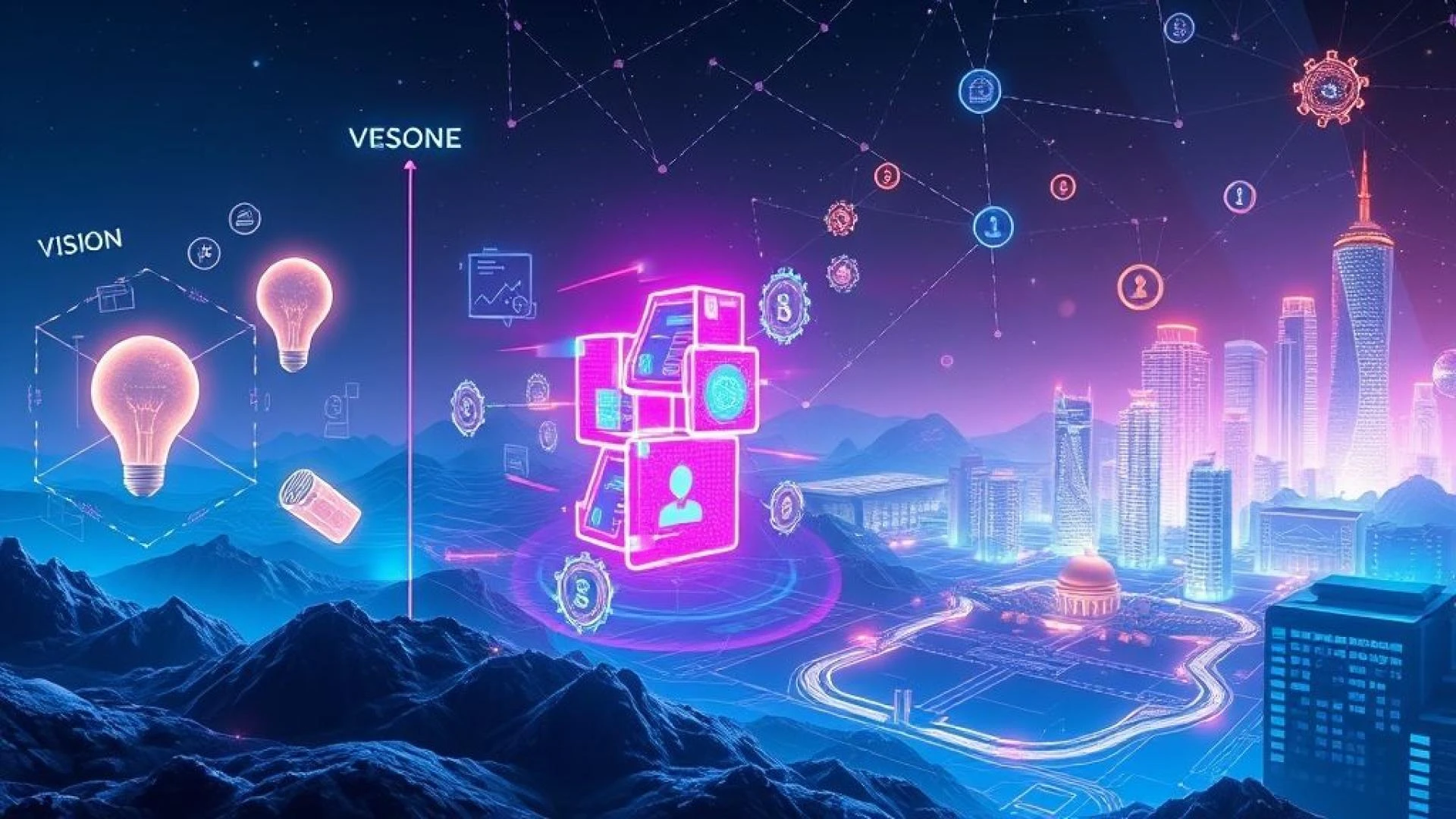
In the Web3 era, tokens are not just digital assets they are the building blocks of new economies, communities, and innovations. But bringing a tokenized vision to reality requires more than passion; it demands expertise, precision, and foresight. Token development services bridge the gap between vision and execution. They provide the technical infrastructure, strategic guidance, security, compliance, and community support necessary to build sustainable and impactful projects. For entrepreneurs, startups, and enterprises looking to enter the blockchain space, partnering with professional token developers can mean the difference between a short-lived experiment and a transformative ecosystem.