
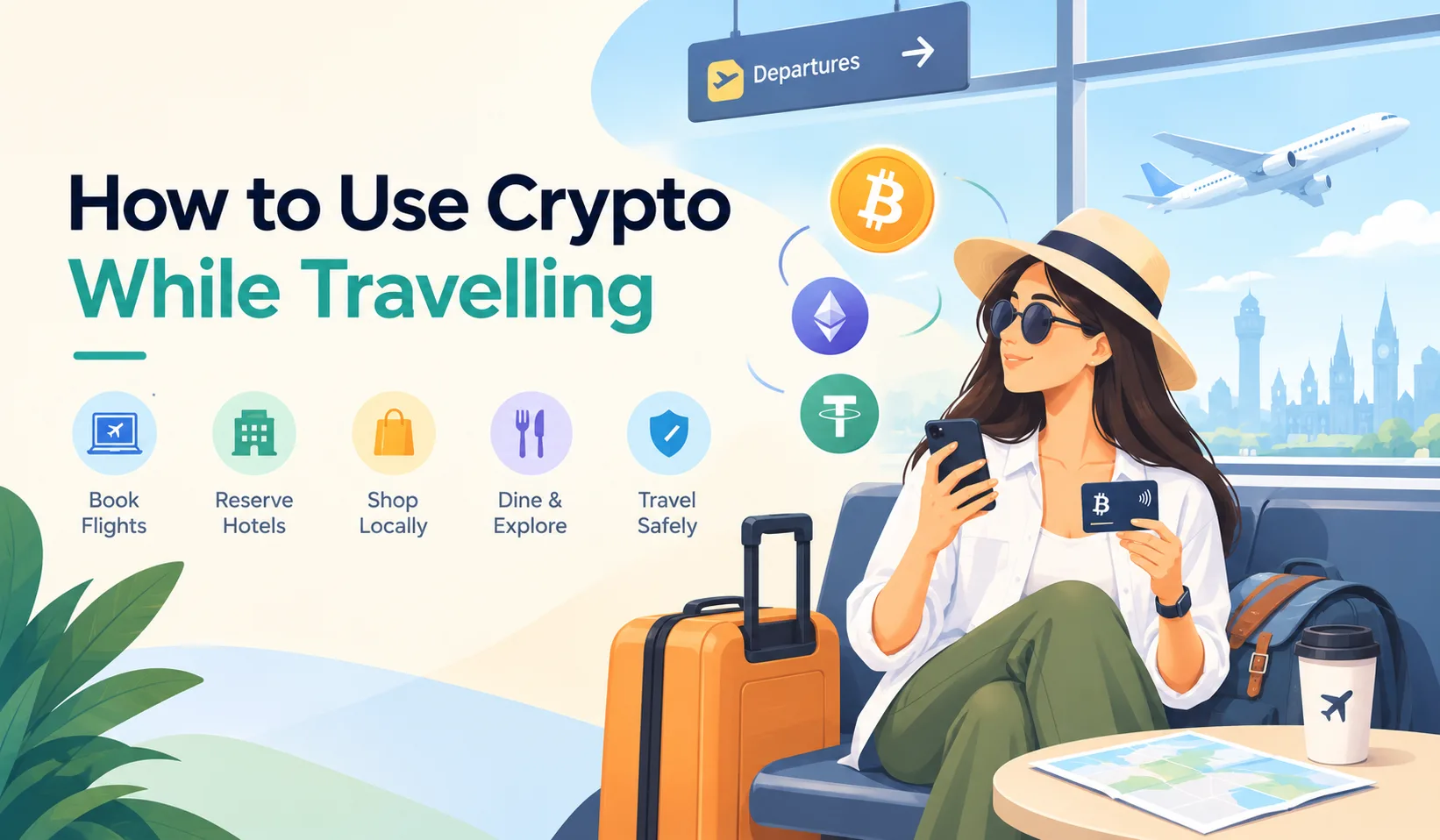
Travelling with cryptocurrency can give you more ways to manage your money, pay for eligible purchases and access digital assets while abroad. Depending on your destination and the services available, you may be able to use crypto for hotel bookings, flights, online shopping and some everyday expenses.
However, cryptocurrency is not accepted everywhere. You need to understand which payment methods work at your destination, how conversion fees apply and what to do if a payment fails.
This guide explains how to use crypto while travelling, the payment options available and the precautions to take before leaving home.
1. Check Where Crypto Payments Are Accepted
Before your trip, research whether businesses in your destination accept cryptocurrency directly. Some travel booking platforms, hotels and online retailers support selected digital assets, while many local businesses still prefer traditional payment methods.
Bitcoin, Ethereum, USDT and USDC are among the assets supported by some crypto payment services. However, accepted currencies and networks vary by provider.
You can look for crypto payment options when booking accommodation, buying tickets or paying for travel-related services online.
Before making a payment, check:
- Which cryptocurrencies the business accepts.
- Whether the correct blockchain network is supported.
- Any minimum payment amount.
- The transaction fee and exchange rate.
- The cancellation and refund policy.
Never assume that a business accepts crypto just because it operates internationally. Confirm the payment options before sending funds.
2. Use a Crypto Card for Everyday Spending
A crypto card can be a practical option when you want to pay at merchants that accept its card network but do not accept cryptocurrency directly.
Depending on the provider, you may be able to use a physical or virtual crypto card for meals, shopping, transport and other eligible purchases. The card provider's rules determine how your cryptocurrency is converted and when funds become available for spending.
For example, some services require you to top up a separate card balance before making a purchase. Others use different conversion arrangements.
Oppi Wallet combines a self-custody crypto wallet with a virtual crypto card. Eligible users can top up the card with supported assets such as BTC, ETH, USDT and USDC. The crypto is converted into a spendable balance during the top-up process, subject to the applicable terms and availability.
3. Book Flights and Hotels With Crypto
Flights and accommodation can account for a large part of a travel budget. Some booking services accept cryptocurrency directly, while others may allow eligible card payments.
When hotel and flight booking with crypto, compare the available payment methods and review the final price before confirming your reservation.
If you plan to pay with crypto, check whether the quoted price is fixed for a specific period. Cryptocurrency prices can change, and payment instructions may expire if you do not complete the transaction within the required time.
You should also review the booking provider's refund and cancellation terms. A refund for a crypto payment may be handled differently from a card refund, and the amount returned in your local currency may differ because of price movements or provider rules.
4. Consider Stablecoins for Travel Spending
Stablecoins such as USDT and USDC are designed to maintain a value linked to the US dollar. Some travellers use them to hold digital funds or make payments through services that support these assets.
Compared with cryptocurrencies that can experience larger price movements, stablecoins may make it easier to estimate the dollar value of your balance. However, they are not risk-free, and their market price can deviate from the intended peg.
If you plan to use stablecoins while travelling, consider the following:
- Confirm that the payment service supports your chosen stablecoin.
- Check which blockchain network is required.
- Review conversion and withdrawal fees.
- Keep enough funds available for unexpected expenses.
- Understand how the service handles refunds and failed payments.
Also, remember that a stablecoin linked to the US dollar does not automatically remove foreign exchange costs when you spend in another currency.
5. Understand Fees Before You Pay
Crypto payments can involve several charges. Knowing what to expect can help you avoid unnecessary expenses during your trip.
Blockchain network fees: These may apply when you send cryptocurrency directly from your wallet.
Conversion fees: A provider may charge for converting crypto into another asset or a card spending balance.
Foreign transaction fees: Your card provider may charge for purchases made in a different currency.
Exchange-rate mark-ups: The rate used for conversion may include an additional cost.
ATM withdrawal fees: Cash withdrawals may involve charges from both the card provider and the ATM operator.
Not every payment method includes all these fees. Review the provider's current fee schedule and compare the total cost with other available payment options.
When paying by card abroad, you may be offered the choice between the local currency and your home currency. Choosing the local currency can help you avoid dynamic currency conversion, although your card provider may still apply its own exchange rate or fees.
6. Keep a Backup Payment Method
Crypto payment services may not be available in every destination, and some merchants may decline your card or payment method.
For this reason, avoid relying entirely on cryptocurrency during a trip. Carry a suitable backup card and some local cash where appropriate.
A backup payment method can be especially useful for transport, small businesses, emergencies and situations where internet access is limited.
Before departure, make sure you can access your wallet and card account securely. Keep your provider's official support details available in case you need to freeze a card or report an issue.
7. Protect Your Wallet and Crypto Funds
Travelling can expose you to unfamiliar networks, public devices and unexpected messages. Protecting your wallet is just as important abroad as it is at home.
Follow these basic precautions:
- Keep your recovery phrase private and stored securely.
- Never share private keys or recovery information with support staff.
- Use official wallet applications and websites.
- Verify payment addresses and blockchain networks before sending funds.
- Avoid signing transactions you do not understand.
- Enable available account security features.
- Review transactions regularly and report suspicious activity promptly.
If you use a self-custody wallet, you are responsible for protecting your recovery phrase. Losing it may mean losing access to your assets, so do not store it in an easily accessible note on your phone.
It is also wise to avoid accessing your wallet through links in unexpected emails or messages. Open the official app or enter the verified website address yourself.
8. Understand Local Rules and Tax Requirements
Rules concerning cryptocurrency vary between countries. Some jurisdictions permit crypto payments, while others restrict certain activities or impose specific requirements.
Spending cryptocurrency may also have tax implications. In some countries, using crypto to buy goods or services can count as a disposal of the asset and may create a taxable gain or loss.
Before travelling, check the relevant rules for your home country and destination. Keep records of purchases, transaction dates, amounts, fees and exchange rates where appropriate.
If you are unsure about your obligations, seek advice from a qualified tax professional familiar with cryptocurrency regulations.
9. Prepare Your Crypto Before Departure
A little preparation can make spending crypto more straightforward while travelling.
Before leaving, check that your wallet and card are working, complete any required account verification and confirm that your destination is supported. Review card limits, top-up requirements and payment fees.
It is also helpful to estimate your travel expenses and decide which payments you intend to make with crypto. You may prefer to use a card for eligible purchases, direct crypto payments for supported bookings and traditional payment methods as a backup. Also this guide on best crypto cards for travel can help you select the right card.
Keep enough accessible funds for emergencies, and avoid transferring large amounts to unfamiliar services simply because they advertise crypto payments.
Final Thoughts
Using crypto while travelling is possible through direct payments, crypto cards and selected travel booking services. The best option depends on your destination, the assets you hold and the payment methods accepted by the businesses you use.
Before your trip, check availability, fees, conversion methods and refund policies. Protect your wallet, carry a backup payment method and understand any local rules that apply.
With careful planning, cryptocurrency can become one of several payment options you use while travelling, rather than something you depend on in every situation.
Article you might like :
How to Spend Crypto in Stores: What You Need to Know
How to Pay Bills and Subscriptions With Crypto
Frequently Asked Questions
Can I use cryptocurrency in another country?
Yes, where local rules permit it and the merchant or payment provider supports your chosen cryptocurrency. Acceptance varies by country and business, so confirm payment options before travelling.
Can I use a crypto card to pay for hotels and flights?
You may be able to use a crypto card if the booking provider accepts its card network and the transaction meets the card issuer's rules. Some booking services also accept cryptocurrency directly.
Is it better to travel with Bitcoin or stablecoins?
It depends on your needs and the payment methods available. Bitcoin may be useful where directly accepted, while stablecoins such as USDT and USDC are designed to track the US dollar. Both have risks, and provider fees can affect the total cost.
Do I need internet access to spend crypto while travelling?
Many crypto wallet transactions and card account functions require internet access. A card may support some offline or contactless transactions depending on its technology and issuer, but you should not assume every payment will work without connectivity.
Is spending cryptocurrency abroad taxable?
It may be. Some countries treat spending crypto as a taxable disposal, while rules differ across jurisdictions. Check the tax requirements that apply to your circumstances and keep suitable transaction records.