
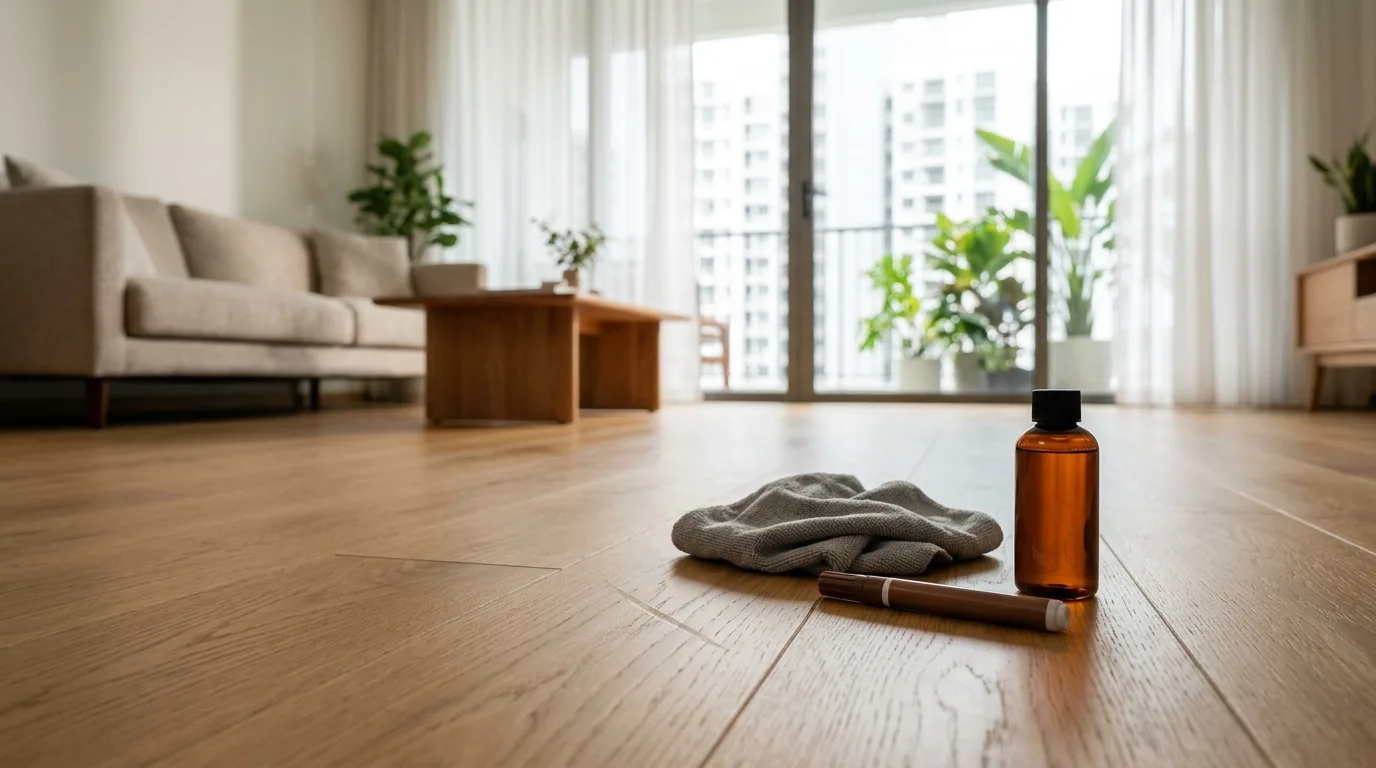
Wood flooring can instantly make a home feel warmer, more elegant and inviting, but even well-maintained floors can develop scratches over time from moving furniture, pet claws, shoes, toys and everyday foot traffic.
The good news is that not every scratch means you need to replace the entire floor. Removing scratches from a wood floor starts with identifying how serious the damage is and what type of flooring you have. Light marks may only need gentle cleaning and polishing, while deeper scratches can require touch-up products or professional repair. Using the wrong cleaning method or an unsuitable product can sometimes make the damage more noticeable. For Singapore homeowners, protecting flooring is especially important because homes often experience frequent movement between indoor and outdoor spaces, humidity changes and heavy daily use.
This guide explains how to assess scratches, remove minor marks, repair more serious damage, prevent new scratches, and understand the key differences between genuine timber flooring and modern wood-look flooring options.
What Causes Scratches on Wood Floors?
Before repairing a scratch, it helps to understand how it happened. Scratches usually occur when something harder than the flooring surface comes into contact and leaves a visible mark.
Common causes include:
• Moving chairs, tables and cabinets without lifting them
• Furniture with missing or damaged protective pads
• High heels or hard-soled shoes
• Pet claws
• Small stones or grit trapped under footwear
• Children's toys
• Heavy objects being dragged across the floor
• Incorrect cleaning tools
• Everyday wear and tear
Even small particles like sand and dirt can act like abrasives when repeatedly walked across a floor, which is why regular cleaning is an important part of protecting wood flooring.
First, Identify How Deep the Scratch Is
The most important step in removing scratches from a wood floor is determining the scratch's severity.
Light Surface Scratches
Light scratches generally affect the finish rather than penetrating deeply into the flooring, appearing as fine lines that are particularly noticeable when light shines across the floor. You can often improve these with gentle cleaning, wood-floor-safe polish, manufacturer-approved maintenance products, or appropriate touch-up solutions.
Medium Scratches
Medium scratches may penetrate through part of the protective finish and become more visible from different angles. Depending on the flooring material, a suitable wood repair marker, wax filler or touch-up product may help disguise the damage.
Deep Scratches
Deep scratches may expose the underlying timber or create a noticeable groove, and simple cleaning will not remove this kind of damage. Professional sanding, refinishing, filling or board replacement may be necessary. If you are unsure how deep a scratch is, avoid aggressive DIY methods until you have identified the flooring type and finish.
How to Remove Light Scratches from a Wood Floor
For minor scratches, start with the least aggressive method possible — the goal is to improve the appearance without damaging the surrounding finish.
1. Clean the Area Thoroughly
Start by removing dust, dirt, and grit from the scratched area with a soft microfibre mop or a vacuum cleaner designed for hard floors. Avoid dragging a vacuum head with a rough or damaged base across the surface, as any remaining grit can create additional scratches during cleaning. After cleaning, let the area dry completely before applying any maintenance product.
2. Use a Suitable Wood Floor Cleaner
Use a cleaning product recommended for your wood flooring type, and avoid excessive water, especially on flooring sensitive to moisture. A damp, well-wrung microfibre cloth is generally safer than soaking the floor, so always follow the manufacturer's care instructions.
3. Try a Suitable Floor Polish
If the scratch is mainly in the surface finish, a suitable wood-floor polish or maintenance product may help reduce its visibility. Avoid using furniture polish or household products simply because they're labelled for wood, since flooring finishes differ significantly and an unsuitable product may leave residue or affect the surface's appearance.
How to Remove Deeper Scratches from a Wood Floor
Deeper scratches need more care because the damage may extend beyond the protective coating.
Use a Wood Repair Marker
For coloured timber surfaces, a repair marker can sometimes disguise a scratch by matching the surrounding colour. Choose a shade that closely matches the flooring, test it in an inconspicuous area first, and apply a small amount rather than covering the entire area immediately. Its purpose is mainly cosmetic; it makes a scratch less noticeable but does not restore the timber to its original condition.
Try a Wax Repair Filler
Wax fillers can work for small grooves or deeper surface damage; you place the filler into the damaged area and level it according to the product instructions. Match the colour carefully, as a filler that is significantly darker or lighter than the surrounding floor can make the repair more noticeable.
Consider Professional Refinishing
When scratches cover a large area or penetrate deeply into the finish, professional refinishing may be more appropriate. Depending on the flooring construction and condition, this may involve sanding the surface, treating damaged areas and applying a new protective finish. However, not all wood-look flooring can be treated the same way, so always confirm the flooring construction before sanding.
Can You Use Sandpaper to Remove Scratches?
Sanding can be appropriate for genuine timber flooring, but it shouldn't be treated as a universal DIY solution. Using coarse sandpaper incorrectly can remove too much material, create an uneven patch or damage the surrounding finish — for a small scratch, aggressive sanding may even create a larger repair area than the original problem. If the scratch is deep and you're considering sanding, check the manufacturer's recommendations or consult a flooring professional first, especially since materials like engineered timber have a limited wear layer that leaves little room for error.
How to Remove Scratches from Wood-Look Flooring
Not all wood-look flooring is solid timber. Modern homes often use engineered wood, laminate, or vinyl flooring designed to mimic natural wood, and that distinction matters when choosing a repair method.
Vinyl Wood Flooring
Wood vinyl flooring has a printed decorative layer designed to replicate the appearance of timber, so sanding or timber-specific repair methods are generally inappropriate. For minor marks, follow the manufacturer's recommended cleaning and maintenance procedure; for significant damage, repairing or replacing the affected plank is usually more appropriate than sanding it. Similar principles apply to stone vinyl flooring, which also relies on a printed or textured decorative layer rather than natural material.
Laminate Flooring
Laminate flooring also has a decorative surface layer and a protective wear layer, and deep sanding can damage both. Repair kits designed specifically for laminate flooring may suit minor damage better.
Engineered Wood Flooring
Engineered wood contains a real timber wear layer over a constructed core. Some products can be refinished, while others have a thinner top layer that limits how much sanding you can do, so always check the product specifications before attempting a repair.
What Should You Avoid When Removing Scratches?
When searching for ways to remove scratches from a wood floor, you may come across many DIY remedies; some household methods may seem simple but can create additional problems.
Avoid:
• Excessive water
• Abrasive cleaning powders
• Steel wool
• Rough scrubbing pads
• Strong household chemicals
• Unapproved furniture polish
• Aggressive sanding
• Scrubbing the damaged area repeatedly
• Using a repair product without testing it first
A flooring surface is not necessarily protected just because it looks durable, since different finishes and materials respond differently to cleaning and repair products.
Does Wood Flooring Need Regular Maintenance?
Yes, regular maintenance helps preserve both appearance and surface protection. A simple maintenance routine can include:
1. Removing dust and loose dirt regularly
2. Cleaning spills promptly
3. Using suitable flooring products
4. Avoiding excessive moisture
5. Checking furniture protection pads
6. Keeping high-traffic areas clean
7. Following the manufacturer's maintenance instructions
The correct maintenance routine depends on the specific flooring material and finish.
When Should You Replace a Damaged Plank?
Not every scratch requires replacement. However, consider replacement when the damage is extensive, the decorative layer is severely damaged, or the affected plank can't be repaired without an obvious patch. For modular flooring systems, replacing an individual plank may be more practical than attempting a complicated surface repair—one reason homeowners should consider a flooring material's long-term repair characteristics before choosing it.
Why Choosing the Right Flooring Matters
Flooring endures daily wear, so appearance shouldn't be the only factor when selecting a product; maintenance requirements, durability, installation method, lifestyle, and room type all matter, too. For families with children or pets, easy-to-maintain flooring can be particularly useful, and homeowners who frequently rearrange furniture may want to consider how easily they can repair or replace their chosen flooring. Modern wood-look vinyl flooring can offer a timber-inspired appearance with a different maintenance and installation experience from traditional timber flooring, making it worth considering for those who want the look of wood without choosing genuine timber.
Working with a reliable Vinyl flooring supplier in Singapore can also help homeowners choose a product suited to their home's specific needs.
Wood Flooring vs Wood-Look Vinyl Flooring
The right option depends on your priorities:
FeatureWood FlooringWood-Look Vinyl FlooringAppearanceNatural timber appearanceDesigned to replicate timberMaintenanceDepends on timber and finishGenerally straightforwardMoisture considerationsRequires appropriate careProduct-dependentScratch repairMay allow refinishing depending on productUsually relies on surface repair or plank replacementDesign optionsDepends on timber species and finishWide range of wood-look designsInstallationDepends on flooring systemDepends on product and subfloor
Neither option should be selected solely for scratch resistance consider the complete flooring system, installation requirements and expected use of the room.
Final Thoughts
Knowing how to remove scratches from a wood floor can help homeowners deal with everyday wear without immediately replacing the entire floor. Light scratches may improve with careful cleaning and suitable maintenance products, while more serious damage may require fillers, touch-up products, professional refinishing or replacement.
The most important step is identifying the actual flooring material first, since solid timber, engineered wood, laminate and wood-look vinyl each have different constructions and shouldn't be treated the same way. Good maintenance, regular cleaning, furniture pads, entrance mats, careful furniture movement and appropriate footwear habits can also prevent many scratches from developing in the first place. For Singapore homeowners planning a renovation, consider not only how a floor looks when new, but also how it will perform and hold up over time.