Keratin bond extensions can add length, volume, and a natural-looking finish, but removing them requires as much care as the original application. Pulling, cutting,g or attempting to break the bonds without the right technique can cause unnecessary tension, tangling, ng and hair breakage.
The safest approach is to have keratin bond extensions removed by an experienced hair extension professional. Individual bonded extensions sit close to the natural hair, and professional removal allows the bonds to be softened and released without excessive force.
If you're preparing for your next appointment, this guide mentions how keratin extensions are removed, what to avoid, and how to care for your natural hair afterwards.
What Are Keratin Bond Hair Extensions?
Keratin bond extensions, also called K-tip, U-tip, or fusion extensions, use a small keratin bond to attach individual extension strands to sections of natural hair. The bond is designed to hold securely while creating a discreet, natural-looking attachment.
Because each extension is attached separately, removal needs to be performed one bond at a time. The objective isn't to pull the extension away from the natural hair but to soften and break down the keratin bond so the extension can slide away gently.
Why Is Proper Keratin Extension Removal Important?
Incorrect removal can place unnecessary stress on the hair surrounding the bond. Trying to pull out an extension while the keratin is still hard may take natural hairs with it or cause breakage.
Common problems caused by rushed or improper removal include:
- Hair breakage around the attachment point
- Excessive pulling and tension
- Tangling or matting
- Residual keratin left in the hair
- Difficulty brushing the hair afterwards
- Unnecessary stress on already fragile strands
Professional removal is recommended for first-time removal or when bonds have become tangled or difficult to release.
How Are Keratin Bond Extensions Safely Removed?
1. Section the Hair Carefully
The hair is divided into manageable sections so the stylist can clearly see each individual bond. Working methodically helps prevent pulling neighbouring extensions or natural hair.
Starting with a small section also makes it easier to identify any tangling around the attachment points.
2. Apply a Suitable Bond Remover
A professional keratin bond remover is applied to the bond according to the product's instructions. The purpose is to soften the keratin so it can be broken apart more easily.
The remover should be used carefully and kept away from areas where it isn't needed. Different extension systems can use different bond formulations, so your stylist should select a product appropriate for the extensions being removed.
3. Gently Break the Keratin Bond
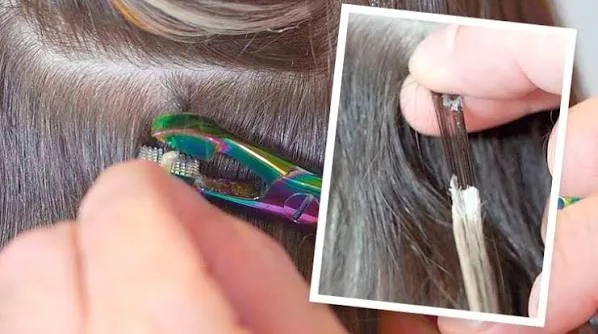
Once the bond has softened, a professional removal tool is used to gently crack the keratin. The goal is to break the bond rather than pull the extension from the hair.
If the bond doesn't release easily, forcing it is not the answer. A more appropriate remover and additional controlled treatment may be required.
4. Slide the Extension Out
Once the keratin has been sufficiently broken down, the extension should slide away from the natural hair with minimal resistance.
If you feel strong pulling or the extension won't move, stop rather than forcing it. A difficult bond may need additional professional attention.
5. Remove Remaining Keratin and Shed Hair
After extensions have been removed, small amounts of keratin residue and naturally shed hair may remain around the attachment area.
A professional can carefully separate these strands and gently detangle the section without unnecessarily pulling on the natural hair.
Can You Remove Keratin Bond Extensions at Home?
Although instructions for DIY removal are available, professional removal is the safer option. Individual bonded extensions require precision because the bonds are small and positioned close to the natural hair.
At-home removal becomes risky if:
- You cannot clearly see the bonds
- Your hair is already fragile or heavily bleached
- The extensions have become matted
- The bonds are difficult to soften
- You don't have the appropriate removal products and tools
- You are unsure which extension method you have
Avoid experimenting with household solvents or aggressive methods. Products not designed for hair extension removal can unnecessarily dry or damage the hair and scalp.
What Should You Avoid During Removal?
Knowing what not to do is as important as knowing the correct process.
Don't Pull the Extensions
If a bond is still secure, pulling can place tension on the natural hair attached to it.
Don't Cut Near the Bond
Cutting through an attachment without knowing where the natural hair is can result in accidental hair loss.
Don't Crush the Bond Aggressively
Removal tools should be used with controlled pressure. The objective is to crack the softened keratin, not repeatedly squeeze or crush the attachment with excessive force.
Don't Rush the Process
Removing multiple individual bonds takes time. Working quickly can lead to missed bonds, unnecessary pulling, and tangling.
How to Care for Your Hair After Removing Extensions
Your natural hair may feel different after removal if you've been wearing extensions for several months. Some hair shedding in the shower or brush can also be noticeable because hairs that naturally shed during the extension-wearing period may have remained caught around the bonds.
After removal:
- Gently detangle your hair from the ends upwards.
- Use a moisturising shampoo and conditioner suited to your hair type.
- Consider a conditioning or strengthening treatment if your hair feels dry.
- Minimise excessive heat styling.
- Avoid tight hairstyles that create additional tension.
- Give your hair time to return to its normal routine before another installation.
Hair breakage can be worsened by mechanical stress, excessive heat and chemical processing, so a gentle routine can help reduce additional damage.
When Should You Get Professional Help?
Professional assistance is strongly recommended if you notice significant matting, painful pulling, scalp discomfort, excessive breakage, or bonds that won't release.
A qualified extension specialist can assess the condition of your natural hair and determine the most appropriate removal technique. If your hair feels unusually thin or you continue experiencing significant shedding after removal, consider speaking with a qualified healthcare professional.
How Often Should Keratin Extensions Be Removed?
The appropriate wear period depends on the extension system, your natural hair growth, and the maintenance schedule recommended by your stylist. Rather than waiting until the bonds become heavily grown out or tangled, follow the maintenance and removal timeframe provided by your extension professional.
Regular professional maintenance can also help identify potential problems before removal becomes difficult.
How to Keep Your Hair Healthy Between Extension Appointments
Safe removal starts with good extension maintenance. Brush your hair gently, keep bonds clean, follow your stylist's aftercare instructions, and avoid unnecessary pulling or tension.
Choosing an experienced extension technician is also important. Correct installation, suitable extension weight and appropriate placement can all contribute to a better experience for your natural hair.
Final Thoughts
Removing keratin bond extensions shouldn't be a rushed DIY process. The safest approach is to soften each bond properly, gently break it apart,t and slide the extension away without forcing it.
If you're ready to remove your keratin bond extensions or are considering your next set, professional guidance can help protect the condition of your natural hair. A qualified hair extension specialist can assess your hair, safely remove existing extensions, ns and recommend the most suitable option for your next appointment.