
Pigmentation can be frustrating, especially when you have been trying different creams, home remedies, scrubs, and skincare routines but those stubborn dark patches keep coming back. Whether you are dealing with melasma, post-acne marks, freckles, sun spots, or an uneven skin tone, the way you treat pigmentation matters just as much as the products you choose.
One of the biggest mistakes people make is trying to fade pigmentation as quickly as possible. Aggressive exfoliation, harsh brightening products, and constantly switching between treatments can irritate the skin and potentially make discoloration look worse.
A better approach is to understand why pigmentation develops and build a consistent skincare routine around ingredients that target uneven pigmentation while supporting healthy-looking skin.
If you are wondering how to reduce pigmentation on the face safely, this guide will walk you through the causes, ingredients, skincare habits, and products that can help you work toward a clearer and more even-looking complexion.
What Is Facial Pigmentation?
Pigmentation refers to the natural color of your skin, which is largely influenced by a pigment called melanin. When certain areas of the skin produce more melanin than surrounding areas, they can appear darker.
This is commonly known as hyperpigmentation.
It can appear as small spots, patches, acne marks, freckles, or larger areas of uneven skin tone. Although pigmentation itself is common, different people may experience it for different reasons.
Some pigmentation develops after acne or skin inflammation, while other discoloration can be connected to sun exposure, hormonal changes, genetics, or skin irritation.
Understanding the cause is important because there is rarely one universal pigmentation treatment that works exactly the same way for everyone.
What Causes Pigmentation on the Face?
Before searching for the best cream for pigmentation or trying another home remedy, it helps to understand what might be triggering your dark spots.
Sun exposure is one of the most common contributors. UV exposure stimulates melanin production, which is why existing dark spots can become more noticeable after spending time outdoors without adequate sun protection.
Acne is another common reason. After a pimple heals, inflammation can leave a flat brown or darker mark behind. This is often referred to as post-inflammatory hyperpigmentation.
Hormonal changes may also contribute to melasma, which often appears as symmetrical brown or grey-brown patches, particularly around the cheeks, forehead, nose, and upper lip.
Skin irritation matters too. Over-exfoliating, repeatedly scrubbing your face, picking at acne, or using products that irritate your skin can contribute to inflammation and make post-inflammatory discoloration more noticeable.
This is why treating pigmentation gently is so important.
How to Reduce Pigmentation Without Damaging Your Skin
When you notice dark spots, it can be tempting to use several brightening products at once. But more products do not necessarily mean faster results.
Your goal should be consistency rather than aggression.
Start with a gentle cleanser, targeted pigmentation treatment, suitable moisturizer when needed, and reliable daytime sun protection. Avoid constantly changing products because pigmentation usually requires time and regular care.
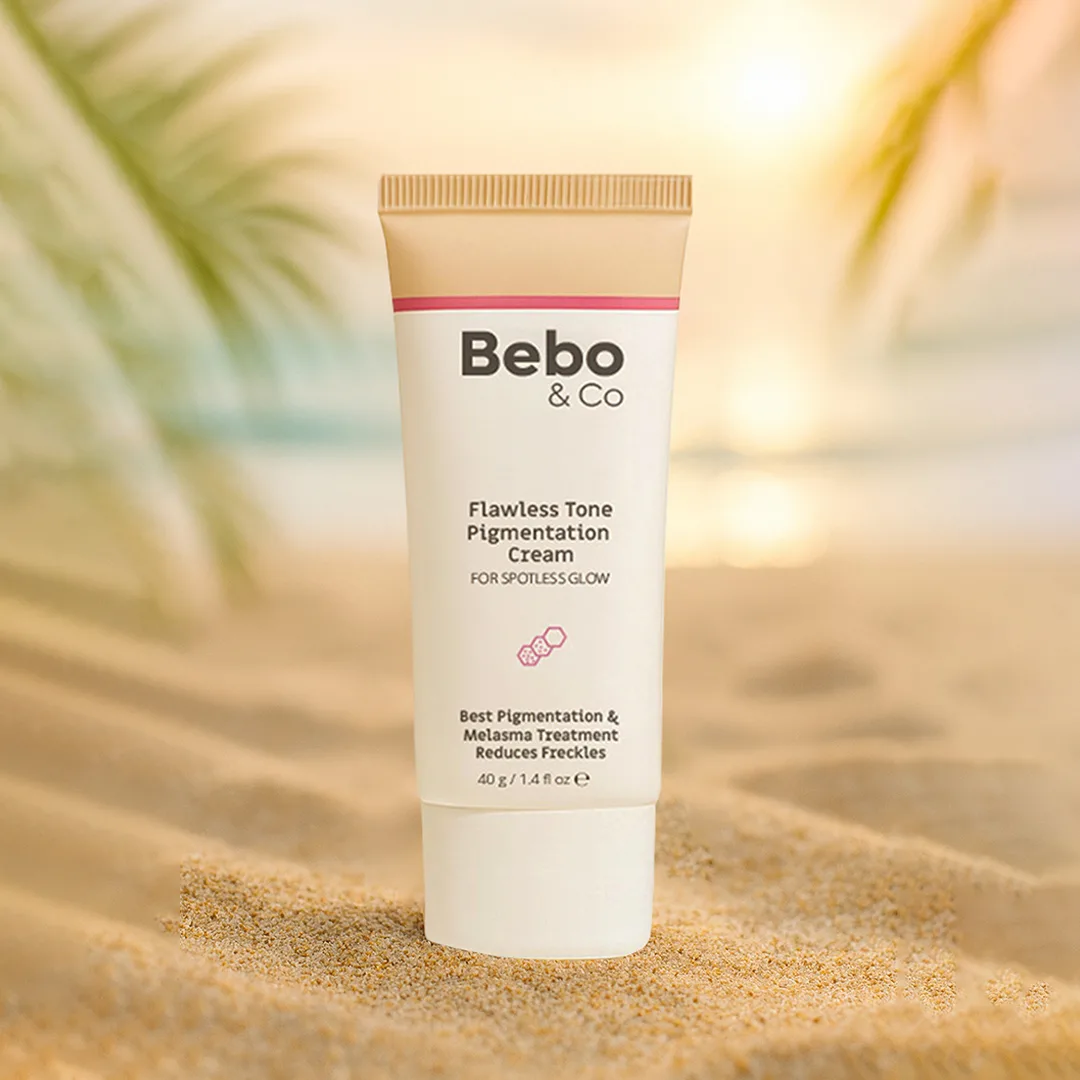
For those looking for a targeted pigmentation cream in Pakistan, Bebo & Co's Flawless Tone Pigmentation Cream is formulated for concerns including melasma, freckles, dark spots, pigmentation, and uneven skin tone.
Its formula combines several commonly used brightening ingredients, including Vitamin C, Kojic Acid Dipalmitate, Alpha Arbutin, and Licorice Extract, alongside hydrating ingredients such as Hyaluronic Acid.
Explore Flawless Tone Pigmentation Cream at Bebo & Co and build a more focused routine for uneven-looking skin.
Ingredients to Look for in a Pigmentation Cream
Understanding ingredients makes choosing skincare much easier. Instead of selecting a product simply because it says "brightening" on the packaging, look at what the formula actually contains.
Alpha Arbutin
Alpha Arbutin is a popular ingredient in skincare routines designed for hyperpigmentation and uneven skin tone. It is commonly included in formulas intended to improve the appearance of dark spots by addressing excess pigmentation.
Because pigmentation tends to develop gradually, products containing Alpha Arbutin usually work best as part of a consistent skincare routine rather than as an overnight fix.
Kojic Acid Dipalmitate
Kojic Acid and its derivatives are widely used in brightening skincare. Bebo & Co's Flawless Tone Pigmentation Cream contains Kojic Acid Dipalmitate, which the brand includes to help address excess melanin and visible dark spots.
This makes it particularly relevant for people searching for a kojic acid cream for pigmentation, dark spots, or uneven-looking skin.
Vitamin C
Vitamin C is one of the best-known brightening skincare ingredients.
Flawless Tone Pigmentation Cream contains Sodium Ascorbyl Phosphate, a stable Vitamin C derivative. In a pigmentation-focused routine, Vitamin C can support a brighter, more even-looking complexion while also providing antioxidant benefits.
Licorice Extract
Licorice Extract is another ingredient commonly found in formulas targeting dullness and uneven pigmentation. It is particularly useful in routines where you want brightening support without relying entirely on aggressive exfoliation.
Hyaluronic Acid
Pigmentation treatment should not mean ignoring hydration.
When skin becomes excessively dry or irritated, maintaining a consistent skincare routine becomes more difficult. Hyaluronic Acid helps support hydration and gives the skin a smoother, plumper appearance.
Flawless Tone combines pigmentation-focused ingredients with hydration, making it easier to approach discoloration while still caring for the overall appearance and feel of the skin.
Can Pigmentation Be Removed Overnight?
Probably one of the most important things to understand about hyperpigmentation is that genuine improvement takes time.
Be cautious when you see products promising to completely remove pigmentation, melasma, or dark spots overnight.
Pigmentation develops within the skin, and visible improvement usually requires consistent skincare over time. According to Bebo & Co's product guidance, users may begin noticing visible results from Flawless Tone Pigmentation Cream after approximately three to four weeks of consistent nightly use, although individual results naturally vary.
Think of pigmentation care as a routine rather than a quick fix.
Taking progress photos under similar lighting every few weeks can also give you a more realistic idea of whether your routine is working.
Why Sun Protection Matters When Treating Pigmentation
You can use excellent pigmentation products at night, but ignoring sun protection during the day can work against your progress.
UV exposure can stimulate additional melanin production and make existing pigmentation appear darker. That is particularly important if you are already dealing with melasma, freckles, sun spots, or post-acne discoloration.
Make sunscreen part of your morning routine and reapply according to the sunscreen's directions when you are exposed to sunlight for extended periods.
Bebo & Co also offers Solar Bliss Sunblock Cream SPF 60+, designed to help protect against UV exposure, tanning, dark spots, and sun damage. Pairing daytime sun protection with targeted nighttime pigmentation care can create a more complete routine.
A Simple Skincare Routine for Pigmentation
You do not need a complicated ten-step skincare routine to care for pigmented skin.
In the morning, cleanse your face gently, follow with your preferred hydrating products if needed, and finish with sunscreen.
At night, cleanse your skin thoroughly and pat it dry. Bebo & Co recommends applying Flawless Tone Pigmentation Cream in the evening directly to areas affected by dark spots, melasma, or freckles, gently massaging until absorbed. Alternatively, a thin layer can be applied across the face for an overall brightening effect.
Avoid adding several new active products simultaneously. A simpler routine makes it easier to understand how your skin responds.
What About Pigmentation Caused by Acne?
If the acne has disappeared but brown or dark marks remain, you may be dealing with post-acne pigmentation.
These marks are different from indented or raised acne scars. Flat discoloration can gradually become less noticeable, but repeatedly touching or picking pimples increases inflammation and can make marks more persistent.
A good routine should therefore address both sides of the problem: avoid irritating active acne and support the appearance of existing discoloration.
Flawless Tone Pigmentation Cream is also positioned by Bebo & Co for post-acne pigmentation and uneven skin tone, making it an option for people whose primary concern is the dark marks left behind after breakouts.
Can You Use Pigmentation Cream on Sensitive Skin?
Sensitive skin needs extra care because aggressive treatment can cause redness, dryness, or irritation.
Bebo & Co describes Flawless Tone Pigmentation Cream as gentle and suitable for different skin types, including sensitive skin. However, everyone's skin reacts differently.
Whenever you introduce a new skincare product, consider patch testing first. If you notice persistent burning, swelling, severe redness, or irritation, stop using the product and seek professional advice.
This is particularly important if you already have a skin condition or are using prescription treatments.
Common Mistakes That Can Make Pigmentation Harder to Manage
One common mistake is expecting instant results and changing products every few days. Your skin needs time to respond to a routine.
Another is skipping sunscreen because you are indoors most of the day or because the weather is cloudy. Daytime sun protection remains an important part of a pigmentation-conscious routine.
Over-exfoliation is another problem. Scrubbing dark areas harder will not simply scrub pigmentation away. Instead, excessive friction can irritate the skin.
Finally, avoid treating every type of discoloration as exactly the same. Melasma, freckles, sun spots, and post-inflammatory pigmentation can have different triggers. If pigmentation is severe, rapidly changing, unexplained, or resistant to regular skincare, consulting a dermatologist is worthwhile.
Build Your Pigmentation Routine With Bebo & Co
Managing pigmentation does not have to involve an overwhelming collection of products.
Start with the essentials: gentle cleansing, targeted nighttime care, hydration where needed, and consistent sun protection.
Bebo & Co's Flawless Tone Pigmentation Cream brings together Vitamin C, Kojic Acid Dipalmitate, Alpha Arbutin, Licorice Extract, Vitamin E, Hyaluronic Acid, and Tea Tree Oil in a formula designed to target the appearance of melasma, freckles, pigmentation, dark spots, and uneven skin tone.
For a more complete routine, you can explore Bebo & Co's pigmentation and brightening collection, including Flawless Tone Pigmentation Cream, Brita Glowing Face Wash, Solar Bliss Sunblock Cream SPF 60+, and pigmentation-focused skincare bundles.
Shop Bebo & Co skincare online and create a routine that focuses on gradual, consistent care rather than harsh shortcuts.