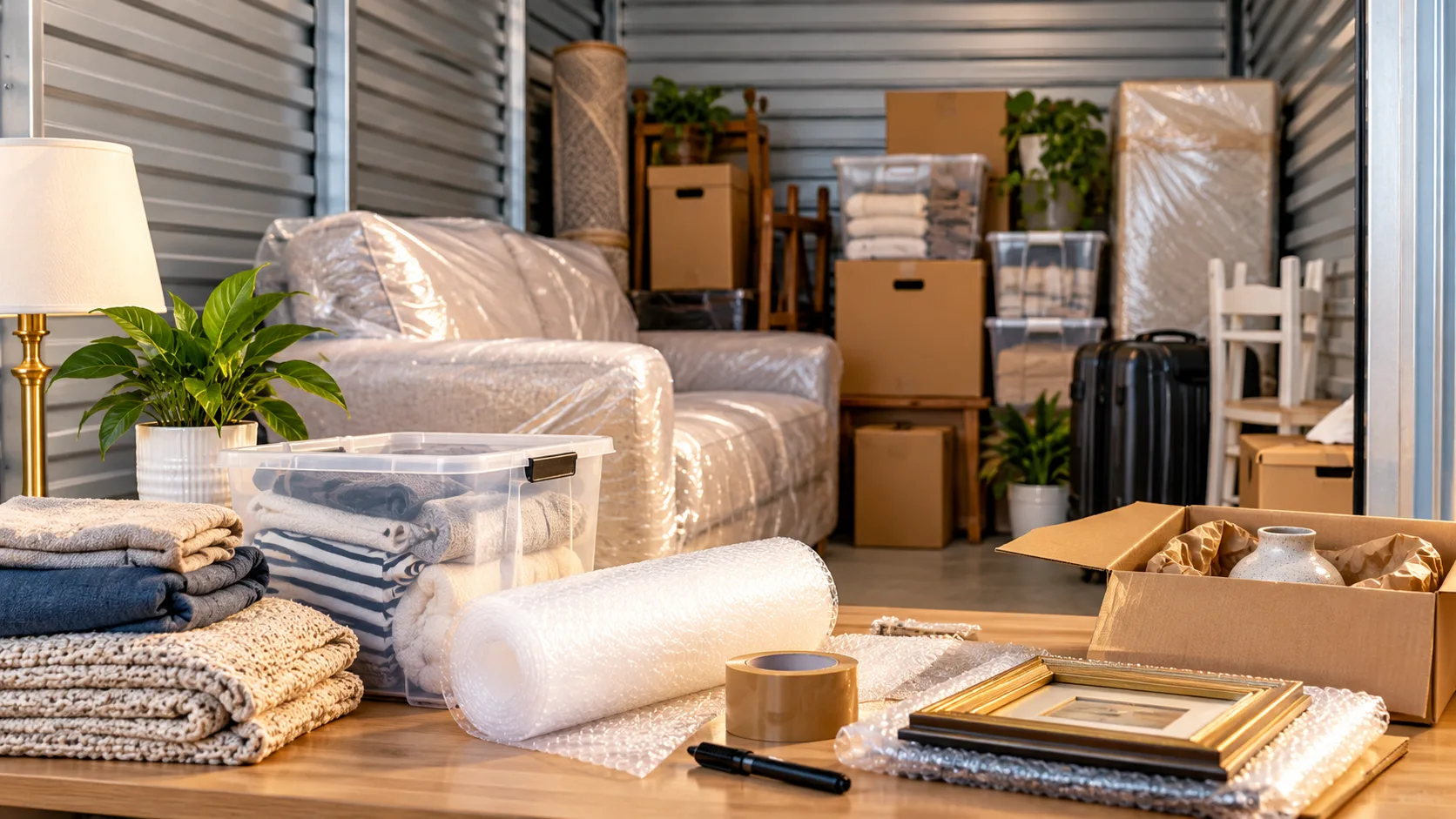
Putting your belongings into a storage unit for a few weeks is relatively straightforward. Leaving them there for six months, a year or longer requires a different approach.
Time changes the equation.
Dust accumulates, materials deteriorate, moisture can become a problem, boxes can weaken, and belongings that seemed perfectly protected on moving day may not be in the same condition when you eventually return.
Long-term self storage in croydon therefore starts before anything enters the unit. The quality of the preparation, packaging and organisation you use can make a significant difference to how easily your possessions survive the storage period.
Whether you are storing furniture during a house move, keeping family belongings after downsizing, protecting business stock or putting seasonal possessions away for an extended period, the following process can help you prepare properly.
Start by Deciding What Actually Needs Long-Term Storage
The first mistake people make is treating storage as a place where everything can go until they decide what to do with it.
That approach becomes expensive and difficult to manage over time.
Before packing, divide your belongings into four groups:
- Keep and store
- Keep and use regularly
- Sell or donate
- Dispose of
This simple exercise prevents you from spending months paying to store items that you never really wanted.
For belongings with sentimental value, the decision can be more difficult. Family photographs, inherited furniture and childhood possessions may not have everyday practical value, but they can still be important enough to justify keeping.
The question is not whether something is currently useful.
The better question is whether you would genuinely regret losing it.
Clean Everything Before It Goes Into Storage
Cleaning is one of the most important steps in long-term storage, yet it is also one of the easiest to overlook.
Dirt, food residue, dust and organic material can attract insects and create unpleasant smells when belongings remain enclosed for long periods.
Furniture should be vacuumed and wiped appropriately before storage. Clothing should be washed and completely dried. Garden equipment should be cleaned of soil and debris.
Kitchen appliances require particular attention because small amounts of food residue can become a much bigger problem after several months.
Do not assume that something is clean simply because it looks clean.
Check corners, underneath furniture, inside drawers and around hinges where dust and residue commonly collect.
Make Sure Everything Is Completely Dry
If there is one rule worth remembering, it is this:
Never pack damp belongings for long-term storage.
Moisture trapped inside boxes, bags or furniture can create conditions that encourage mould and unpleasant odours.
This is particularly important for fabric items, mattresses, carpets, garden equipment, camping equipment and anything that has recently been exposed to rain.
The UK National Archives notes that water can cause serious damage to paper and other archival materials, while stable environmental conditions are important for long-term preservation.
Allow recently cleaned belongings enough time to dry naturally before packing them.
If an item feels cool or damp to the touch, do not assume it is ready simply because the outside appears dry.
Choose the Right Boxes
The cheapest box is not necessarily the best box for long-term storage.
Thin cardboard can weaken over time, particularly if boxes are moved several times or stacked under heavier containers.
Use strong, clean boxes that are appropriate for the weight and type of belongings inside.
Try to keep boxes relatively consistent in size because uniform boxes are easier to stack safely and make better use of the available space.
However, avoid making every box extremely heavy.
Books, paperwork and dense household items can become surprisingly heavy when packed into large cartons. Smaller boxes are usually much easier to move and reduce the risk of the box breaking under its own weight.
Do Not Overpack Boxes
There is a temptation to fill every available gap.
That can be useful when packing for a house move, but long-term storage requires more thought.
An overfilled box can become difficult to close, difficult to lift and more likely to deform under pressure.
Fragile items may also be damaged when they are squeezed against one another.
A good box should contain enough material to prevent unnecessary movement while still allowing the contents to sit comfortably.
If you need to force the lid closed, the box is probably too full.
Use Protective Packaging for Fragile Items
Glassware, ornaments, electronics, framed photographs and other fragile possessions should never be left loose inside a storage box.
Wrap individual items appropriately and use cushioning material to reduce movement.
Do not rely on a single layer of newspaper for particularly fragile possessions. The packaging should be appropriate for the item's shape, weight and vulnerability.
For valuable or irreplaceable belongings, consider using specialist archival or conservation-grade materials rather than ordinary household packaging.
This matters particularly for photographs and paper records.
The Library of Congress recommends protective enclosures for photographic materials and warns against unsuitable materials that can contribute to deterioration.
Give Furniture More Protection Than You Think It Needs
Furniture can survive storage very well when prepared properly, but simply placing it inside a unit is not enough.
Clean upholstered furniture thoroughly before storage.
For wooden furniture, remove dust and use an appropriate treatment if the manufacturer recommends one.
Where possible, dismantle larger pieces such as beds, tables and shelving units.
Keep screws, brackets and other fittings in labelled bags and attach those bags securely to the relevant furniture.
Protect furniture from scratches during transportation, but avoid wrapping every item so tightly that air circulation is completely restricted.
For upholstered pieces, the objective is to protect them from dust without trapping unwanted moisture.
Prepare Appliances Properly
Large appliances need preparation before they enter long-term storage.
Fridges and freezers should be emptied, cleaned and thoroughly dried.
Their doors should not simply be closed immediately after cleaning because trapped moisture can lead to unpleasant smells and other problems.
Washing machines should also be drained properly before storage.
Small appliances should be cleaned, dried and packed carefully, particularly if they contain removable components.
Keep manuals, cables and accessories together whenever possible.
There is little value in storing an appliance safely for twelve months if you cannot find the power cable when you eventually need it.
Pay Special Attention to Clothing and Fabric
Clothing, bedding, curtains and other fabrics need careful preparation because they can absorb moisture and odours.
Wash clothing before storage and allow it to dry completely.
Avoid putting dirty or damp fabrics directly into sealed containers.
For longer-term storage, use suitable clothing containers rather than simply compressing everything into large plastic bags.
Do not store valuable fabrics against surfaces that could transfer stains or chemicals.
For particularly delicate clothing, specialist garment storage may be more appropriate than ordinary boxes.
Store Books Correctly
Books are heavier and more delicate than they appear.
The Library of Congress recommends cool, relatively dry and stable conditions for books, while warning against areas exposed to large temperature and humidity fluctuations.
Before storage, make sure books are clean and completely dry.
Pack them carefully so that they are supported rather than crushed.
Do not create enormous boxes filled entirely with books.
A smaller box containing books can be much easier to lift and less likely to damage its contents or its base.
Keep books away from direct light and, where possible, avoid storing them against areas that could be exposed to leaks or significant environmental fluctuations.
Take Extra Care With Photographs
Photographs deserve special attention because they can be difficult or impossible to replace.
Do not write directly across the image area.
If photographs need identification, label the enclosure rather than damaging the photograph itself.
The Library of Congress recommends relatively dry, cool and stable conditions for photographic materials and highlights the importance of controlling relative humidity.
The National Archives similarly recommends suitable archival enclosures and warns against materials such as PVC and poor-quality plastics for photographic storage.
If you have irreplaceable family photographs, consider digitising them before long-term storage.
That does not replace the originals, but it gives you a second copy if something unexpected happens.
Protect Important Documents
Paper records require a little more planning than ordinary household possessions.
Birth certificates, property documents, old letters, business records and family paperwork should be kept in suitable folders or protective boxes.
Avoid folding important documents simply to make them fit.
The National Archives recommends storage containers that allow papers to remain appropriately supported without unnecessary bending or compression.
For particularly important documents, creating secure digital copies can provide additional peace of mind.
However, a digital copy should be treated as a backup rather than a replacement for an original document where the original has legal or historical significance.
Avoid Sealing Everything in Airtight Plastic
Plastic containers can be useful, but using plastic indiscriminately is not a long-term storage strategy.
If moisture is already present when an item is sealed, the container can trap it.
This is one reason preparation matters more than simply choosing the most waterproof-looking container.
The Library of Congress specifically warns that plastic containers do not solve environmental problems when valuable materials are kept in areas with unsuitable humidity, and that high humidity combined with enclosed storage can increase mould risks.
Use containers according to the type of item being stored rather than assuming that airtight is always better.
Keep Belongings Off the Floor
Even inside a storage facility, keeping belongings directly on the floor may not be ideal.
Raising boxes and other possessions where the storage arrangement allows it can provide an additional layer of protection against accidental spills or minor water exposure.
This is particularly relevant for paper, photographs, clothing and other materials that are vulnerable to water.
The National Archives recommends keeping family papers and photographs away from potential sources of leaks and raising them off the floor where appropriate.
Follow the storage provider's rules regarding shelving, pallets and other equipment rather than improvising with unsuitable materials.
Label Every Box Before It Enters the Unit
Long-term storage becomes frustrating when you cannot remember what you packed.
Write a clear description on each box.
Instead of writing:
Kitchen
write:
Kitchen – baking equipment, serving dishes and spare glasses
Instead of:
Clothes
write:
Winter coats and adult jumpers
Specific labels make retrieval considerably easier.
Put the label on more than one side where possible so that you can identify the box without moving everything around.
Create a Simple Storage Inventory
Labelling boxes is helpful.
An inventory is even better.
You do not need complicated software.
A spreadsheet or note on your phone can record:
- Box number
- Contents
- General category
- Location within the unit
- Date stored
- Items that may need future attention
You can even photograph the contents before closing each box.
For business stock, an inventory becomes particularly valuable because it can prevent unnecessary purchases when existing stock is already sitting in storage.
Photograph Valuable Items
Before putting valuable belongings into long-term storage, photograph them.
Take pictures from several angles and capture any existing marks, serial numbers or identifying features.
This provides a useful record of their condition before storage.
For business equipment, record model and serial numbers where applicable.
For valuable furniture, photographs can also document existing scratches or signs of wear.
The purpose is not to create unnecessary paperwork.
It is simply to create a clear record of what you stored and what condition it was in when it went into storage.
Dismantle What You Can
Large furniture can consume storage space unnecessarily.
If a dining table has removable legs, remove them.
If shelving can be dismantled safely, consider doing so.
Keep all fittings together and label them clearly.
A small bag marked Dining Table Screws is considerably more useful than a loose collection of unidentified screws at the bottom of a box.
Protect dismantled components so that they do not rub against one another during storage.
Think About Accessibility Before You Pack
Long-term does not necessarily mean untouched.
You may suddenly need your winter coat, business documents, camping equipment or an item of furniture several months after everything has been stored.
Do not build a wall of boxes that makes the back of the unit impossible to reach.
Place items that are unlikely to be needed for a long time further towards the back.
Keep frequently accessed possessions closer to the entrance.
Leave sensible pathways where the size and layout of the unit permit it.
The best organised storage unit is not necessarily the one containing the most belongings.
It is the one where you can find something without having to unpack everything else.
Create a Simple Storage Map
A storage map sounds excessive until you need one item buried behind twenty boxes.
Divide the unit into simple sections.
For example:
A: Furniture
B: Seasonal items
C: Family belongings
D: Business stock
Then record the relevant box numbers within each section.
This creates a basic system that remains useful even if the unit is not accessed for months.
Be Careful With Items That Can Attract Pests
Food is an obvious example, but pests can also be attracted by crumbs, organic material, dirty fabrics and poorly cleaned equipment.
Never assume that a tiny amount of leftover food cannot cause a problem.
Clean containers thoroughly before storing them.
Garden equipment should be free from soil and organic debris where appropriate.
Clothing should be clean before packing.
Storage areas should also remain clean and orderly.
The National Archives recommends clean storage environments and highlights the importance of protecting collections against insects and rodents.
Do Not Store Something Just Because It Is Expensive
Price is not the same as suitability for storage.
A cheap item that you use every week may deserve more accessible space than an expensive item you have not touched in five years.
Think about frequency of use, sentimental value, replacement cost and storage requirements.
This prevents valuable storage space from becoming occupied by belongings that have no meaningful role in your life.
Check Your Storage Provider's Rules
Every storage facility has its own terms.
Before moving belongings into a unit, check what the provider permits and whether there are restrictions covering particular materials, electrical equipment, chemicals, food, flammable products or other potentially hazardous items.
Do not rely on advice from a random internet article when the storage company's own terms are available.
The rules for one facility may differ from another.
If you are unsure whether something can be stored, ask before bringing it to the facility.
Choose a Storage Facility With Long-Term Needs in Mind
Not every storage unit is equally suitable for every type of possession.
If you are storing ordinary furniture and household boxes, your priorities may include access, security, unit size and convenience.
If you are storing photographs, books, documents or delicate belongings for a long period, environmental conditions become much more important.
For UK households, choosing a storage facility that provides a clean, secure and appropriate environment can make more sense than choosing solely on the lowest advertised price.
If you are looking for a local option, Snappy Self Storage provides storage facilities for household and business belongings, including long-term storage requirements.
The important point is to match the facility to what you are actually storing rather than assuming every unit is suitable for every item.
A Long-Term Self Storage Checklist
Before closing your storage unit, work through this checklist.
Before packing
- Decide what genuinely needs to be stored.
- Sell, donate or dispose of unwanted items.
- Clean furniture and household belongings.
- Wash clothing and fabrics.
- Remove food and organic residue.
- Make sure everything is completely dry.
- Check your storage provider's prohibited-items policy.
During packing
- Use strong boxes.
- Avoid overfilling containers.
- Protect fragile possessions individually.
- Use suitable packaging for photographs and documents.
- Dismantle large furniture where practical.
- Label boxes clearly.
- Record valuable items and serial numbers.
- Photograph important belongings before storage.
Inside the storage unit
- Keep belongings away from obvious water risks.
- Follow the facility's rules about raising items from the floor.
- Place rarely needed belongings further back.
- Keep frequently accessed items accessible.
- Leave sensible pathways where possible.
- Keep similar categories together.
- Record where important boxes are located.
After storage
If your belongings will remain stored for many months, do not assume that you never need to think about them again.
Where your agreement and access arrangements permit it, periodic checks can help you identify problems before they become serious.
Pay particular attention to items that are sensitive to moisture, temperature fluctuations or packaging problems.
The Biggest Long-Term Storage Mistakes
Most storage problems are not caused by one dramatic mistake.
They usually come from small decisions made at the beginning.
The common mistakes include:
Storing damp belongings.
Moisture trapped inside packaging can become a much bigger problem over time.
Using weak boxes.
A box that survives a house move may not be suitable for repeated handling or heavy stacking.
Failing to label anything.
After six months, you may remember the contents of one box far less clearly than you expect.
Packing everything too tightly.
Overfilled containers are harder to move and can put unnecessary pressure on their contents.
Ignoring important documents and photographs.
Paper-based possessions require more careful environmental and packaging considerations than ordinary household goods.
Blocking access to the entire unit.
A perfectly packed unit is useless if reaching one item requires removing half of everything else.
Storing unwanted possessions indefinitely.
Storage should solve a space problem, not postpone every decision forever.
Sources and Further Reading
The preservation principles in this article are informed by guidance from the Library of Congress and the National Archives, particularly their recommendations concerning books, photographs, paper records, humidity, packaging and protection from water and environmental extremes.