
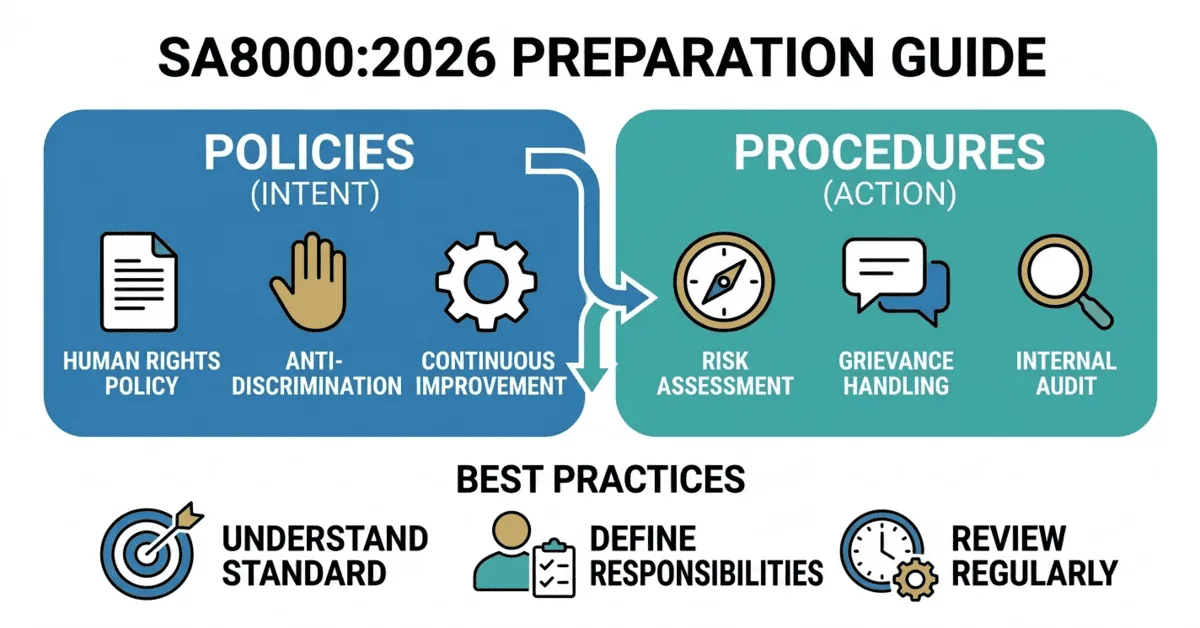
Implementing SA8000:2026 requires more than understanding the standard—it requires well-developed policies, procedures, and documentation that support ethical labour practices and social accountability. Well-structured SA 8000:2026 documents provide the framework needed to establish a compliant management system, ensure consistent implementation, and demonstrate conformity during certification audits. Whether your organization is preparing for certification or improving its existing system, properly developed SA8000:2026 procedures are essential for successful implementation.
Why Are SA8000:2026 Policies and Procedures Important?
Policies define an organization's commitment to social accountability, while procedures explain how these commitments are implemented in daily operations. Together, they create a standardized management system that ensures employees, supervisors, and management consistently follow ethical workplace practices.
Well-prepared documentation helps organizations:
- Demonstrate compliance with SA8000:2026 requirements
- Protect workers' rights and welfare
- Improve operational consistency
- Support internal audits and certification audits
- Reduce compliance risks and nonconformities
- Promote continual improvement in social responsibility
Clear documentation also makes employee training easier and ensures responsibilities are understood throughout the organization.
Essential Policies Required for SA8000:2026
A comprehensive SA8000:2026 management system should include policies that reflect the organization's commitment to responsible labour practices. Depending on organizational activities, these may include:
- Social Accountability Policy
- Human Rights Policy
- Child Labour Prevention Policy
- Forced Labour Prevention Policy
- Health and Safety Policy
- Anti-Discrimination Policy
- Freedom of Association Policy
- Ethical Recruitment Policy
- Grievance Handling Policy
- Continuous Improvement Policy
Each policy should be approved by top management, communicated to employees, and reviewed periodically to ensure continued effectiveness.
Procedures That Support SA8000:2026 Implementation
Policies establish the organization's intentions, while SA8000:2026 procedures describe how those intentions are achieved. Effective procedures help maintain consistency across departments, define responsibilities clearly, and simplify compliance monitoring.
Common procedures include:
- Risk assessment and opportunity management
- Employee grievance handling
- Competency, awareness, and training
- Internal communication
- Operational control
- Supplier evaluation and monitoring
- Internal audit process
- Corrective and preventive action
- Incident reporting
- Management review
These procedures should clearly define responsibilities, documentation requirements, approval processes, and record retention methods.
Best Practices for Preparing SA8000:2026 Policies and Procedures
Organizations can improve documentation quality by following a systematic approach.
Understand the Standard Requirements
Carefully review every clause of SA8000:2026 and identify documentation required for each requirement. Avoid creating unnecessary documents that add complexity without improving compliance.
Define Organizational Responsibilities
Assign clear roles and responsibilities for implementing each policy and procedure. Employees should understand their responsibilities and reporting structure.
Keep Documentation Practical
Policies should be concise and easy to understand, while procedures should provide step-by-step guidance without becoming overly complicated.
Use Standardized Formats
Maintain consistency in document numbering, revision history, approval signatures, version control, and document distribution.
Review and Update Regularly
Business operations, regulations, and customer expectations change over time. Regular document reviews ensure policies remain relevant and effective.
Simplify Implementation with Ready-to-Use SA8000:2026 Documents
Preparing documentation from scratch requires significant time, expertise, and ongoing updates. Many organizations choose professionally developed SA 8000:2026 documents to accelerate implementation while ensuring alignment with the latest standard requirements.
Professionally developed documentation packages include editable manuals, policies, procedures, forms, checklists, and audit documents designed to help organizations establish an effective social accountability management system. Using standardized SA8000:2026 documentation helps improve document consistency, simplify implementation activities, and support effective certification preparation.
Conclusion
Preparing effective SA8000:2026 policies and procedures is essential for building a strong social accountability management system. Well-structured documentation helps organizations implement ethical labour practices, ensure regulatory compliance, improve worker confidence, and successfully prepare for certification audits.
By developing clear, practical, and regularly updated policies and procedures—or using professionally designed documentation—you can streamline implementation, reduce compliance risks, and create a sustainable framework for continual improvement in workplace social responsibility.