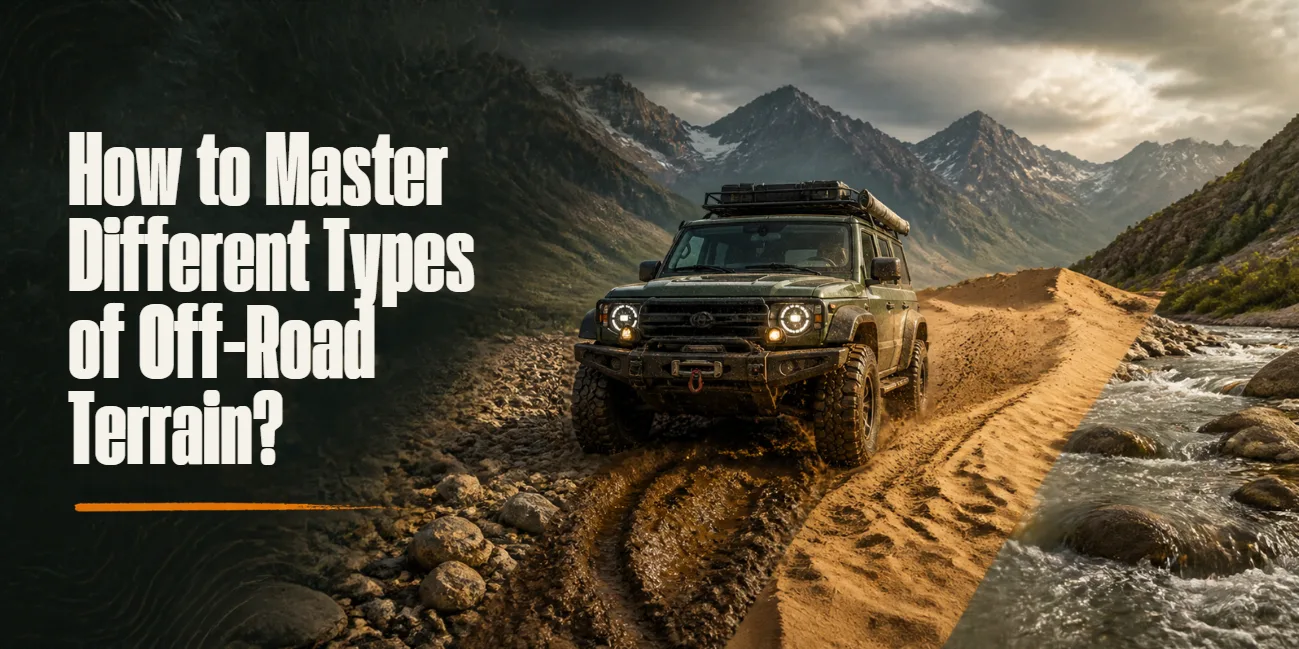
Off-roading means leaving paved roads behind and facing new challenges on every trail. Mud, sand, rocks, and steep hills all need different driving skills. Even experienced drivers can have trouble with traction and control if they aren’t prepared.
Being good at off-road driving is about more than just owning a 4x4. You need to know the terrain, adjust your driving, and use the right off-road tires and gear. Handling different surfaces well helps you avoid accidents, keeps you from getting stuck, and makes your trips more fun.
Whether you’re on muddy trails or rocky paths, here are some tips to help you handle different off-road terrain safely and with confidence.
Muddy Trails
Mud is tough to drive through because it quickly reduces tire grip. Thick mud, slippery spots, and deep ruts make it hard for tires to hold on. Vehicles can lose speed, slide, or get stuck, especially in deep mud.
Before you cross a muddy trail, check how deep it is and find a safe place to enter and exit. Don’t drive into unknown areas, since mud can hide holes, rocks, or other obstacles. If you can, pick a firmer path for better traction.
Keep a steady pace when driving through mud. Use four-wheel drive if needed and don’t press the gas too hard, or your tires might spin and sink. Avoid sudden braking or sharp turns. Steer smoothly and keep your speed under control.
Choosing the right tires matters a lot. Mud tires have deep treads and wide grooves to grip soft ground and clear away mud as they turn. This self-cleaning design helps keep traction where regular tires might slip.
Sand and Desert Dunes
Driving on sand is tricky because the loose surface makes it hard for tires to grip. Tires can sink, which makes it harder to move forward, especially on soft dunes or sandy hills.
A good way to drive better on sand is to lower your tire pressure. This spreads your vehicle’s weight over a bigger area, helping you float on top of the sand instead of sinking. Always follow your vehicle and tire maker’s advice, and remember to pump your tires back up before driving on pavement.
Maintaining steady momentum is equally important. Avoid sudden acceleration, sharp turns, and unnecessary braking, as these movements can cause the tires to dig into the sand. Use smooth throttle inputs and maintain a consistent speed, especially when approaching small dunes or sandy inclines.
Wider tires can help spread your vehicle’s weight on soft ground. With the right tire pressure and good driving habits, they make it easier to drive on sandy trails.
Rocky Trails and Boulders
Rocky trails need careful driving. Uneven ground, sharp rocks, and big obstacles can damage your tires or the bottom of your vehicle. These trails also test your ground clearance and suspension, making it hard to keep all four tires on the ground.
When approaching rocky terrain, take time to assess the trail and identify the safest driving line. Look for stable surfaces that allow the tires to maintain contact without putting too much pressure on vulnerable components. Avoid driving directly over sharp rocks whenever possible, as they can damage the tires or cause sidewall punctures.
Low-range gearing is particularly useful when navigating large rocks and uneven trails. It provides additional control at low speeds, allowing drivers to move over obstacles without relying on excessive throttle. Maintain a slow, steady pace and avoid sudden acceleration that could cause the vehicle to bounce or lose traction.
A spotter can really help, especially in tight spots or when you can’t see obstacles from the driver’s seat. They can point out hazards and guide you through tough areas.
Think about adding gear like skid plates and rock sliders. Skid plates protect the bottom of your vehicle, and rock sliders guard the sides. These upgrades help prevent damage on rough trails.
Steep Hills and Slopes
Going up or down steep hills takes good control and planning. Loose dirt, gravel, and bumps can make it hard to keep your grip. Trying a slope without knowing what to expect can make you slide, lose control, or even roll over.
Before you try to climb a hill, check the slope and see if your vehicle can handle the angle and surface. Watch for loose rocks, deep ruts, or other obstacles. If the hill looks too steep or risky, choose a different path instead of forcing it.
When climbing, pick the right gear and use low-range four-wheel drive if needed. Keep your speed steady and don’t hit the gas suddenly, or your tires might spin. At the top, steer smoothly and avoid sharp turns.
Going downhill needs just as much care. Use low-range gears and brake gently to control your speed, instead of relying only on the brakes. Don’t steer or brake suddenly, since that can make you slide on loose ground.
Most importantly, know what your vehicle can and can’t do. Things like ground clearance, engine power, tire grip, and approach angles all matter on steep hills. Don’t try a slope that’s too much for your vehicle or your own experience.
Snow and Icy Trails
Snow and ice make off-roading unpredictable because they reduce traction. Tires can struggle to grip, so it’s harder to accelerate, steer, or stop. Even skilled drivers can lose control, especially if there’s hidden ice under fresh snow.
To drive on snow, keep your movements smooth and controlled. Use gentle gas, don’t make sudden turns, and leave plenty of space between you and other vehicles. Brake slowly to avoid sliding.
Picking the right tires is important too. Winter tires have special treads and rubber to grip in the cold. Before you go out, check your tire tread and look for uneven wear or damage. Worn tires won’t grip well on snow.
Also, watch out for what’s under the snow. Deep snow can hide rocks, ruts, or branches that might damage your vehicle or make it unstable. Stay off unknown trails when you can’t see well, and be extra careful in tricky areas.
Gravel and Loose Dirt
Gravel roads and loose dirt might seem easier than mud or rocks, but they still need careful driving. Loose stones and dirt can make your tires slip, especially when turning, speeding up, or going downhill. Stopping can also take longer on these surfaces.
Start by slowing down, especially before sharp turns or going downhill. Don’t steer, speed up, or brake suddenly, since that can make your tires lose grip. Keep a steady pace and make small, gradual changes to your steering and gas.
It’s also important to keep a safe distance from the vehicle ahead. Cars in front can kick up gravel that might hit your windshield or headlights. More space gives you time to react to sudden stops or surprises.
The right off-road tires help you grip and control your vehicle on rough ground. Choose tires that are tough and have treads for your usual trails. All-terrain tires are a good choice if you drive on both roads and dirt.
Embrace the Off-road Terrain Adventure
Every off-road trip is different, but knowing the terrain and adjusting your driving can really help. Pick the right tires, keep your speed steady, and get your vehicle ready before you go. Use the right gear, know your limits, and always put safety first so you can enjoy every adventure and handle any trail.