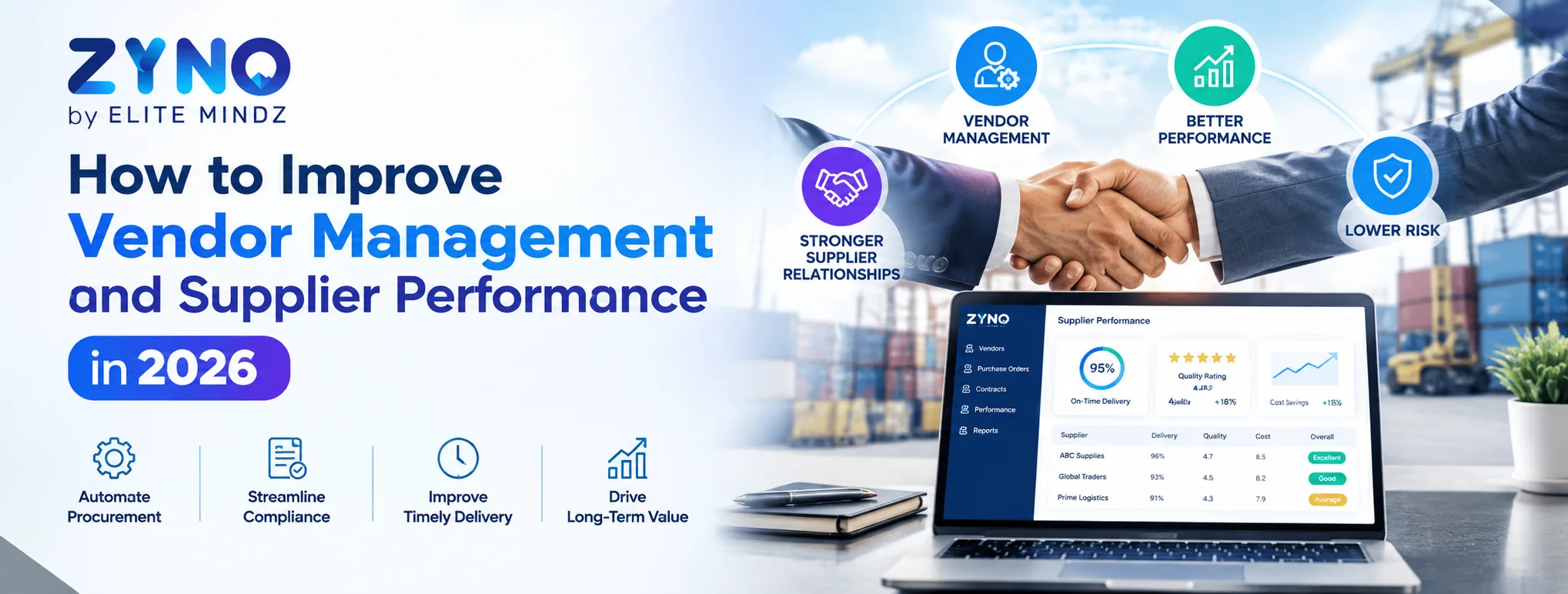
Vendor relationships have become increasingly important as businesses manage complex supply chains, multiple suppliers, changing customer expectations, and rising operational risks. Simply selecting a supplier and negotiating a contract is no longer enough. Businesses need an ongoing approach to vendor management and supplier performance.
In 2026, organizations can improve supplier relationships by combining clear performance metrics, structured processes, regular evaluations, risk management, and technology. A modern Vendor Management System can also help procurement teams centralize supplier information and improve visibility across the supplier lifecycle.
What Is Vendor Management?
Vendor management is the process of managing an organization's relationships with suppliers and service providers. It includes activities such as vendor selection, onboarding, evaluation, contract management, compliance monitoring, performance tracking, and relationship management.
Effective vendor management helps organizations understand how suppliers are performing and whether they continue to meet business requirements.
A structured vendor management process can include:
- Vendor identification and selection
- Vendor onboarding
- Vendor evaluation
- Contract management
- Compliance monitoring
- Performance tracking
- Risk assessment
- Supplier communication
- Periodic performance reviews
What Is Supplier Performance Management?
Supplier Performance Management focuses on measuring and improving how suppliers perform against agreed expectations.
Organizations can evaluate suppliers using supplier performance metrics such as:
- On-time delivery
- Product or service quality
- Order accuracy
- Cost performance
- Compliance
- Responsiveness
- Service-level performance
- Risk exposure
A strong supplier performance management process gives procurement teams measurable information that can be used to identify problems and improvement opportunities.
Why Improve Vendor Management and Supplier Performance in 2026?
Supplier expectations are changing as businesses increasingly rely on digital procurement, real-time information, automation, and data-driven decision-making.
Improving vendor management can help businesses:
- Reduce supply-chain disruptions
- Improve supplier quality
- Increase delivery reliability
- Control procurement costs
- Reduce supplier risks
- Improve compliance
- Strengthen vendor relationships
- Make better procurement decisions
- Improve operational visibility
The objective should not simply be to reduce supplier costs. Businesses also need to consider quality, reliability, risk, responsiveness, and long-term value.
10 Ways to Improve Vendor Management and Supplier Performance
1. Set Clear Supplier Performance Expectations
Suppliers should understand exactly what the business expects from them.
Define measurable requirements for:
- Delivery timelines
- Quality standards
- Pricing
- Response times
- Compliance
- Documentation
- Service levels
Clear expectations provide a foundation for effective supplier performance evaluation.
When expectations are measurable, procurement teams can identify performance gaps more objectively.
2. Track Supplier Performance Metrics
One of the most important ways to improve supplier performance is to measure it consistently.
Useful supplier performance metrics and KPIs include:
On-Time Delivery: Measures how frequently suppliers deliver according to agreed schedules.
Quality Rate: Tracks defects, rejected products, returns, or service issues.
Order Accuracy: Measures whether suppliers deliver the correct products, quantities, and specifications.
Cost Performance: Evaluates pricing accuracy, cost changes, and savings opportunities.
Compliance Rate: Measures adherence to contractual, regulatory, and internal requirements.
Responsiveness: Tracks how quickly suppliers respond to requests, issues, or corrective actions.
These metrics can be combined into a supplier scorecard for a broader view of supplier performance.
3. Use Vendor Scorecards
A vendor scorecard provides a structured way to evaluate suppliers across multiple criteria.
For example, an organization could evaluate a supplier based on:
- 30% delivery
- 25% quality
- 15% cost
- 10% compliance
- 10% responsiveness
- 10% risk
The exact weightings should depend on the organization's requirements and supplier category.
Scorecards can also help procurement teams identify trends rather than relying on individual incidents.
4. Segment Suppliers by Risk and Importance
Not every supplier needs the same level of monitoring.
A business can classify suppliers based on factors such as:
- Business criticality
- Spend
- Operational dependency
- Data access
- Geographic exposure
- Financial risk
- Compliance requirements
High-risk or business-critical suppliers may require more frequent reviews and detailed supplier risk assessment.
Lower-risk suppliers may require a simpler monitoring process.
5. Strengthen Vendor Onboarding
Good vendor management starts with effective onboarding.
During vendor onboarding, organizations can collect and verify:
- Business information
- Tax details
- Banking information
- Certifications
- Insurance documents
- Compliance documentation
- Product or service information
A structured onboarding process helps create accurate supplier records and establishes expectations from the beginning.
6. Conduct Regular Supplier Evaluations
Supplier performance should not be evaluated only when something goes wrong.
Regular supplier evaluation can help businesses identify:
- Performance improvements
- Recurring quality problems
- Delivery delays
- Compliance issues
- Cost changes
- Emerging supplier risks
Depending on the supplier, reviews can be monthly, quarterly, or annually.
7. Use Technology for Vendor Performance Tracking
Managing supplier information through spreadsheets and emails can become difficult as supplier networks grow.
Vendor performance tracking software can help organizations centralize:
- Supplier information
- Performance KPIs
- Contracts
- Compliance documents
- Evaluation results
- Risk information
- Corrective action plans
A Vendor Management System can provide procurement teams with a centralized view of supplier relationships.
8. Automate Supplier Performance Monitoring
Automation can reduce manual reporting and help procurement teams identify issues faster.
For example, a Supplier Performance Management Software solution may provide dashboards showing:
- Delivery performance
- Quality trends
- Compliance status
- Supplier scores
- Open issues
- Risk indicators
Automated alerts can also notify teams when a supplier falls below predefined performance thresholds.
9. Build Stronger Supplier Relationships
Vendor management should not be limited to monitoring and compliance.
Strong supplier relationship management involves regular communication, feedback, collaboration, and problem-solving.
Businesses can work with strategic suppliers to:
- Improve processes
- Reduce waste
- Identify cost-saving opportunities
- Improve product quality
- Develop new solutions
- Strengthen supply continuity
A collaborative relationship can help both parties focus on long-term performance.
10. Create Corrective Action Plans
When supplier performance falls below expectations, businesses should identify the root cause rather than simply recording a low score.
A corrective action plan can define:
- The performance issue
- Root cause
- Required corrective action
- Responsible party
- Target completion date
- Follow-up review
- Performance improvement target
This creates accountability and turns supplier evaluation into a continuous improvement process.
Vendor Risk Management in 2026
Supplier risk is an important part of modern vendor management.
Businesses should monitor risks related to:
- Financial stability
- Cybersecurity
- Regulatory compliance
- Supply continuity
- Geographic exposure
- Operational dependency
- Data security
- Business continuity
A regular vendor risk assessment can help procurement teams identify suppliers that require additional monitoring.
Supplier risk should also be reviewed when there are major changes to the supplier, contract, market, or business relationship.
How Technology Supports Better Supplier Performance
Modern vendor management software can connect supplier data, performance tracking, risk management, onboarding, and procurement processes.
A centralized vendor management platform can help organizations:
- Maintain supplier records
- Track vendor performance
- Automate onboarding
- Manage supplier documentation
- Monitor compliance
- Conduct supplier evaluations
- Track corrective actions
- Generate reports
- Improve procurement visibility
Integration with ERP and procurement systems can further reduce duplicate data entry and improve access to supplier information.
Key Supplier KPIs to Monitor in 2026
Organizations can build a supplier KPI framework around several categories:
KPI CategoryExample MetricsDeliveryOn-time delivery rate, lead timeQualityDefect rate, rejection rateCostPrice variance, cost savingsComplianceCompliance rate, expired documentsServiceResponse time, issue resolutionRiskRisk score, critical supplier exposureRelationshipReview completion, improvement actionsThe most useful KPIs depend on the supplier's role and the organization's objectives.
Common Vendor Management Mistakes to Avoid
Businesses can weaken supplier performance when they:
- Use unclear supplier expectations
- Track too many irrelevant KPIs
- Rely entirely on spreadsheets
- Ignore supplier risk
- Conduct evaluations inconsistently
- Fail to communicate performance results
- Focus only on price
- Ignore corrective actions
- Keep outdated supplier information
- Treat onboarding as a one-time activity
A focused and consistent process is usually more useful than collecting large amounts of disconnected supplier data.
Final Thoughts
Improving vendor management and supplier performance in 2026 requires a combination of clear expectations, measurable KPIs, regular supplier evaluations, risk management, collaboration, and technology.
Businesses can start by defining the right supplier performance metrics, creating vendor scorecards, strengthening onboarding, and establishing regular performance reviews. As supplier networks grow, Vendor Management Software and supplier performance tracking tools can help centralize information and automate important processes.
The goal is to build a supplier management process that provides visibility, encourages continuous improvement, reduces avoidable risks, and supports stronger long-term procurement performance.
Frequently Asked Questions
1. How can businesses improve vendor management in 2026?
Businesses can improve vendor management by standardizing onboarding, defining clear KPIs, segmenting suppliers by risk, conducting regular evaluations, automating workflows, and maintaining accurate supplier information.
2. What are the most important supplier performance metrics?
Common metrics include on-time delivery, quality rate, order accuracy, cost performance, compliance, responsiveness, lead time, and issue resolution.
3. How do you measure supplier performance?
Supplier performance can be measured by defining KPIs, collecting performance data, assigning scores, using supplier scorecards, reviewing results regularly, and tracking improvement actions.
4. What is a Vendor Management System?
A Vendor Management System is software that helps businesses manage supplier information, onboarding, compliance, performance, risk, contracts, and ongoing vendor relationships.
5. How does vendor management software improve supplier performance?
Vendor management software can centralize supplier data, automate workflows, track KPIs, monitor compliance, provide performance dashboards, and help procurement teams identify issues earlier.
6. What is the difference between vendor management and supplier performance management?
Vendor management covers the broader supplier relationship and lifecycle, while supplier performance management focuses specifically on measuring, monitoring, and improving supplier performance.
7. How often should supplier performance be evaluated?
The frequency depends on supplier importance and risk. Critical suppliers may require monthly or quarterly reviews, while lower-risk suppliers may be evaluated less frequently.
8. Why is supplier risk assessment important?
Supplier risk assessment helps businesses identify financial, operational, compliance, cybersecurity, and supply-chain risks that could affect business continuity.