
Selecting the right consumables for next-generation sequencing is a bigger decision than it first appears. The reagents you standardize on affect data quality, workflow speed, cost per sample, and how easily your lab can scale.
Rather than chasing a single "best" product, the smarter approach is to match your choices to your applications, throughput, and budget. Choosing NGS sample preparation reagents well means weighing several factors together instead of focusing on one number in isolation. Below, we walk through the criteria that matter most, the trade-offs to expect, and the questions worth asking before you commit to a supplier or protocol.
Why Reagent Choice Deserves Careful Thought
Before comparing options, it helps to understand how much this decision influences your results. Reagents sit at the foundation of every run.
The quality and consistency of your consumables shape everything downstream, from library yield to the reliability of your sequencing data. Inconsistent reagents introduce variability that's hard to trace and expensive to troubleshoot. On the other hand, well-chosen, dependable reagents give you reproducible results, smoother workflows, and fewer failed runs, which ultimately protects both your budget and your project timelines.
Key Factors to Consider
Several criteria deserve attention when you evaluate options. Balancing them together, rather than optimizing for one alone, leads to better long-term decisions.
Cost naturally matters, but so does compatibility with your existing kits and instruments. A cheaper reagent that forces protocol changes or lowers yield rarely saves money overall. This is especially true for NGS library preparation DNA cleanup, where recovery efficiency and purity directly influence how much usable material reaches the sequencer. Evaluating performance and cost together, rather than separately, gives you a far more accurate picture of real value.
The Core Criteria for Evaluating Reagents
Here are the factors that most strongly separate a good choice from a poor one. Work through each deliberately rather than relying on a supplier's headline claims.
Performance and Consistency
Reliable performance is non-negotiable for sequencing work. Look for reagents that deliver strong, repeatable recovery and purity across the fragment sizes and sample types you actually use. Lot-to-lot consistency is just as important as headline performance, because a reagent that works brilliantly one month and unpredictably the next will quietly undermine your data and your confidence in it.
Compatibility With Your Workflow
The best reagent for another lab may not suit yours. Confirm that any option fits your current kits, instruments, and automation setup without demanding major protocol rewrites. Reagents that slot into existing volume ratios and steps save validation time and reduce risk. When comparing NGS sample preparation reagents, compatibility often matters as much as raw performance, because it determines how smoothly a switch actually goes.
Cost and Scalability
Price per reaction is only part of the cost story. Consider yield, hands-on time, waste, and how pricing behaves as your volumes grow. A reagent that scales affordably supports your lab's future, not just today's runs. Good NGS library preparation DNA cleanup reagents help here by maximizing usable recovery, so you get more value from each sample rather than losing material to inefficiency.
Automation Readiness
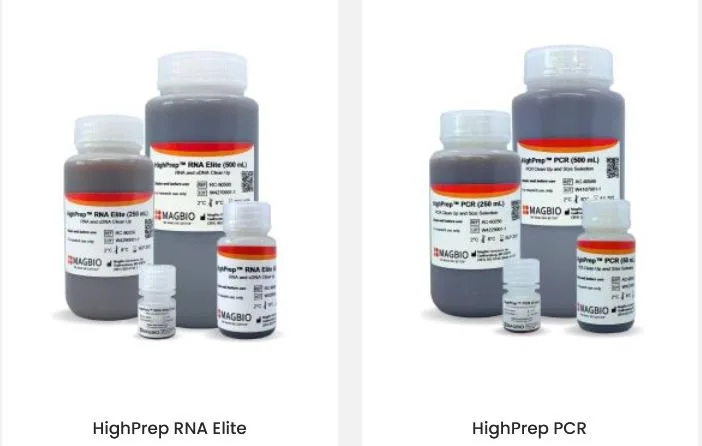
If you run high throughput or plan to, automation compatibility becomes essential. Bead-based cleanup reagents such as HighPrep PCR are well suited to both manual and automated workflows, which helps labs scale without redesigning their processes. Choosing automation-friendly consumables early prevents painful, costly transitions later as your sample numbers climb.
A Simple Framework for Making the Decision
A structured approach keeps your evaluation objective. Use these steps to compare options fairly before committing.
- Define your main applications, sample types, and target fragment sizes first.
- List your must-have criteria, such as recovery, purity, and kit compatibility.
- Request performance and comparison data directly from suppliers.
- Validate shortlisted reagents on your own samples before switching fully.
- Factor in total cost, including hands-on time, waste, and scalability.
- Confirm lot-to-lot consistency and reliable supply availability.
Following this order helps you avoid choosing on price alone and then discovering hidden costs after you've already committed.
Common Mistakes When Choosing Reagents
Many labs stumble on the same avoidable errors. Recognizing them early saves both money and rework.
- Choosing purely on lowest price without checking performance impact.
- Skipping in-house validation and trusting marketing claims alone.
- Ignoring compatibility with existing kits, instruments, or automation.
- Overlooking lot-to-lot consistency and long-term supply reliability.
- Underestimating hands-on time and downstream troubleshooting costs.
- Failing to plan for future throughput and scalability needs.
Avoiding these pitfalls turns reagent selection from a gamble into a repeatable, defensible decision.
Tips for a Smooth Transition
Switching reagents doesn't have to disrupt your lab if you plan it carefully. A measured approach protects your data and your timelines.
Start by testing new reagents alongside your current ones on non-critical samples so you can compare results directly. Document every result, including yield and purity, to build an evidence base you can trust. Pay particular attention to NGS library preparation DNA cleanup performance during this phase, since recovery and purity here strongly influence the quality of everything that follows downstream.
FAQs
Should I always choose the cheapest reagent?
No. The lowest price can hide costs like lower yield, extra hands-on time, or protocol changes. Evaluate performance and cost together, and factor in total value across a full workflow rather than deciding on price per reaction alone.
How do I know if a reagent is compatible with my kits?
Check whether it fits your existing volume ratios, steps, instruments, and automation without major changes. Request compatibility information from the supplier, then confirm it yourself by validating the reagent on your own samples before switching.
Why is lot-to-lot consistency so important?
Inconsistent reagents introduce variability that's difficult to trace and can quietly compromise your data. Consistent lots give you reproducible results run after run, which protects both your timelines and your confidence in your sequencing outcomes.
Standardizing your NGS consumables this year? See how MagBio Genomics and HighPrep PCR deliver reliable, automation-friendly cleanup that fits your workflow, so your lab can scale sequencing with confidence and consistency. Contact us today via call (301) 302-0144 for expert support.