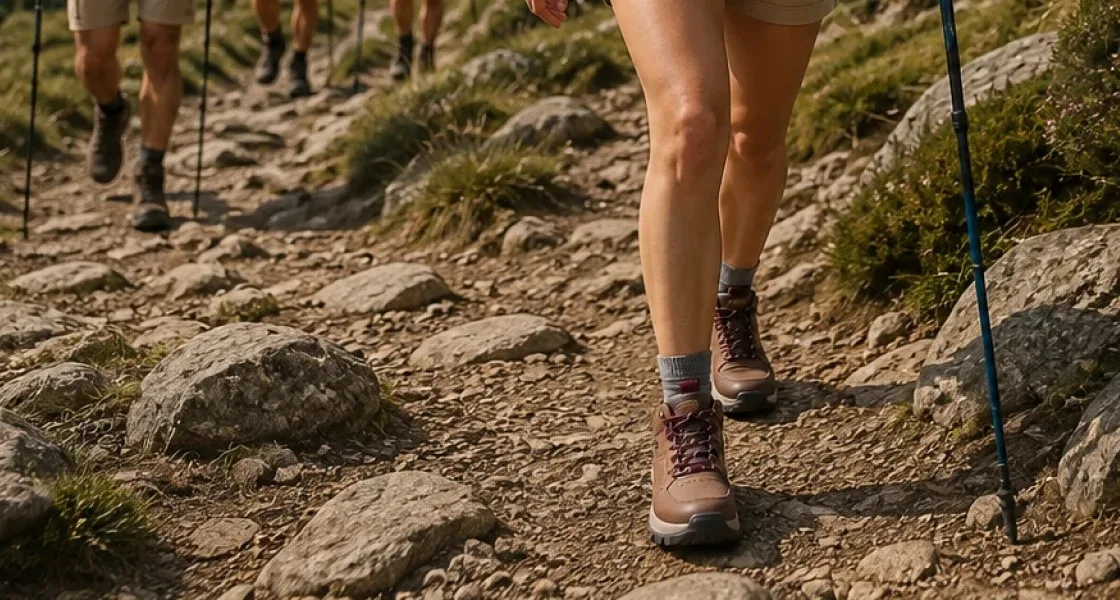
The British countryside has a way of making a simple walk more complicated.
A forecast that promises a dry morning can turn into drizzle halfway up a hillside, while a well-marked trail can become a mixture of mud, wet grass and slippery stone after a few days of rain. For anyone who walks regularly, footwear is therefore more than a matter of comfort. It can determine how confidently you move across the terrain.
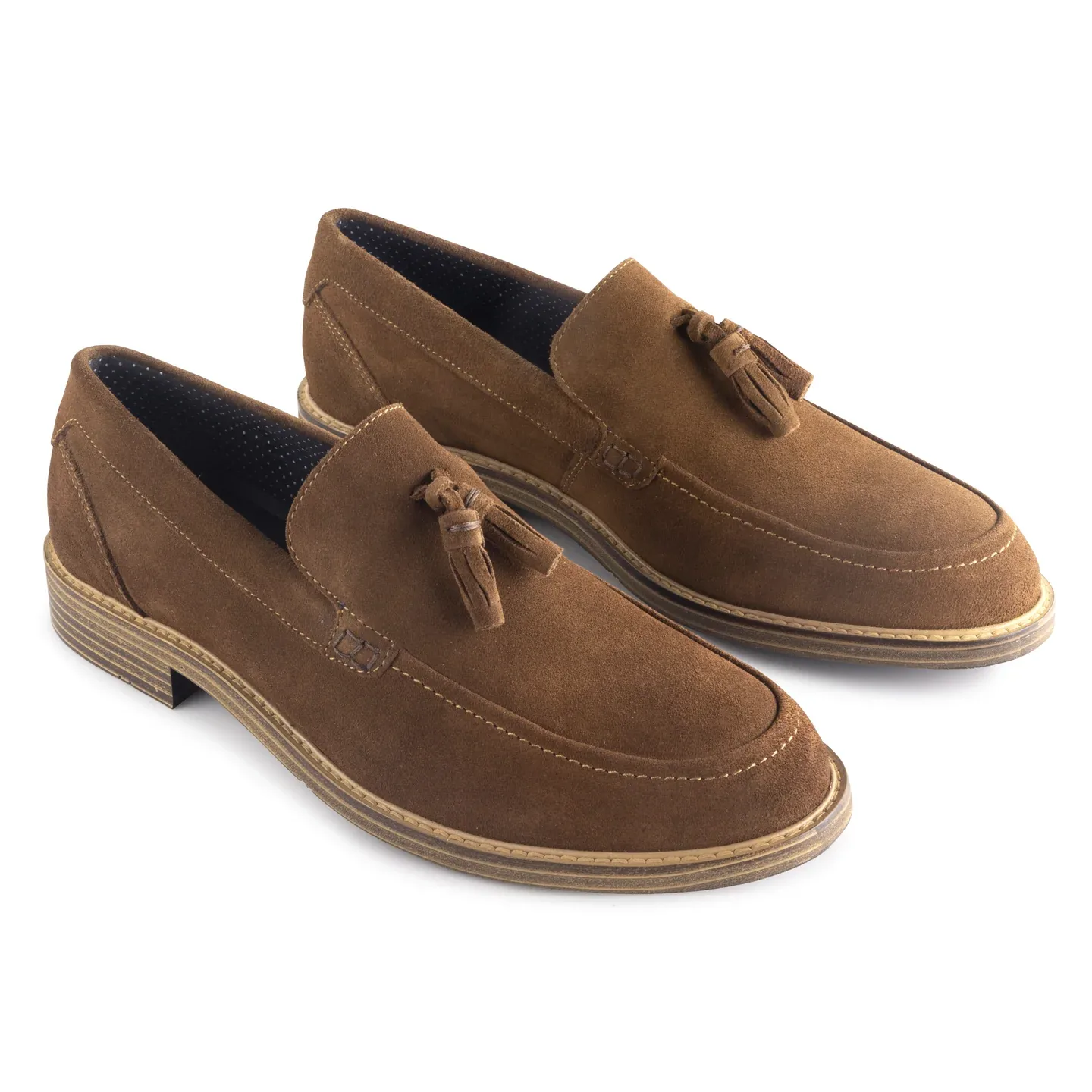
That is why choosing men's waterproof hiking shoes in the UK requires a little more thought than simply finding a pair described as waterproof.
The right footwear needs to balance protection from rain, grip, comfort, breathability, and the type of ground you are likely to encounter. A lightweight shoe may be ideal for a woodland trail but less convincing on a steep, rocky route in the Lakes.
The trick is matching the footwear to the walk.
Choosing men's waterproof hiking shoes in the UK
Start by considering where you normally walk.
If most of your weekends involve maintained paths, country parks and relatively gentle hills, a lightweight hiking shoe may provide all the support you need. These shoes tend to feel more agile than traditional boots and can be particularly comfortable when you are covering plenty of distance.
For rougher terrain, longer hikes or routes with significant elevation, additional structure may be useful. A sturdier shoe or mid-height boot can provide greater support and protection, particularly when carrying a heavier backpack.
Then there is the weather.
A waterproof membrane can be invaluable in Britain's wetter months, but waterproofing is only one part of the equation. If the shoe does not breathe well, your feet can become damp from perspiration even when rain stays outside.
That is an easy detail to overlook.
For regular walkers, the ideal pair is usually one that keeps external moisture out without feeling excessively warm during moderate activity.
Hiking shoes or boots: which is right for you?
The traditional hiking boot still has plenty going for it, particularly on demanding routes.
A higher ankle can offer additional coverage and a more secure feel on uneven ground. Boots can also provide greater protection against mud, rocks and wet vegetation.
But there are plenty of walks where that level of footwear is unnecessary.
Lightweight men's waterproof walking shoes can be an excellent choice for everyday countryside walking, travel, woodland trails and less technical routes. They are easier to wear, often lighter on the foot, and can feel more natural when you are walking on firm paths.
Think about the terrain rather than the label.
A two-hour walk through a local country park does not necessarily require the same footwear as a full-day hike across exposed mountain terrain.
What makes a good waterproof walking shoe?
Waterproofing is the obvious starting point, but look beyond the word itself.
Check how the manufacturer describes the construction and what conditions the footwear is intended to handle. A shoe designed to cope with occasional showers is not necessarily suitable for standing in wet grass for several hours.
The tongue and gusset construction can also influence how easily water enters around the upper. Even a waterproof shoe has a practical limit if water is able to flow over the collar.
The materials matter, too. Synthetic uppers can be lighter and easier to maintain, while leather can offer durability and a more traditional feel. Neither is automatically the right choice for every walker.
Breathability deserves equal consideration. During a brisk uphill section, your feet can generate considerable heat. A shoe that feels wonderfully waterproof at the start of a walk may become uncomfortable if moisture has nowhere to escape.
The best footwear is a compromise — waterproof enough for the conditions, breathable enough for the activity.
Don't overlook grip and sole design
A waterproof shoe with poor grip is not particularly useful on a muddy hillside.
Look at the outsole and consider the terrain you normally encounter. Deeper lugs can provide useful traction in mud and softer ground, while a less aggressive pattern may feel more comfortable and predictable on hard paths and pavements.
Rubber compounds also vary in their characteristics. Some are designed with wet-rock grip in mind, while others are aimed more towards durability and general outdoor use.
There is no single tread pattern that is perfect for every situation.
This is why descriptions such as "all-terrain" should be treated as a starting point rather than a guarantee. If your favourite routes involve wet roots, muddy inclines and rocky descents, prioritise footwear designed with those surfaces in mind.
And remember that tread eventually wears down. A once-excellent hiking shoe can become noticeably less capable after many miles.
Choosing men's trekking trousers for the same conditions
Footwear is only one part of a sensible walking outfit.
The right men's trekking trousers can make a significant difference when the weather is changeable. Traditional jeans may feel perfectly comfortable around town but become heavy and restrictive when wet.
Walking trousers tend to use lighter, more flexible fabrics that allow a greater range of movement. Some are designed to dry quickly, while others incorporate stretch panels or articulated knees.
Again, consider the conditions.
For a warm summer hike, lightweight trousers may be more comfortable than a heavier pair. During colder months, a slightly more substantial trouser can work well alongside a base layer.
For genuinely wet conditions, it can make sense to carry overtrousers rather than relying on the walking trousers themselves to provide complete protection.
The most useful outdoor clothing tends to be modular. Layers and adaptable pieces give you more options when the forecast changes.
Getting the fit right
Even excellent footwear will struggle if it does not fit properly.
Try hiking shoes with the socks you would normally wear on a walk. Your heel should remain secure without excessive pressure, while your toes should have enough room to move.
Pay particular attention to downhill sections.
Your foot naturally moves forwards when descending, and a shoe that feels fine on flat ground can suddenly reveal a poor fit when tackling a steep slope. Your toes should not repeatedly strike the front of the shoe.
It is also worth considering when you will be walking. Feet can swell slightly during longer outings, so buying footwear based purely on how it feels for five minutes in a shop can be misleading.
If possible, walk around properly before making a decision.
Looking after waterproof footwear
Outdoor footwear takes a fair amount of abuse.
Mud should be removed after a walk rather than allowed to dry into the upper and sole. If the shoes become soaked, let them dry naturally in a well-ventilated place.
Avoid putting wet footwear directly against a radiator or another intense heat source. Excessive heat can affect adhesives, materials, and the shape of the shoe.
Waterproof membranes and treatments may also require specific care. Follow the manufacturer's cleaning guidance rather than assuming that every type of footwear should be treated in the same way.
If water stops beading on the outer material, that does not necessarily mean the waterproof membrane has failed. In some cases, the outer fabric simply needs cleaning and reproofing.
It is a small distinction, but one that can save an otherwise perfectly good pair of shoes from an unnecessary replacement.
Building a practical walking kit
You do not need a wardrobe full of specialist outdoor clothing to enjoy walking.
For many people, a sensible kit can be built around one reliable pair of waterproof walking shoes, comfortable trekking trousers, moisture-managing layers and a waterproof outer shell.
From there, add equipment according to the terrain and season.
A lightweight daypack, spare socks and basic navigation equipment can be more useful than spending heavily on highly technical clothing that rarely gets used.
Northwest Territory, for example, offers outdoor clothing and footwear aimed at walking and everyday outdoor use, making it useful to consider footwear alongside the wider clothing system rather than treating shoes as an isolated purchase. Northwest Territory
Ultimately, the best men's waterproof hiking shoes in the UK are not necessarily the most rugged or the most expensive. They are the ones that suit the ground beneath your feet, the weather you are likely to face, and the distance you actually intend to walk.
Good outdoor kit should give you confidence without becoming something you have to think about constantly.
FAQ
Are waterproof hiking shoes better than hiking boots?
Neither is universally better. Lightweight hiking shoes can be suitable for maintained paths and moderate walks, while boots may offer additional support and protection on rougher terrain.
What should I look for in men's waterproof walking shoes?
Focus on waterproof construction, grip, fit, breathability, cushioning, and the type of terrain you expect to encounter. Weight is also worth considering if you regularly walk long distances.
Are waterproof hiking shoes suitable for UK winter walks?
They can be, depending on the terrain and weather. For very cold, muddy or mountainous conditions, a more substantial waterproof boot may provide greater protection and support.
What should men wear with trekking trousers?
A practical combination is a moisture-managing base layer, trekking trousers and a waterproof or windproof outer layer when required. The exact combination should reflect the temperature, rainfall and intensity of the walk.