omething is reassuring about a good pair of shoes.
A well-cut suit can transform an outfit, but the wrong footwear can undermine it surprisingly quickly. Formal shoes are often treated as the finishing touch, yet they have a greater influence on how an outfit looks and feels than many men realise.
The difficulty is knowing what to buy when the occasion is not always clear-cut. A pair worn to a wedding might also need to work for the office. Shoes bought for a business trip may need to survive long walks, restaurant dinners and unpredictable weather.
That is where formal shoes for men become less about following rigid rules and more about understanding versatility.
The best pair is rarely the one that looks impressive for ten minutes in a shop. It is the pair you can imagine reaching for repeatedly because it works with your clothes and your lifestyle.
Choosing formal shoes for men by occasion
The first question should always be: where am I going to wear them?
For traditional business settings, interviews, and particularly formal events, the Oxford remains a dependable choice. Its closed lacing and clean profile give it a relatively refined appearance, especially in black leather.
Derby shoes are a little more relaxed. Their open lacing gives them a less formal character, but that can actually make them more useful for everyday wardrobes. A dark brown Derby, for example, can work with tailored trousers during the week and smarter chinos at the weekend.
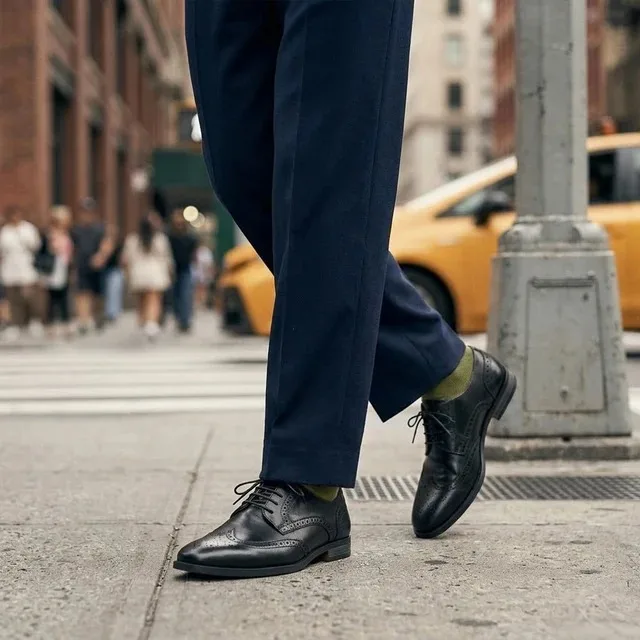
Brogues introduce more visual detail through their perforated decoration. They are particularly useful when you want something smarter than a casual shoe without making the outfit feel overly serious.
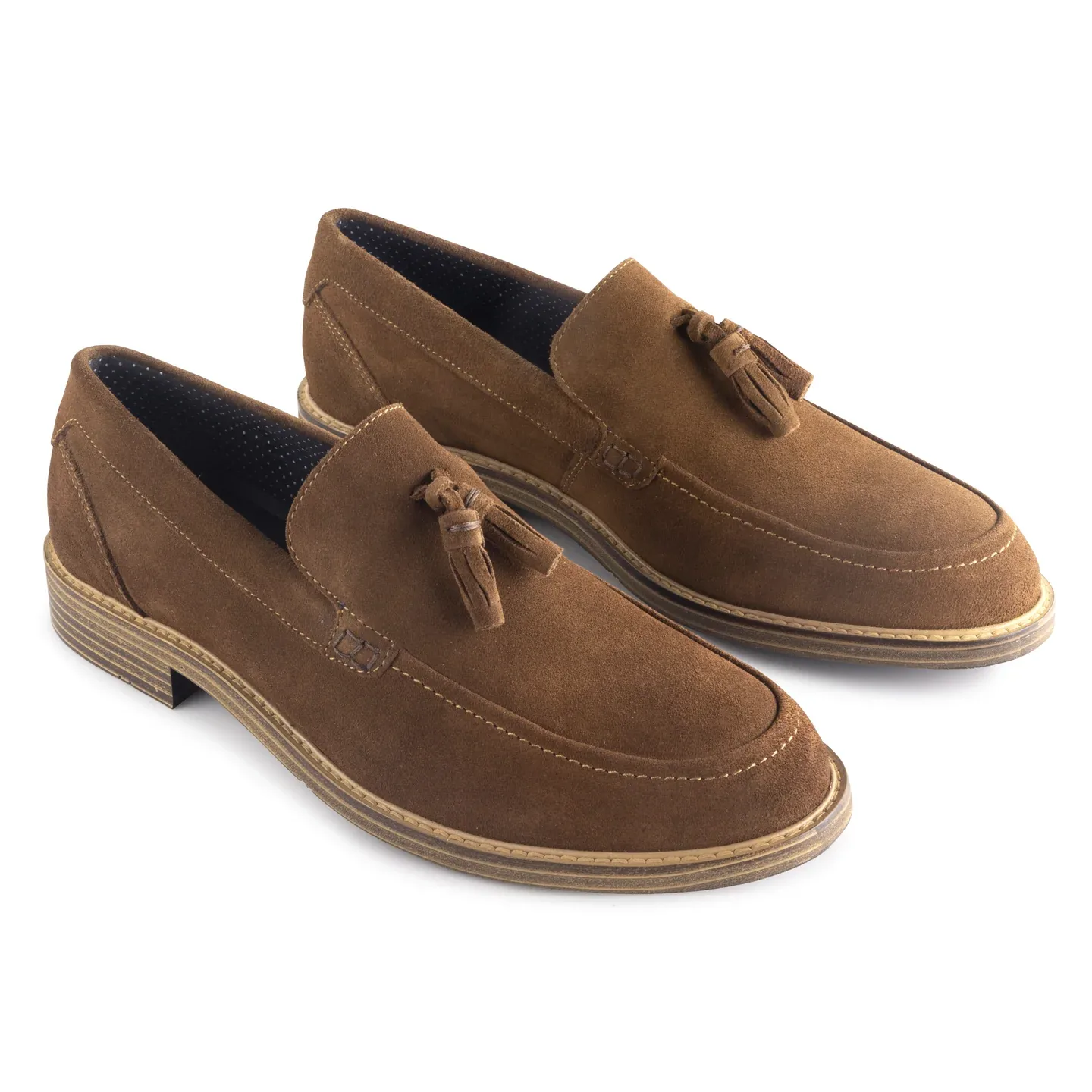
Then there are loafers, which occupy an interesting middle ground. A polished leather loafer can look perfectly at home with tailoring, while suede versions can move comfortably into smart-casual territory.
There is no need to own every style. Understanding the differences is more useful.
The key styles every man should understand
Oxford: The traditional choice for formal occasions and conservative businesswear. Black is the most formal option, while dark brown offers greater flexibility.
Derby: A versatile lace-up with a slightly more relaxed character. A strong everyday choice for men who want one pair to cover several settings.
Brogue: Decorative perforations add personality. The more elaborate the brogueing, the more casual the shoe generally appears.
Monk strap: A distinctive alternative to traditional laces. Particularly effective with tailored outfits when you want something a little less predictable.
Loafer: Easy to wear and particularly useful in warmer weather. Leather loafers can be smart enough for formal occasions, while suede and softer styles suit more relaxed outfits.
One practical point often gets overlooked: the shoe should work with the shape and cut of your trousers.
A very slim trouser leg paired with a particularly bulky shoe can look unbalanced. Conversely, a substantial Derby can sit naturally beneath wider-cut tailoring. Proportion matters.
Finding the right colour
Black shoes have an obvious place in a formal wardrobe, but buying only black footwear can make your options surprisingly narrow.
Dark brown is arguably one of the most useful colours for everyday smart dressing. It works particularly well with navy, grey and blue tailoring and tends to feel less severe than black.
Tan is another option, although it naturally leans towards less formal occasions. It can look excellent with lighter summer tailoring, chinos and casual separates.
Burgundy and oxblood offer another route for men who want some personality without moving too far from traditional dress.
The safest approach is to consider the clothes already hanging in your wardrobe. If most of your suits are navy, a dark brown pair may be considerably more useful than another black pair.
When comfort becomes part of good style
There is an old assumption that formal shoes have to be uncomfortable.
They do not.
A shoe that looks excellent but leaves you limping after a wedding reception has failed at a fairly basic job.
Fit is the starting point. Your heel should feel secure without being squeezed, while your toes need sufficient room to move. Do not rely entirely on the size printed inside the shoe, either. Different lasts and constructions can produce very different fits even when two pairs carry the same size.
Think about when you will wear them, too.
If a pair is intended for an eight-hour wedding, a short walk to the venue is not an adequate test. Your feet can change throughout the day, particularly after prolonged standing, so comfort over time matters.
Cushioning, lining, sole flexibility and overall weight all contribute.
Good formal footwear should feel supportive rather than merely soft.
Choosing holiday shoes for men
Holiday footwear has a different job to perform.
A pair of holiday shoes for men may need to cope with sightseeing in the morning, lunch outdoors, an afternoon walk and dinner in the evening. Packing four different pairs is rarely practical, particularly when luggage space is limited.
This is where loafers become particularly useful.
A leather loafer can be dressed up with tailored trousers for dinner or worn more casually with chinos. Suede styles can work beautifully with linen and lightweight summer clothing, although they are obviously less practical if heavy rain is likely.
For city breaks, comfort deserves even more attention. A shoe that looks smart but becomes uncomfortable after several thousand steps will probably spend the remainder of the trip in the hotel room.
A useful holiday wardrobe might therefore include one versatile loafer, a comfortable casual trainer and another pair suited to the destination. The exact combination depends on where you are going and what you plan to do.
Silver Street London, for example, separates its men's footwear into categories including formal shoes, loafers, sandals and holiday-season styles, which reflects a useful way of thinking about footwear: choose according to how and where the shoe will actually be worn. Silver Street London
Looking after quality footwear
Buying good shoes is only half the job.
Leather responds well to regular care. Dirt should be brushed away rather than allowed to build up, while occasional conditioning and polishing can help maintain the appearance of the upper.
Rotation matters as well.
If possible, avoid wearing the same pair every day. Allowing leather footwear to rest between wears gives moisture time to dissipate and helps the shoe retain its shape.
Shoe trees are particularly useful for better-quality leather shoes. They can help maintain the shape while absorbing some of the moisture that accumulates during normal wear.
And never rush the drying process. If shoes become soaked, allow them to dry naturally rather than placing them directly beside a radiator.
These are small habits, but they make a noticeable difference over several years.
Build a versatile shoe wardrobe
A man's shoe collection does not need to be enormous.
For many wardrobes, a black formal shoe, a dark brown Derby or brogue, and a versatile loafer provide a solid foundation. From there, additions can be based on genuine needs: summer footwear, boots for colder weather, or something distinctive for weddings and evening events.
The important thing is that each pair earns its space.
There is little value in owning six pairs that rarely leave the wardrobe. Three or four well-chosen pairs that cover work, weddings, dinners, weekends and holidays are likely to be far more useful.
The same principle applies when replacing an old pair. Rather than asking what looks fashionable this season, consider what is missing from your existing footwear.
Ultimately, the best formal shoes for men are the ones that combine appropriate style with genuine wearability. A smart Oxford has its place, but so does a comfortable Derby or loafer that can move between occasions without looking out of place.
Good footwear should make getting dressed easier, not more complicated.
FAQ
What are the most versatile formal shoes for men?
A black Oxford is a strong choice for formal occasions, while a dark brown Derby or brogue can cover a wider range of business and social settings. A leather loafer is useful for men who want something that can move between formal and smart-casual outfits.
Are brown formal shoes as versatile as black?
Brown shoes can be extremely versatile, particularly with navy, grey and blue clothing. Black remains the more traditional option for highly formal occasions, but dark brown can work across a broader range of everyday outfits.
What are good holiday shoes for men?
Loafers are particularly useful because they can be dressed up or down. For walking-heavy trips, prioritise comfort and support, while the climate should influence your choice of leather, suede or lighter materials.
How should formal shoes fit?
The heel should remain secure without excessive pressure, while the toes should have enough room to move comfortably. Try them with the socks you normally wear and consider how they feel after extended walking or standing.