Choosing an indices CFD trading platform badly is expensive. Not just in fees, but in slippage, missed tools, and the slow realisation that you're fighting your broker as much as the market. This article walks through the specific criteria that actually separate good platforms from ones that look fine until you're live. Whether you're new to forex online trading or already juggling several index positions, it's worth checking your current setup against these benchmarks.
Table of Contents
- What Is an Indices CFD Trading Platform?
- Key Features to Evaluate Before You Open an Account
- Regulation, Safety, and Trust
- Costs, Spreads, and Hidden Fees
- Platform Tools and Execution Quality
- Broker Comparison Table
- Key Takeaways
- FAQ
What Is an Indices CFD Trading Platform?
Most people come to index CFDs because they want exposure to broad market moves without buying dozens of individual stocks. A CFD (contract for difference) gives you exactly that: price exposure to an underlying index, with no ownership of the actual assets involved. You can go long on the US500 if you think it's heading up, or go short on the UK100 if you expect a pullback.
What makes this different from buying an index ETF is leverage. With leverage, your broker essentially extends credit so you can control a position larger than your deposit alone would allow. At 10:1, a $1,000 account controls a $10,000 position. That amplifies gains. It amplifies losses by exactly the same factor.
The platform itself is the software environment where all of this happens: charting, order entry, risk tools, account reporting. It's not just an interface. The platform shapes your execution speed, your available order types, and how clearly you can see what a trade is actually costing you. That's why picking one deserves more thought than most beginners give it.
Key Features to Evaluate Before You Open an Account
Not all platforms are built the same, and the gaps tend to show up at the worst possible moments. Here's what to look for before you commit any capital.
Range of Indices Available
Coverage varies more than you'd expect. Some brokers list five or six major indices and call it done. Others offer 30 or more, including Asian markets, sector indices, and commodity-linked benchmarks. If your strategy relies on correlations between, say, the Nikkei and the S&P 500, limited coverage isn't a minor inconvenience. It's a hard constraint on what you can trade.
Order Types and Risk Tools
Stop-loss orders, which close a trade automatically if the price moves against you by a set amount, are non-negotiable. But look beyond the basics. Guaranteed stop-loss orders, trailing stops, and take-profit levels all give you finer control over how much you can lose on any single position. None of these tools eliminate risk entirely, but they do let you define it in advance rather than reacting in the moment.
Mobile and Desktop Access
A platform that runs well on desktop but lags on mobile is a real problem if you're away from your desk during active sessions. Consistent execution across devices isn't a luxury. It's a practical requirement for anyone trading during market hours.
Regulation, Safety, and Trust
Regulation is not a formality. It's the primary line of defence between your capital and a broker with no real accountability.
Under current FCA rules as of 2026, retail traders in the UK are capped at 20:1 leverage on major indices. ESMA applies similar restrictions across the EU. These limits exist because leverage is consistently the biggest single source of retail trader losses, and regulators have the data to prove it. Any broker offering significantly higher leverage to retail clients in regulated jurisdictions is a red flag worth taking seriously.
Look for licensing from credible authorities: the FCA in the UK, CySEC across Cyprus and the EU, ASIC in Australia, or FSCA in South Africa. A regulated broker is required to hold client funds in segregated accounts, meaning your money sits separately from the broker's own operating capital. That segregation matters a great deal if a broker runs into financial difficulty.
Verify a broker's regulatory status directly on the relevant regulator's website. Do this first, before you look at spreads, before you try the demo, before anything else. No charting suite or educational library compensates for trading with an unregulated counterparty.
Costs, Spreads, and Hidden Fees
Every trade has a cost. Most beginner traders underestimate how quickly those costs compound.
Spreads
The spread is the gap between the bid price (what the market will pay you) and the ask price (what you'll pay the market). You pay it every time you open a position. On the US500, competitive platforms typically quote spreads between 0.4 and 1.5 points. That range looks small until you're trading frequently, at which point it starts to show up clearly in your monthly results.
Overnight Financing Charges
CFDs aren't built for indefinite holding. Swap rates, the daily financing charges applied when you keep a CFD position open overnight, can quietly accumulate on leveraged positions held across several days or weeks. According to the ESMA 2025 retail investor report, a majority of retail CFD traders who hold positions beyond five days report financing costs as a meaningful drag on returns. Check the swap rate schedule before entering anything you plan to hold for more than a day or two.
Commission Structures
Some brokers charge a per-trade commission on top of the spread. Others are spread-only. Neither model is inherently better. But you need to calculate your total cost per round trip, using realistic trade sizes, and compare that number across brokers rather than just looking at headline spread figures.
Platform Tools and Execution Quality
Even a sound strategy will underperform on a platform that's slow or poorly built. According to a 2025 Finance Magnates industry report, execution speed and slippage were the top two complaints from retail CFD traders surveyed globally. Not spreads. Not fees. Execution. That finding should shape how seriously you test any platform before putting real money on it.
Charting and Analysis
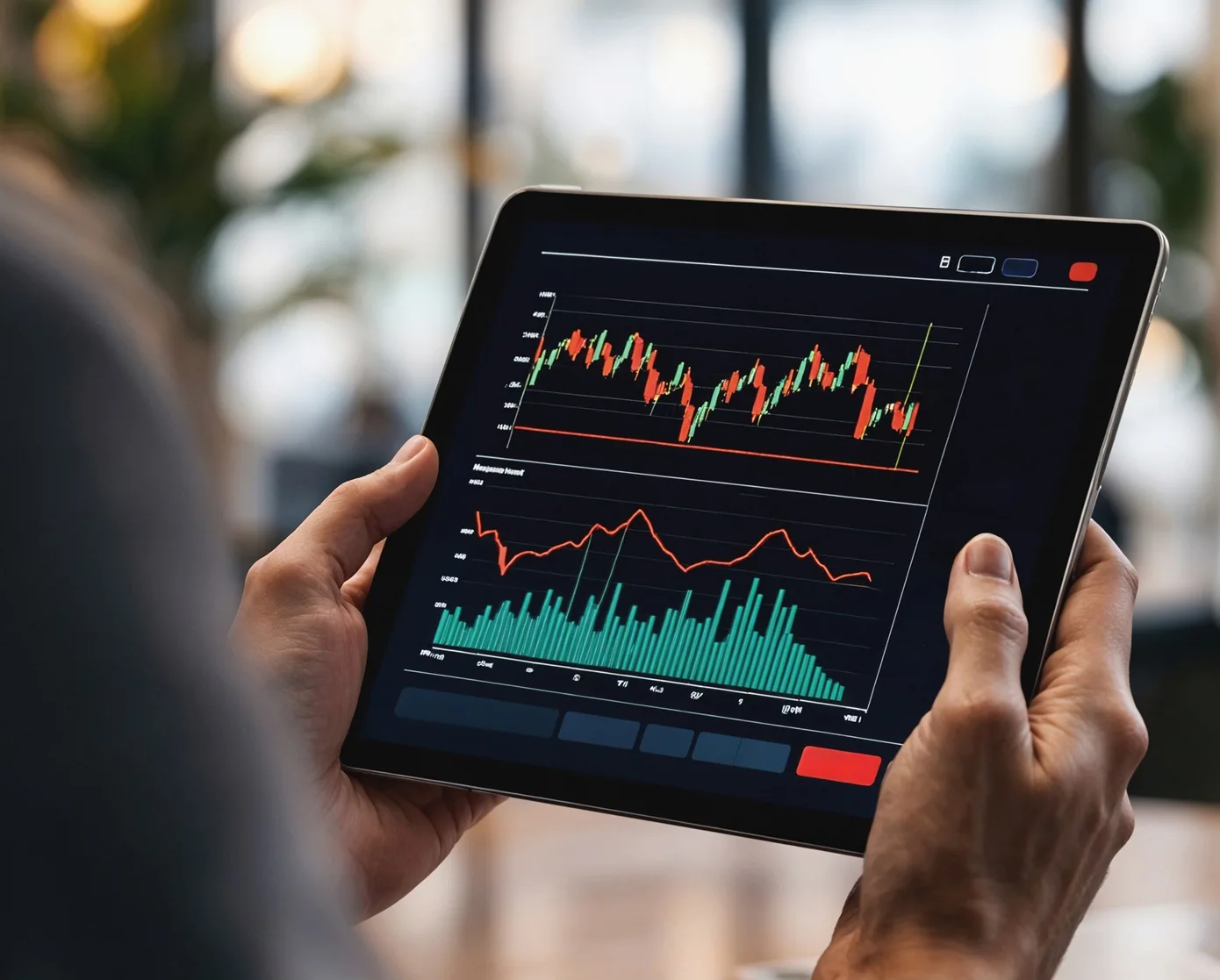
Index trading at any serious level requires more than a basic line chart. Look for candlestick charts, multiple timeframes, and a solid range of technical indicators, including moving averages, RSI, and Bollinger Bands. If the charting feels limited on a demo account, it'll feel worse when you're managing live positions and need to make quick decisions under pressure.
Social and Copy Trading
Some platforms now integrate copy trading functionality, letting you mirror the positions of more experienced traders automatically. This is genuinely useful when you're still getting a feel for index correlations and market timing. Inveslo, for example, combines copy trading with a structured education suite, which makes it a practical option if you'd rather learn from live market behaviour than from static theory.
Execution and Slippage
Slippage is the difference between the price you expected and the price you actually got. It tends to matter most during fast-moving sessions, like the US open or right after a major economic release, when prices are moving quickly and fills can lag. Brokers with strong liquidity relationships and low-latency infrastructure generally produce tighter slippage. Ask specifically about execution policy before you open an account: is the broker operating as a market maker, or does it route orders through STP or ECN infrastructure?
Key Takeaways
Picking an indices CFD trading platform comes down to four things: who regulates the broker, what it costs you to trade, how reliable the execution is, and whether the platform tools match your actual strategy. There is no one-size-fits-all answer here, and what works for a scalper trading the US500 may not suit someone taking longer-term positions on the DAX.
- Regulation first: always verify licensing with the FCA, CySEC, or ASIC before depositing.
- Total cost per trade: account for spreads, swap rates, and commissions together, not separately.
- Execution quality: test the demo account under realistic conditions before going live.
- Platform fit: copy trading and education tools matter most if you are still building your approach.
Start with a demo account on any platform that clears your regulatory check, trade it seriously for two to four weeks, and let the execution data tell you whether it deserves your real capital.
FAQ
Q1. What is the difference between an index ETF and an indices CFD?
An ETF gives you ownership of a basket of stocks tracking an index. An index CFD gives you price exposure only, with leverage, and no ownership. CFDs are typically used for shorter-term trading, while ETFs suit long-term investors holding positions for months or years.
Q2. How much capital do I need to start trading index CFDs?
Most regulated brokers allow you to open an account with as little as $100 to $500. However, trading with very small capital alongside leverage increases your risk of a margin call substantially. A more realistic starting point for managing risk properly is $1,000 or more.
Q3. Are index CFDs suitable for beginners?
They can be, provided the beginner takes the time to understand leverage, margin, and risk management before trading live. Using a demo account and copy trading features to observe real market behaviour is a sensible first step rather than trading on instinct alone.
Q4. What indices can I typically trade on a CFD platform?
Most reputable platforms offer the major global indices: US500, US30, Nasdaq100, FTSE100, DAX40, Nikkei225, and ASX200. More specialised platforms extend coverage to sector indices, small-cap indices, and emerging market benchmarks.
Author Bio
Michael Reed is a financial markets writer with 12 years of experience covering forex online trading, CFD markets, and retail investment platforms. He has written for institutional and retail audiences across Europe and Asia, with a focus on helping traders navigate platform selection, regulatory changes, and risk management practices.