
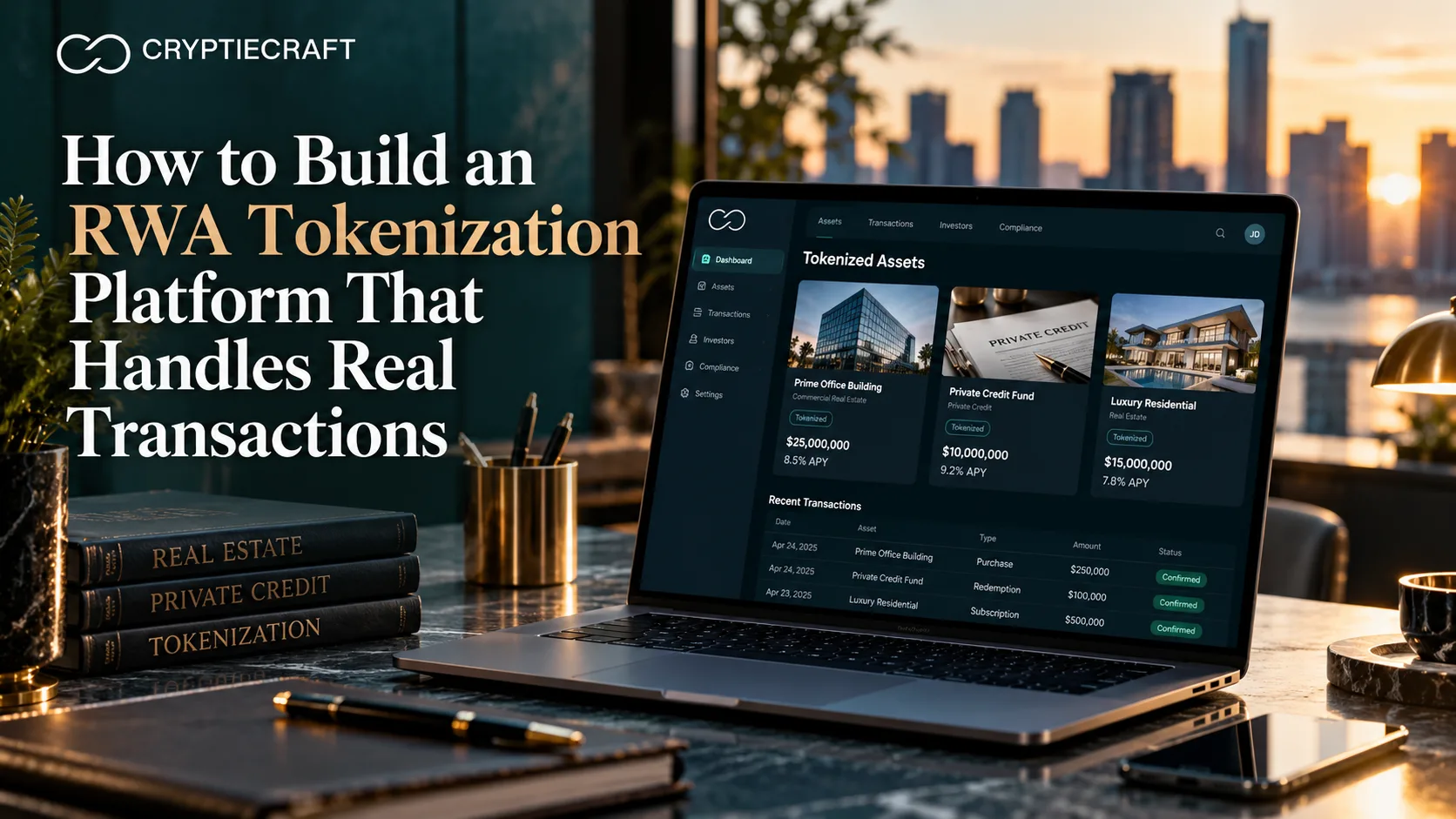
A token may be issued correctly while the investor dashboard still displays the wrong holding. That can happen when the blockchain transaction and application database finish at different times.
Anyone researching how to build an RWA tokenization platform should pay attention to this difference. The software must coordinate asset rights, investor approval, payment status, and token records rather than assuming that a completed smart contract call ends the process.
Define What a Transaction Means
Start with one realistic workflow. An approved investor subscribes to an offering, sends payment, receives an allocation, and later views the confirmed position.
List every condition that must be true before each step can complete. The payment may need external confirmation. The wallet may need to satisfy eligibility checks. The token allocation may require an authorized signer.
Use the asset's legal and operating documents to define the rules. A token cannot establish rights that the documents do not grant.
Design Records That Show Each Stage
A backend should store a clear transaction reference and the current state of every subscription. A useful sequence might include created, awaiting payment, payment confirmed, allocation submitted, and completed.
The system should also record failures. If a blockchain transaction is rejected, users must not see a completed allocation merely because payment succeeded.
Make Requests Safe to Retry
External systems sometimes send the same notification twice. Store a unique event identifier and make repeated processing return the earlier result.
This prevents a duplicate payment notification from creating two token allocations.
Link Investor Approval With Wallet Rules
Wallet addresses do not prove identity. The platform should link approved addresses with the investor records needed for the offering, while keeping sensitive personal documents appropriately protected.
Where token transfers must be restricted, the contract needs controls that apply outside the website too. ERC 3643 offers a reference architecture for identity aware transfer checks.
The exact token standard should be chosen after reviewing transfer rules and compatibility requirements.
Confirm Blockchain Results Before Updating Holdings
Sending a transaction does not mean it has completed. The backend should track the transaction identifier, confirmation status, and final outcome under the selected network's rules.
If the application restarts, it must recover unfinished operations from saved records rather than submit every request again.
These tasks form a practical part of RWA tokenization platform development, where smart contracts, backend services, and asset administration must share consistent information.
Test the Exceptions Before Launch
A good test plan uses more than successful subscriptions. It also includes late payments, expired investor approval, rejected allocations, repeated notifications, and unavailable blockchain services.
One test should start with a confirmed payment and simulate a failed token allocation. The application should clearly show the pending problem, prevent a second allocation, and provide a controlled recovery procedure.
Another should verify that a blocked recipient cannot bypass an eligibility check by calling the token contract directly.
A reliable platform can explain every unsettled transaction. That matters more than whether the first demonstration makes token issuance look effortless. The goal is to build an RWA tokenization platform whose records remain accurate when normal operations become complicated.