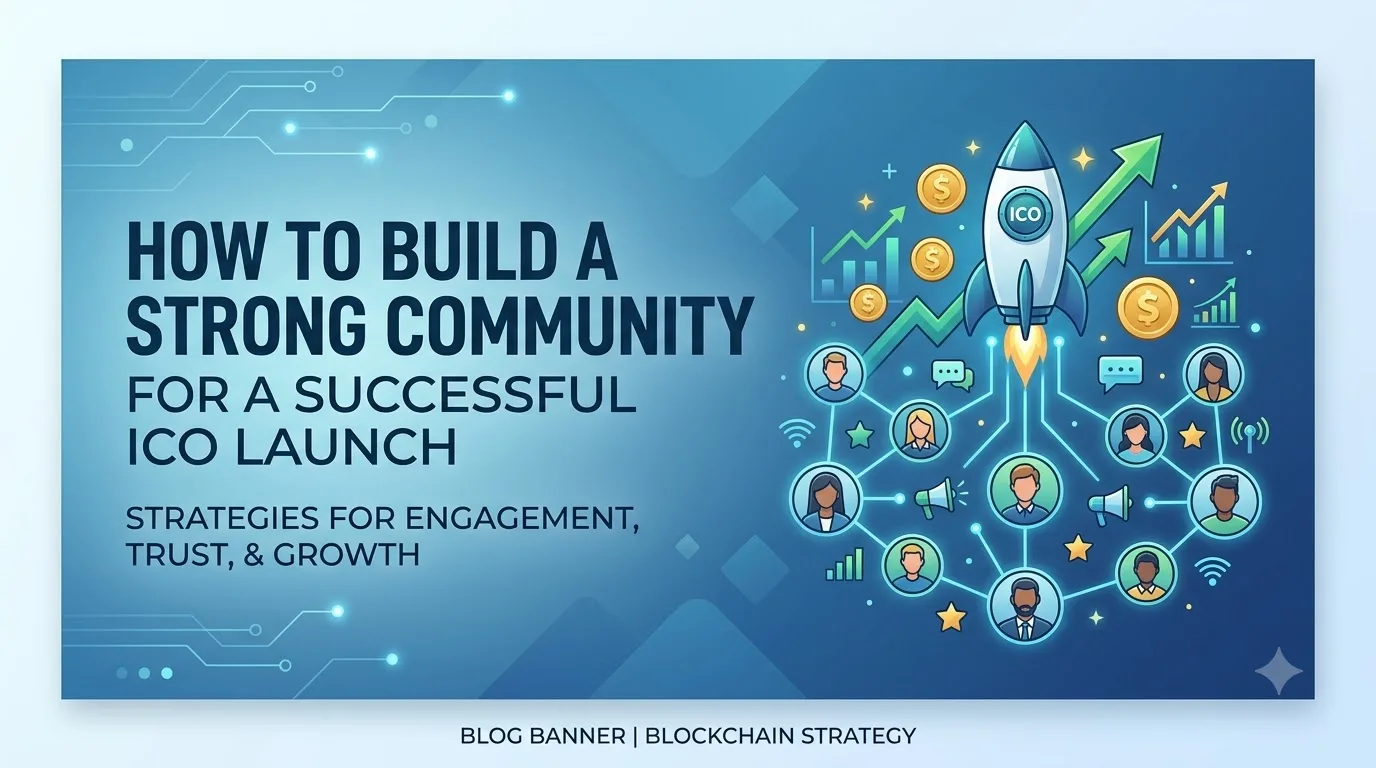
An ICO can attract attention with a strong product, token model, and launch plan. Yet attention alone does not create a sustainable token ecosystem. People need reasons to follow the project, understand its purpose, participate in discussions, and remain involved after the token launch.
Community building has become especially important as crypto users spread across several platforms. CoinGecko's 2026 research found that X, Telegram, and YouTube together accounted for 84% of respondents' primary crypto social-media activity. X was the largest individual platform, but only 41.7% of respondents identified it as their main place for crypto activity.
This shows why ICO teams need a community strategy that works across multiple channels instead of depending on one social network. A successful community is built around useful information, consistent communication, genuine interaction, and confidence in the project's direction.
Start With a Clear Reason for the Community to Exist
The first step is defining why people should join the community before asking them to buy or promote a token. A Telegram group filled with price predictions and promotional messages does little to establish lasting interest.
The community should instead reflect the project's actual purpose. If an ICO is building a DeFi application, members may want product updates, governance discussions, protocol education, testnet opportunities, and technical explanations. If the project focuses on gaming, the community may respond better to gameplay previews, development milestones, player feedback, and ecosystem announcements.
This distinction matters because different audiences join crypto communities for different reasons. A developer may care about documentation and technical progress, while an investor may focus on token distribution, utility, vesting, and project milestones.
The project should therefore define its primary community groups before launch and create content around their specific interests.
Build Trust Before Asking for Investment
Trust should develop before the token sale begins. An ICO that appears only when it wants investors can struggle to build meaningful relationships.
The project website, whitepaper, social profiles, token information, team details, roadmap, and community channels should communicate the same information. Claims about partnerships, product development, token utility, audits, and milestones should be supported by verifiable information.
This is particularly important when considering How to Build a Community Before an ICO, because crypto offerings involve risks relating to price volatility, liquidity, cybersecurity, technology, operations, and legal or regulatory matters. The SEC has highlighted these categories when discussing crypto asset offerings and related disclosures.
A community should not be treated as a place to hide uncertainty. If a product milestone changes, the team should explain what happened and provide an updated timeline. If a technical issue appears, members should receive factual information rather than vague promotional statements.
Trust grows when communication remains consistent during both positive and difficult periods.
Choose Community Channels Based on User Behavior
An ICO does not need to maintain every social platform. It needs to understand where its target users actually spend time.
Telegram can support fast announcements, community discussions, support, and launch coordination. Discord can provide more structured spaces for developers, contributors, NFT holders, gaming communities, or specialized groups. X can support public conversations, educational threads, founder communication, and ecosystem visibility. YouTube can provide longer explanations through interviews, product demonstrations, AMAs, and educational videos.
CoinGecko's 2026 survey reinforces the need for this multi-channel approach. While X, Telegram, and YouTube dominate crypto social-media usage collectively, Discord, Reddit, and other platforms still represent a meaningful portion of community activity.
The important point is not to copy the same post everywhere. Each channel should have a defined purpose.
For example:
- X: Public updates, educational content, discussions, and founder communication.
- Telegram: Real-time announcements, support, and community conversation.
- Discord: Deeper member groups, contributors, developers, and events.
- YouTube: AMAs, product demonstrations, interviews, and educational content.
- Reddit: Long-form discussions, technical explanations, and community feedback.
Give Members Reasons to Participate
Community participation rarely grows from announcements alone. Members need opportunities to contribute.
Before an ICO, teams can organize AMAs, community calls, quizzes, educational sessions, testnet activities, governance discussions, feedback campaigns, and product demonstrations. These activities give members a reason to return even when there is no immediate token-related announcement.
Early members can also become valuable contributors. They may translate announcements, answer common questions, report bugs, create educational content, or introduce new users to the project.
A useful community program should recognize these contributions without turning every interaction into a reward campaign. Excessive token incentives can attract participants who are interested only in short-term rewards. Once the incentives disappear, much of that activity may disappear as well.
The goal should be to develop members who understand the project and want to contribute to its ecosystem.
Use AMAs to Reduce the Information Gap
Ask-me-anything sessions can be particularly useful during the ICO preparation period because they allow potential participants to question the team directly.
A good AMA should not be limited to questions about token price or exchange listings. The discussion can cover product development, token utility, allocation, vesting, governance, technical architecture, partnerships, security, and the roadmap.
Questions that cannot be answered immediately should be acknowledged rather than ignored. Publishing a follow-up document after the session can also help prevent important information from being lost in a fast-moving Telegram or Discord conversation.
This approach turns community communication into an information resource rather than a promotional event.
Make Moderation Part of the Launch Strategy
As community numbers increase, moderation becomes a major operational responsibility. Crypto communities frequently attract scammers, impersonators, fake administrators, phishing links, and misleading investment claims.
Moderators should establish rules before the ICO campaign begins. Official announcement channels should be clearly separated from discussion channels. Administrators should be identifiable, suspicious links should be removed quickly, and members should know how official communications are delivered.
Security education should also be part of community management. Members can be reminded that administrators will not request private keys or seed phrases and that token-sale information should always be checked against official project channels.
Regulatory awareness matters as well. In Europe, ESMA's guidance under MiCA specifically addresses market-abuse risks involving crypto assets and recognizes the intensive use of social media in crypto markets.
Promotion should therefore be handled with care. The project should distinguish factual information about its token and product from claims that could create unrealistic expectations.
Turn Community Feedback Into Product Feedback
A strong ICO community should influence more than marketing metrics. It can provide useful information about the product itself.
Teams can monitor recurring questions, feature requests, onboarding problems, technical complaints, and areas of confusion. If many users repeatedly ask how the token will be used, that may indicate that the project's existing explanation is not sufficiently understandable.
Feedback can also guide documentation and product design. Developers can identify recurring technical problems, while community managers can identify communication gaps.
This creates a valuable feedback loop:
Community discussion → Feedback → Product or communication changes → Community update
When members see that their feedback produces visible changes, participation becomes more meaningful.
Measure Community Quality, Not Just Member Count
A community with 200,000 members is not necessarily healthier than one with 20,000 active participants. Large numbers can be inflated by inactive accounts, bots, incentive hunters, or users who have little interest in the actual product.
ICO teams should monitor metrics such as:
- Daily and weekly active members
- Meaningful comments and discussions
- AMA attendance
- Content engagement
- Community retention
- Support response times
- Referral activity
- Testnet or product participation
- Sentiment and recurring concerns
These measurements provide a better view of whether the community is developing genuine interest.
For example, if Telegram membership increases sharply while discussion activity remains flat, the campaign may be generating reach without meaningful engagement. If membership grows more slowly but active participation, product usage, and retention improve, the community may be developing deeper involvement.
Prepare the Community for Life After the ICO
One of the biggest mistakes is treating community management as something that ends when the token sale closes.
The ICO should be presented as one stage of a longer ecosystem journey. Members should understand what happens after the sale, including product development, token utility, governance plans, ecosystem partnerships, exchange-related announcements where applicable, and future milestones.
This is especially important because crypto adoption is broadening across different markets. Chainalysis reported that APAC crypto activity increased 69% year over year in the 12 months ending June 2025, with India, Vietnam, and Pakistan among major contributors.
A growing global audience creates opportunities for ICO communities, but it also creates a need for localized communication, reliable support, and consistent information.
Conclusion
A strong ICO community is built through trust, useful communication, participation, and long-term engagement rather than follower numbers alone. Projects should establish a clear community purpose, select channels based on audience behavior, provide meaningful activities, moderate security risks, listen to member feedback, and communicate openly about both progress and challenges. The strongest communities do not simply gather people around a token sale. They create an informed group that understands the product, contributes feedback, and remains connected to the project's development after the ICO. For projects preparing their launch strategy, Blockchain App Factory provides ICO marketing services that can support community building, content campaigns, social media promotion, influencer outreach, PR, and token launch promotion.