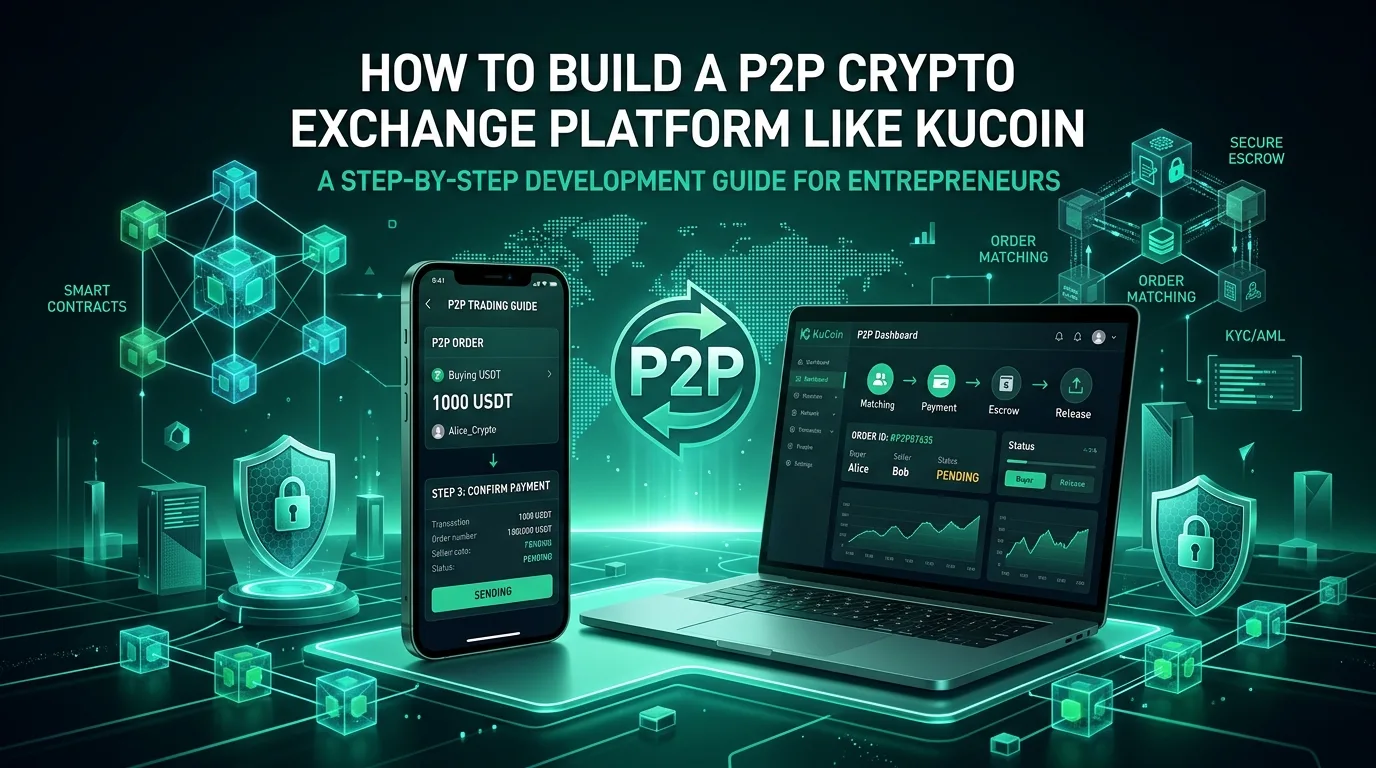
The cryptocurrency industry has evolved far beyond simple trading platforms. Today, peer-to-peer (P2P) cryptocurrency exchanges have emerged as one of the fastest-growing segments of the digital asset market, enabling users to trade directly with one another without relying on intermediaries. Leading platforms such as KuCoin, Binance P2P, and Bybit have demonstrated the enormous demand for decentralized trading environments that provide greater flexibility, lower transaction costs, and wider financial inclusion.
According to industry reports, global cryptocurrency ownership surpassed 560 million users in recent years, and P2P trading volumes continue to increase, particularly in emerging markets where access to traditional banking services remains limited. This growth presents a significant opportunity for entrepreneurs and businesses looking to launch a P2P crypto exchange platform similar to KuCoin.
However, building a successful P2P exchange requires much more than simply creating a marketplace for buyers and sellers. It demands sophisticated technology, robust security measures, seamless user experiences, and compliance with evolving regulatory requirements.
Understanding the P2P Crypto Exchange Model
A peer-to-peer cryptocurrency exchange facilitates direct transactions between users rather than acting as the counterparty to trades. The platform serves as an intermediary that connects buyers and sellers while providing security mechanisms such as escrow services, dispute resolution systems, and payment processing integrations.
Unlike centralized exchanges that manage order books and custody user funds, P2P platforms empower users to negotiate prices, choose payment methods, and execute transactions directly with one another.
KuCoin's P2P marketplace exemplifies this model by offering:
- Multiple fiat payment methods
- Escrow protection for transactions
- User verification systems
- Merchant management tools
- Real-time communication channels
- Multi-currency support
This approach has proven particularly successful in regions where traditional banking restrictions make direct cryptocurrency purchases difficult.
Why Businesses Are Investing in P2P Crypto Exchanges
The growing popularity of P2P exchanges stems from several compelling business advantages.
Expanding Market Demand
In many developing economies, cryptocurrency adoption is driven by inflation concerns, currency devaluation, and limited access to conventional financial services. P2P platforms provide an alternative financial infrastructure that allows users to buy and sell digital assets using local payment methods.
Countries in Asia, Africa, and Latin America have become major contributors to global P2P trading volumes. This demonstrates that there is substantial demand for localized crypto marketplaces.
Lower Operational Risks
Traditional exchanges often hold large amounts of user funds, making them attractive targets for cyberattacks. In contrast, P2P exchanges typically hold assets temporarily in escrow, reducing custody-related risks and liabilities.
Multiple Revenue Streams
A P2P exchange can generate income through:
- Trading commissions
- Merchant subscription fees
- Listing charges
- Advertising opportunities
- Premium services
- Withdrawal and transaction fees
These diversified revenue streams create sustainable long-term business models.
Enhanced User Trust
Modern crypto users increasingly seek transparency and control over their assets. P2P trading allows users to maintain greater autonomy, which significantly enhances trust and encourages long-term platform engagement.
Essential Features of a KuCoin-Like P2P Exchange
Developing a competitive P2P exchange platform requires implementing a comprehensive set of features that balance security, efficiency, and user experience.
User Registration and Verification
A secure onboarding system is fundamental. Users should be able to register through email, mobile numbers, or social login systems while completing Know Your Customer (KYC) verification procedures.
Advanced verification methods may include:
- Identity document validation
- Facial recognition
- Address verification
- Risk assessment procedures
Strong verification mechanisms help reduce fraud and ensure regulatory compliance.
User Dashboard
An intuitive dashboard enables users to:
- Manage profiles
- Monitor transactions
- Track wallet balances
- View trading history
- Access support services
A clean and user-friendly interface significantly impacts user retention and engagement.
Escrow System
The escrow mechanism is arguably the most critical component of a P2P exchange.
When a trade begins, the cryptocurrency is temporarily locked by the platform. The funds are released only after the seller confirms payment receipt. This process protects both parties from fraud and significantly increases transaction security.
KuCoin's success in the P2P market can largely be attributed to its highly reliable escrow infrastructure.
Order Management System
A robust order management engine allows users to:
- Create buy and sell advertisements
- Set trading limits
- Specify payment methods
- Determine pricing preferences
- Manage active orders
The system must process thousands of simultaneous transactions without delays.
Multi-Payment Integration
One of the biggest advantages of P2P exchanges is payment flexibility.
Users expect support for:
- Bank transfers
- Digital wallets
- Mobile payment applications
- Regional payment gateways
- International remittance systems
Providing numerous payment options increases accessibility and attracts users from different geographic regions.
Wallet Integration
The platform should support secure cryptocurrency wallets capable of handling multiple assets, including:
- Bitcoin (BTC)
- Ethereum (ETH)
- USDT
- BNB
- Solana-based assets
Both hot and cold wallet solutions are necessary to ensure operational efficiency and asset security.
Real-Time Chat System
Communication between buyers and sellers is essential in P2P trading.
Integrated messaging systems enable participants to:
- Share payment confirmations
- Clarify transaction details
- Resolve minor issues quickly
This feature also reduces support workloads and improves overall user satisfaction.
Dispute Resolution System
Even with robust security measures, transaction disputes inevitably arise.
A dedicated dispute management system should allow:
- Evidence submission
- Administrative review
- Transaction arbitration
- Automated ticket generation
An efficient dispute resolution process significantly enhances platform credibility.
Admin Dashboard
Administrators require comprehensive management capabilities, including:
- User management
- Transaction monitoring
- Merchant approval
- Revenue tracking
- Compliance reporting
- Fraud detection
A powerful backend infrastructure is crucial for maintaining operational efficiency.
Security Measures That Cannot Be Ignored
Cryptocurrency exchanges remain prime targets for cybercriminals. Consequently, security should be integrated into every layer of development.
Essential security components include:
- Two-factor authentication (2FA)
- Multi-signature wallets
- End-to-end encryption
- Anti-phishing protection
- DDoS mitigation systems
- AI-driven fraud monitoring
- Regular security audits
- Penetration testing
Several major exchanges have suffered substantial financial losses due to security breaches. These incidents demonstrate that even minor vulnerabilities can have devastating consequences for business reputation and customer trust.
Businesses seeking long-term success increasingly rely on specialized P2P Exchange Development Solutions that incorporate enterprise-grade security frameworks from the initial development phase.
Technology Stack for Building a P2P Exchange
Choosing the right technology stack directly impacts scalability and performance.
Front-End Technologies
- React.js
- Angular
- Vue.js
Back-End Technologies
- Node.js
- Python
- Java
- Golang
Database Systems
- PostgreSQL
- MongoDB
- MySQL
Blockchain Integration
- Ethereum
- Binance Smart Chain
- Solana
- Polygon
Cloud Infrastructure
- AWS
- Google Cloud
- Microsoft Azure
Scalable architecture ensures the platform can handle increasing user volumes and trading activity without performance degradation.
Many companies leverage advanced P2P Exchange Development Solutions to accelerate deployment while maintaining flexibility for future upgrades.
Development Process for a KuCoin-Like P2P Exchange
Building a P2P exchange involves several interconnected stages.
Market Research and Planning
The development process begins by identifying:
- Target audiences
- Geographic markets
- Competitor strategies
- Regulatory requirements
A comprehensive business strategy significantly reduces development risks.
UI/UX Design
User experience plays a major role in exchange adoption.
The platform should provide:
- Simple navigation
- Mobile responsiveness
- Fast transaction workflows
- Accessible interfaces
Platform Development
Core development includes:
- Trading engine creation
- Wallet integration
- Escrow mechanisms
- Payment gateways
- Security infrastructure
Testing and Quality Assurance
Before launch, the platform must undergo:
- Functional testing
- Security testing
- Performance testing
- Stress testing
- Compliance verification
Deployment and Maintenance
Successful exchanges require continuous updates, security monitoring, and feature enhancements after launch.
This is why many organizations partner with firms specializing in P2P Exchange Development Solutions, ensuring ongoing technical support and maintenance.
Regulatory and Compliance Considerations
Cryptocurrency regulations vary significantly across jurisdictions.
Compliance requirements may include:
- KYC verification
- AML procedures
- Data protection regulations
- Licensing requirements
- Tax reporting obligations
Failure to comply with regulations can lead to operational restrictions, financial penalties, and reputational damage.
Therefore, legal consultation should be integrated into the development process from the outset.
Cost of Building a P2P Crypto Exchange Like KuCoin
The development cost of a P2P crypto exchange depends on multiple variables, including features, security requirements, and customization levels.
Basic Platform
Estimated cost: $25,000–$50,000
Includes:
- User registration
- Wallet integration
- Basic escrow functionality
- Limited payment options
Mid-Level Platform
Estimated cost: $50,000–$120,000
Includes:
- Advanced security features
- Multi-currency support
- Merchant management
- Dispute resolution system
- Mobile applications
Enterprise-Grade Platform
Estimated cost: $120,000–$300,000+
Includes:
- AI fraud detection
- High-performance infrastructure
- Advanced analytics
- Extensive payment integrations
- Regulatory compliance systems
- Custom features and branding
Additional expenses may include:
- Cloud hosting
- Legal consultation
- Security audits
- Marketing campaigns
- Technical maintenance
Businesses aiming for rapid market entry often choose customized P2P Exchange Development Solutions that reduce development timelines and minimize technical risks
Conclusion
Building a P2P crypto exchange platform like KuCoin represents a significant business opportunity in the rapidly evolving digital asset ecosystem. However, success requires far more than developing a simple trading application. It demands sophisticated architecture, advanced security measures, regulatory compliance, seamless payment integrations, and a user-centric experience.
With millions of users worldwide increasingly embracing peer-to-peer cryptocurrency trading, businesses that invest in reliable technology and comprehensive P2P Exchange Development Solutions can establish highly profitable platforms capable of competing in the global crypto marketplace. By focusing on security, scalability, and innovation, entrepreneurs can create exchanges that not only meet current market demands but also remain competitive in the future of decentralized finance.