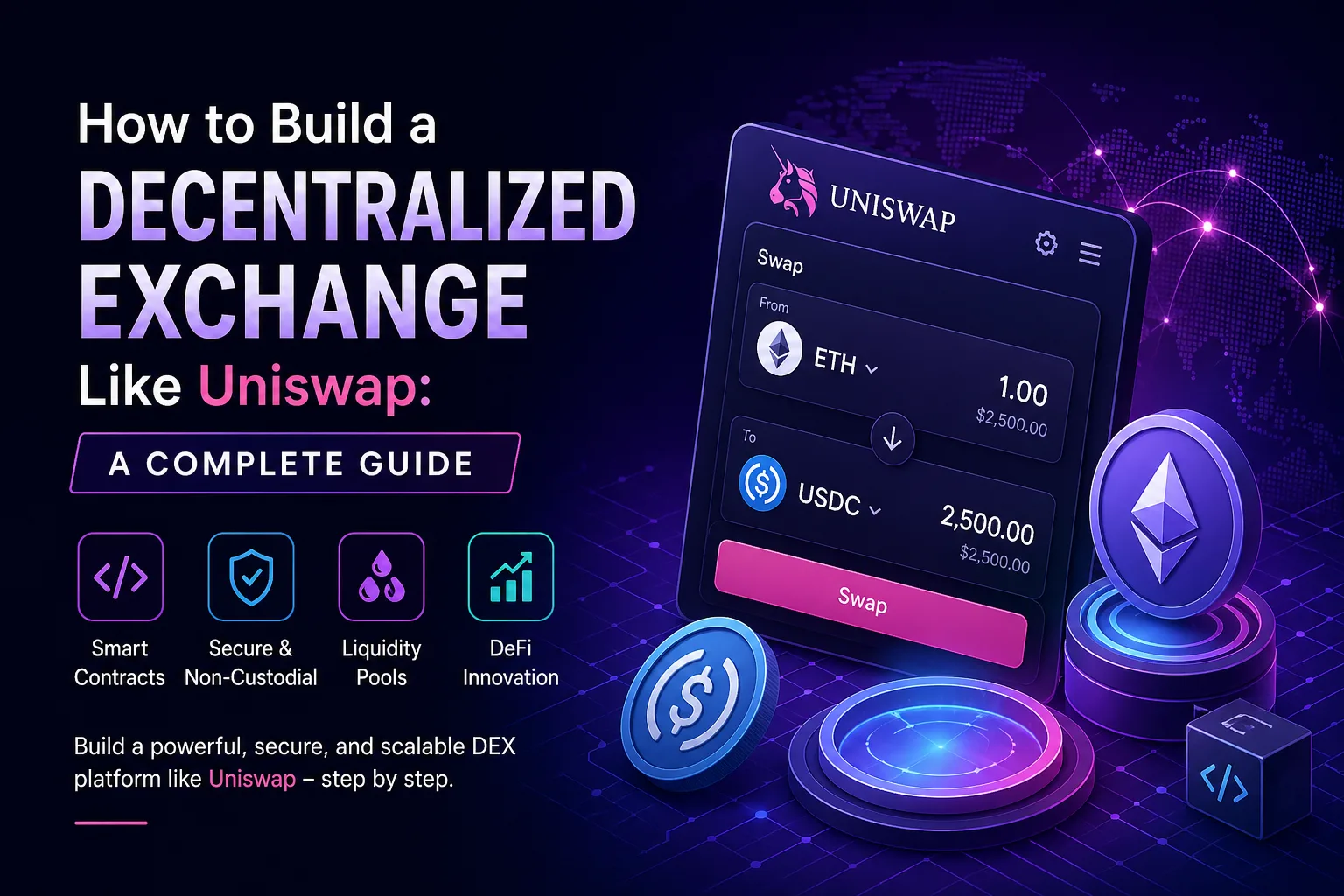
How to Build a Decentralized Exchange Like Uniswap: A Complete Guide
The rise of decentralized finance has reshaped how digital assets are traded, shifting control away from centralized intermediaries toward transparent, blockchain-based systems. Among the most influential innovations in this space is the decentralized exchange (DEX), with Uniswap setting a benchmark for simplicity, liquidity efficiency, and user autonomy. Businesses and entrepreneurs are now exploring how to replicate and innovate on this model, often partnering with a Decentralized Exchange Development Company to accelerate time to market and ensure technical robustness. Building a DEX is not just about writing smart contracts; it involves deep consideration of liquidity mechanisms, security architecture, governance frameworks, and user experience. This guide breaks down the complete process, offering practical insights into every stage of development while addressing common challenges and strategic decisions.
Understanding the Core Concept of a Decentralized Exchange
A decentralized exchange is fundamentally different from traditional trading platforms because it removes centralized control and replaces it with automated, trustless systems. This shift allows users to interact directly with smart contracts, ensuring that trades are executed transparently without intermediaries. For businesses entering this space, understanding these foundational principles is critical before moving into development. A Decentralized Exchange Development Company often begins by aligning these concepts with business objectives, ensuring the platform is both technically sound and aligned with user expectations in a competitive market.
- Smart Contract Automation
Smart contracts handle trade execution, pricing, and settlement automatically. Instead of relying on order books, many DEXs use automated market makers (AMMs), which calculate prices using mathematical formulas. A Decentralized Exchange Development Company typically ensures these contracts are optimized for efficiency and security, minimizing vulnerabilities and gas costs. - Non-Custodial Trading
Users retain full control of their funds by trading directly from their wallets. This reduces the risk of hacks associated with centralized exchanges. Developers must integrate secure wallet connections and ensure seamless transaction flows without compromising user autonomy. - Transparency and Immutability
Every transaction is recorded on-chain, making the system auditable and tamper-resistant. This transparency builds trust but also requires careful design to prevent exploitation of visible data, such as front-running. - Global Accessibility
Anyone with an internet connection and a crypto wallet can access a DEX. This inclusivity expands market reach but demands scalable infrastructure to handle diverse user bases and transaction volumes.
Choosing the Right Blockchain Network
The choice of blockchain network plays a decisive role in determining how efficiently a decentralized exchange operates under real-world conditions. Factors such as transaction speed, cost, and ecosystem maturity influence both user adoption and long-term sustainability. Businesses must evaluate technical capabilities alongside market trends to make informed decisions. A Decentralized Exchange Development Company typically conducts a thorough analysis of available networks, ensuring that the selected blockchain aligns with performance expectations, scalability requirements, and the overall vision of the platform.
- Transaction Speed and Scalability
High throughput networks reduce latency and improve user experience. Layer 2 solutions and alternative chains offer faster processing compared to traditional networks. A Decentralized Exchange Development Company often evaluates multiple chains to align with project goals. - Gas Fees and Cost Efficiency
Transaction fees can significantly affect user engagement. Lower fees encourage frequent trading, while high costs may deter users. Balancing decentralization with affordability is critical. - Ecosystem and Developer Support
A strong ecosystem provides access to tools, libraries, and community support. This accelerates development and simplifies integration with other DeFi protocols. - Security and Network Stability
Established blockchains offer proven security models, reducing the risk of network-level attacks. Stability ensures consistent performance under heavy usage.
Designing the Automated Market Maker (AMM) Model
The automated market maker model defines how assets are priced and traded within a decentralized exchange, making it one of the most critical components of the entire system. Unlike traditional exchanges that rely on order books, AMMs use liquidity pools and mathematical formulas to facilitate trades. Understanding how these mechanisms function allows developers to design systems that are both efficient and resilient. A Decentralized Exchange Development Company focuses on tailoring AMM models to suit specific trading needs while maintaining liquidity depth and minimizing slippage.
- Liquidity Pools
Users deposit token pairs into pools, enabling trades without traditional buyers and sellers. A Decentralized Exchange Development Company structures these pools to maximize efficiency and minimize slippage. - Pricing Algorithms
Most AMMs use constant product formulas, but variations exist to optimize for different use cases. Choosing the right algorithm impacts liquidity depth and price stability. - Incentive Mechanisms
Liquidity providers earn fees and rewards, encouraging participation. Designing attractive incentives ensures sufficient liquidity for smooth trading. - Risk Management
Impermanent loss is a key concern for liquidity providers. Developers must educate users and implement strategies to mitigate these risks.
Smart Contract Development and Security
Smart contracts serve as the operational backbone of a decentralized exchange, handling everything from trade execution to liquidity management. Because these contracts operate autonomously, any flaw in their design can lead to significant financial risks. This makes security and precision essential throughout the development process. A Decentralized Exchange Development Company emphasizes rigorous testing, code audits, and continuous monitoring to ensure that the platform remains secure, reliable, and capable of handling large-scale transactions without vulnerabilities.
- Code Quality and Optimization
Efficient code reduces gas consumption and improves performance. A Decentralized Exchange Development Company focuses on writing clean, modular contracts that are easy to audit and upgrade. - Security Audits
Independent audits identify vulnerabilities before deployment. Regular testing and bug bounty programs further strengthen security. - Upgradeability and Flexibility
Protocols must adapt to evolving market conditions. Upgradeable contracts allow improvements without disrupting existing operations. - Compliance Considerations
While decentralized, projects must still consider regulatory frameworks. Proper structuring helps avoid legal complications.
Building a User-Friendly Interface
User experience plays a decisive role in the adoption and retention of any decentralized exchange. Even the most advanced backend infrastructure can struggle to gain traction if the interface is difficult to navigate. A well-designed frontend ensures that users can trade, provide liquidity, and manage assets with ease. A Decentralized Exchange Development Company prioritizes intuitive design principles, ensuring that both beginners and experienced traders can interact with the platform efficiently while maintaining full control over their assets.
- Intuitive Design
Clear navigation and simple interfaces make trading accessible to both beginners and experienced users. A Decentralized Exchange Development Company prioritizes user-centric design to enhance engagement. - Wallet Integration
Seamless connection with popular wallets ensures smooth onboarding. Compatibility across devices increases accessibility. - Real-Time Data Display
Users need accurate information on prices, liquidity, and transaction status. Efficient data handling improves decision-making. - Responsive Performance
Fast loading times and minimal delays create a positive user experience, encouraging repeat usage.
Liquidity Management and Tokenomics
Liquidity is the lifeblood of any decentralized exchange, directly influencing trading efficiency and user satisfaction. Without sufficient liquidity, users may experience high slippage and inconsistent pricing. Tokenomics plays a key role in attracting and retaining liquidity providers by offering incentives and rewards. A Decentralized Exchange Development Company designs strategies that balance user incentives with long-term sustainability, ensuring that the platform remains competitive while maintaining financial stability.
- Token Distribution Strategies
Native tokens can incentivize participation and governance. A Decentralized Exchange Development Company designs tokenomics to balance rewards and sustainability. - Fee Structures
Trading fees generate revenue and reward liquidity providers. Competitive pricing attracts more users. - Yield Farming Opportunities
Additional incentives encourage users to lock assets in liquidity pools, boosting overall liquidity. - Market Stability Measures
Mechanisms such as dynamic fees or liquidity rebalancing help maintain stable trading conditions.
Governance and Decentralization
Decentralization extends beyond technology into governance, where community participation becomes a defining feature of the platform. Allowing users to influence decisions fosters trust and encourages long-term engagement. Governance models must be carefully designed to ensure fairness, transparency, and efficiency. A Decentralized Exchange Development Company implements structured frameworks that empower stakeholders while maintaining operational stability, ensuring that the platform evolves in alignment with community interests.
- DAO Implementation
Decentralized Autonomous Organizations enable users to vote on protocol changes. A Decentralized Exchange Development Company integrates governance frameworks that ensure transparency and fairness. - Voting Mechanisms
Token-based voting systems empower stakeholders while maintaining efficiency. - Proposal Systems
Structured processes allow users to suggest and implement improvements. - Community Engagement
Active participation strengthens trust and drives innovation within the ecosystem.
Testing, Deployment, and Maintenance
Launching a decentralized exchange requires extensive testing and continuous improvement to ensure reliability in a live environment. From initial deployment on test networks to ongoing updates after launch, every stage must be handled with precision. A Decentralized Exchange Development Company follows structured workflows to identify issues early, optimize performance, and maintain system integrity. This ongoing commitment to quality ensures that the platform remains stable, secure, and capable of adapting to changing user demands.
- Testnet Deployment
Testing in a controlled environment identifies issues before mainnet launch. A Decentralized Exchange Development Company ensures comprehensive testing across scenarios. - Performance Optimization
Continuous monitoring helps maintain efficiency under varying loads. - Bug Fixes and Updates
Regular updates address vulnerabilities and improve functionality. - User Support Systems
Providing assistance enhances user confidence and retention.
Marketing and Growth Strategy
A decentralized exchange requires a strong growth strategy to stand out in a competitive market and attract a consistent user base. Marketing efforts must focus on education, trust-building, and long-term engagement rather than short-term promotions. A Decentralized Exchange Development Company often supports these efforts by aligning technical features with user needs, ensuring that the platform delivers real value. Effective strategies combine content, partnerships, and community-driven initiatives to create sustainable growth.
- Content and Education
Informative resources help users understand the platform. A Decentralized Exchange Development Company often collaborates on educational initiatives to build trust. - Partnerships and Integrations
Collaborating with other DeFi projects expands reach and functionality. - Community Building
Engaging users through social channels fosters loyalty and advocacy. - Incentive Campaigns
Rewards and promotions attract new users and encourage activity.
Conclusion
Building a decentralized exchange like Uniswap requires a combination of technical expertise, strategic planning, and user-focused design. From selecting the right blockchain to implementing secure smart contracts and fostering community governance, every step plays a critical role in the platform’s success. Collaborating with a Decentralized Exchange Development Company can streamline the process, providing the necessary experience and resources to navigate complex challenges. As decentralized finance continues to evolve, well-designed DEX platforms will remain central to the ecosystem, offering secure, transparent, and efficient trading solutions for a global audience.