
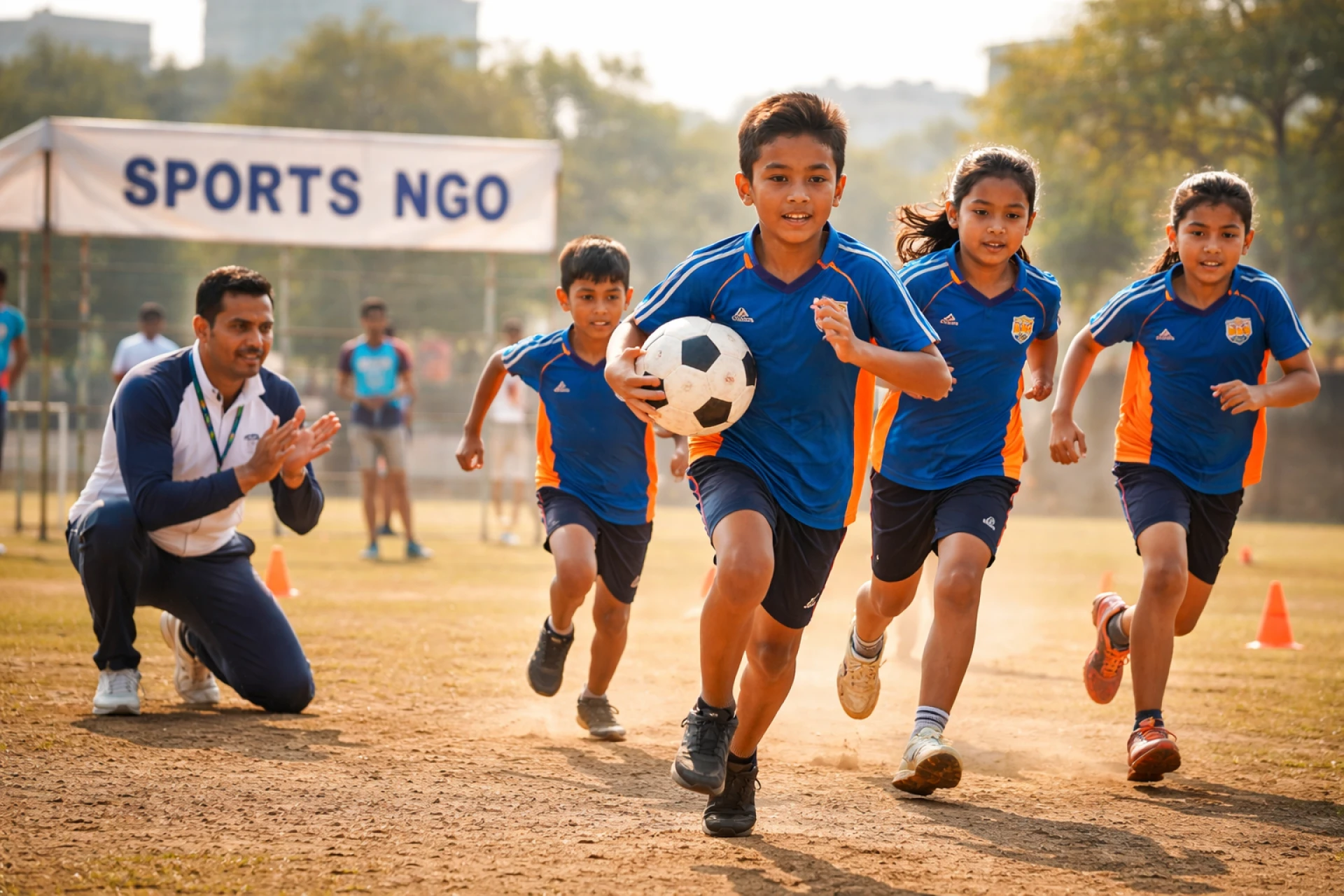
India is filled with young dreamers who grow up playing cricket in narrow lanes, football on dusty grounds, or running barefoot across school fields. Talent exists everywhere, but opportunity does not. For many children, especially those from low-income backgrounds, becoming a professional athlete feels impossible because training, equipment, coaching, and nutrition all require financial support.
This is where an NGO for Sports in India plays a life-changing role. These organizations do much more than organize games — they build a complete pathway that takes a child from curiosity to competition and, eventually, to professional sports.
Over the past decade, sports NGOs have quietly transformed thousands of lives by discovering hidden talent and nurturing it with structure, discipline, and mentorship.
Identifying Talent at the Grassroots Level
Professional athletes are not created in stadiums; they are discovered in neighborhoods. Many children show natural speed, stamina, or coordination early in life, but no one recognizes their potential.
Sports NGOs regularly visit schools, villages, and urban communities to conduct trials and introductory sessions. Coaches observe agility, reflexes, and game awareness rather than just technical skill. This approach ensures children without formal training are not ignored.
Once identified, the child enters a structured program run by the best NGO for Indian sports initiatives where ability is carefully assessed and developed. Early identification is critical because the younger the athlete, the better the long-term development.
This stage converts raw enthusiasm into guided potential.
Providing Professional Coaching
Coaching is the backbone of athletic development. Without proper guidance, talented players repeat mistakes and stagnate. Unfortunately, professional training academies are expensive and inaccessible to many families.
An NGO for Sports in India bridges this gap by providing certified coaches who teach:
- Technical fundamentals
- Game strategy and decision-making
- Strength and conditioning
- Injury prevention
- Mental discipline
Instead of occasional practice, children follow structured training schedules similar to professional academies. Consistency helps athletes understand improvement through effort rather than luck.
With time, they begin thinking like competitors rather than casual players.
Supplying Equipment and Facilities
Many talented children quit sports simply because they cannot afford basic equipment. A football, running shoes, cricket kit, or protective gear may seem small, but for struggling families it becomes a major expense.
Through partnerships and CSR Donations for Sports, NGOs provide essential resources:
- Training kits
- Shoes and uniforms
- Practice equipment
- Access to safe playing grounds
Having proper equipment does more than improve performance — it builds dignity. Children feel equal to others and take training seriously. Confidence grows when they look and feel like athletes.
Facilities also matter. Even modest grounds, when maintained and supervised, offer safer and more effective practice environments than streets.
Nutrition and Health Support
Athletic performance depends heavily on nutrition. Many young players come from households where daily meals lack adequate protein and micronutrients. Without proper diet, stamina declines and injuries increase.
Sports NGOs address this gap by offering meal plans, supplements, and awareness sessions for families. Supported by CSR Donations for Sports, programs often include:
- Balanced diet support
- Hydration guidance
- Regular health checkups
- Physiotherapy access
Healthy athletes recover faster and train harder. Parents also understand the importance of balanced food, improving overall family wellbeing.
This holistic approach ensures talent is not lost due to preventable health issues.
Balancing Education and Training
Parents often worry that sports participation will harm academics. NGOs actively prevent this conflict. They integrate education support alongside training programs.
Children receive tutoring, homework assistance, and time-management guidance. Coaches emphasize discipline in both studies and sports. As a result, athletes learn focus and responsibility.
An effective NGO for Sports in India understands that only a few athletes reach elite levels, so education remains essential. Balanced development reassures families and keeps children motivated.
Instead of choosing between school and sport, they excel in both.
Exposure to Competitive Platforms
Talent develops through competition. Without matches, athletes cannot test skills under pressure. Many grassroots players never experience formal tournaments.
Sports NGOs organize leagues, inter-district matches, and talent showcases. They also connect athletes to federation trials and academy selections.
The best NGO for Indian sports programs carefully prepare athletes for these opportunities by teaching match temperament, teamwork, and resilience. Losing becomes a learning process rather than discouragement.
Exposure builds confidence. Children who once hesitated now compete with determination.
Mentorship and Psychological Development
Becoming a professional athlete requires mental strength as much as physical ability. Fear, self-doubt, and social pressure often force young players to quit.
NGOs provide mentorship where coaches act as role models and guides. They teach:
- Handling success and failure
- Maintaining discipline
- Setting realistic goals
- Managing stress and expectations
For many children, mentors become trusted figures who encourage them during difficult phases. Emotional support is especially important for those from challenging backgrounds.
This psychological foundation separates hobby players from serious competitors.
Creating Pathways to Professional Careers
Once athletes reach advanced levels, NGOs help them move toward professional systems. This may include academy admissions, state teams, or scholarship programs.
Through networks supported by CSR Donations for Sports, organizations arrange:
- Trial participation
- Scholarship applications
- Travel assistance
- Documentation guidance
These steps are complicated for families unfamiliar with sports structures. NGOs act as facilitators, ensuring talent is not blocked by paperwork or lack of awareness.
The child who once played casually now steps into professional sports environments.
Empowering Girls to Become Athletes
Girls often face additional social barriers. Early dropout, safety concerns, and stereotypes prevent participation. Sports NGOs actively encourage female athletes through dedicated programs.
They provide safe training spaces, female mentors, and family counseling. As participation increases, communities accept girls in sports roles more easily.
Many successful athletes have emerged from such programs, inspiring others to follow. Gender inclusion strengthens the sporting ecosystem by doubling the talent pool.
Impact on Communities and Society
When one child becomes an athlete, an entire community’s mindset changes. Younger children start practicing regularly, parents become supportive, and local pride grows.
Through consistent efforts of an NGO for Sports in India, sports become part of daily life rather than occasional recreation. Physical activity improves public health, reduces negative influences, and promotes teamwork.
Professional athletes emerging from humble backgrounds also inspire hope — proof that opportunity can overcome limitation.
Conclusion
The journey from playground to professional arena is long and demanding. It requires coaching, nutrition, education, mentorship, and exposure. For privileged families, these resources are available; for many others, they are not.
Sports NGOs bridge this inequality. By identifying talent early, nurturing it carefully, and guiding athletes toward opportunities, they transform dreams into careers. Supported by CSR Donations for Sports and collaborative partnerships, the best NGO for Indian sports initiatives are creating future champions across the country.
These organizations are not just producing athletes — they are building confidence, discipline, and possibility. In doing so, every dedicated NGO for Sports in India helps ensure that talent, not background, decides who gets to stand on the podium.