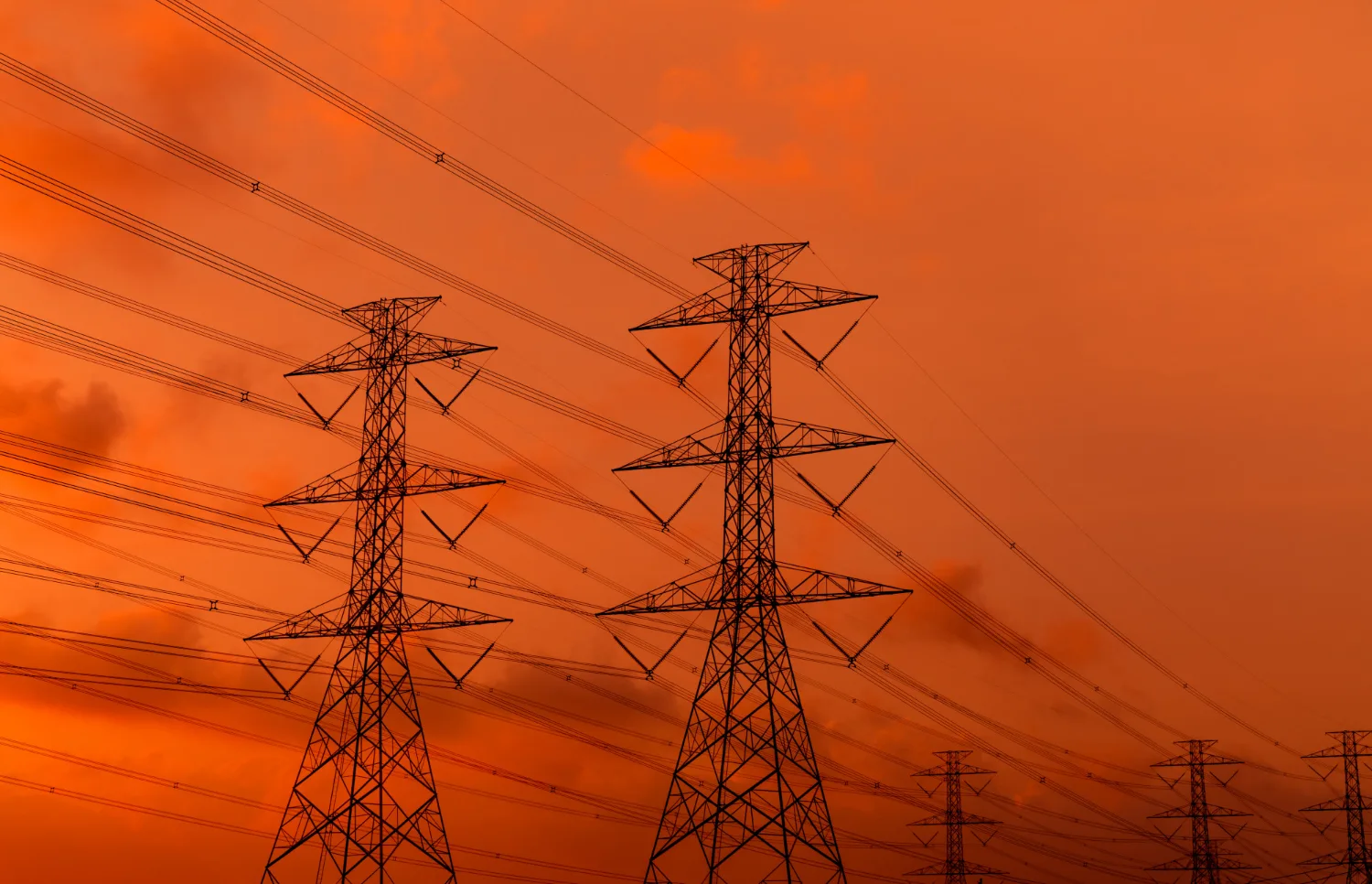
The power grid was largely built before the digital age, and a lot of it shows. Aging infrastructure and reactive maintenance cycles have created bottlenecks that new transmission lines alone cannot solve fast enough. What's changing that picture is distributed fiber optic sensing (DFOS), a technology that turns existing optical fiber into a continuous sensing network across the full length of a transmission line. Combined with ACCC conductors (aluminum conductor composite core), this approach is pushing grid intelligence into territory that wasn't possible even a few years ago.
Why Traditional Monitoring Falls Short
For decades, transmission line monitoring relied on point-based sensors placed at intervals along a line. Those sensors could tell you what was happening at their specific location, but everything in between was essentially a blind spot. Temperature spikes, sag anomalies, vibration stress, and ice loading in the middle of a 50-mile span could go undetected until something failed.
Dynamic line rating (DLR) technology improved things considerably by measuring actual real-time conditions rather than relying on worst-case weather assumptions. Traditional conductors are typically rated conservatively, which means significant capacity often sits unused just to maintain safety margins. DLR helped recover some of that capacity, but it was still largely point-based and limited in what it could see.
What Fiber Optic Sensing Actually Does
DFOS works differently from anything that came before it. A laser-powered interrogation unit sends light pulses through the optical fiber and analyzes the light that scatters back. Physical conditions along the fiber, including heat, strain, and vibration, change that backscattered signal in measurable ways. The result is a continuous, real-time picture of what's happening along the entire length of the line, not just at sensor locations.
What made this practical for transmission lines is that optical fiber already exists on most of them. Utilities have been installing optical ground wire (OPGW) for static shield protection and communication for years. Those fibers, already strung across thousands of miles of transmission infrastructure, can serve double duty as a continuous sensing array when integrated with DFOS technology. No new hardware along the span, no additional installation work on energized lines. This is one of those situations where existing infrastructure turns out to be more valuable than anyone originally anticipated.
ACCC Conductors and the Intelligence Layer
ACCC conductors bring two things to this equation: superior capacity and a natural home for embedded fiber.
The composite core in an ACCC conductor is built from carbon and glass fiber, making it roughly 25% stronger and 60% lighter than a traditional steel core. That weight reduction allows the conductor to carry nearly 30% more aluminum without any increase in overall diameter or weight. The result is a conductor that can carry up to twice the current of conventional aluminum conductor steel reinforced (ACSR) alternatives while producing lower electrical line losses and resisting thermal sag far more effectively at elevated operating temperatures.
When optical fiber is embedded directly into an ACCC conductor, it transforms the cable from a power-carrying medium into an intelligent monitoring system. Temperature, strain, sag, ice loading, and corona discharge data flow continuously from the conductor to an analytics platform. Instead of periodic inspections or isolated sensor readings, grid operators get a real-time, high-resolution picture of line conditions from substation to substation.
DLR-3.0: From Reactive to Predictive
The integration of DFOS with ACCC conductors and AI-powered analytics is what the engineering community is calling DLR-3.0, and the name captures what's genuinely different about it. Earlier DLR systems told you current conditions. This one forecasts them.
With continuous fiber data feeding into AI-enhanced modeling platforms, operators can project transmission line ratings an hour ahead or a full day ahead. That predictive capability connects directly to asset management systems, demand platforms, and situational awareness tools across the grid. An issue developing on one segment can trigger preemptive adjustments elsewhere before it becomes a problem.
Beyond capacity management, the system can localize specific events with impressive precision. Hotspots, galloping, and phase-specific anomalies can be identified by type and pinpointed to within roughly three feet along the span. For maintenance planning and emergency response, that kind of resolution changes everything about how crews are deployed and how quickly problems get resolved.
A Broader Industry Shift
The traction behind this technology reflects a real need. Grid demand is rising faster than new transmission infrastructure can be built, and regulators are increasingly pushing utilities toward high-capacity conductor solutions. Legislation like the High-Capacity Grid Act in the United States has directed utilities and grid operators to prioritize best-available conductor technology in new and reconductoring projects.
ACCC conductors fit that directive well. For reconductoring projects especially, deploying an ACCC conductor on an existing line can double capacity without requiring new structures or expanded rights-of-way. Add DFOS integration and the line becomes a smart asset rather than a passive one. Utilities operating OPGW-equipped lines can activate this capability using fiber already in place, making the path to implementation far shorter than building new infrastructure.
Conclusion
Smart fiber sensing is not a distant technology or a pilot-stage experiment. It is being deployed on real transmission infrastructure worldwide, integrated with ACCC conductors, and validated against the kind of grid conditions that traditional monitoring systems were never designed to handle.
The shift happening here is from static infrastructure to intelligent network assets. Lines that once sat passively between substations now generate a continuous stream of data that supports better decisions, safer operations, and more capacity from the infrastructure already in place. That is the kind of upgrade a grid under pressure genuinely needs.