Real-estate marketing is designed to help buyers understand a project’s concept, location, architecture and proposed benefits. Brochures, advertisements, presentations and architectural renderings can be useful during the early stage of research.
However, marketing material is not the same as a registered plan, legal certificate or executed agreement. A purchaser considering a resort ownership project must separate promotional positioning from information that can be independently verified.
Sonagarh Fort Resort is a proposed resort ownership development near Kukas, Jaipur. Available project information describes an approximately 18-acre development with 200 proposed ownership units, around 290.6 proposed keys, five proposed unit categories and hospitality management proposed through Lohagarh Group.
Anyone researching the First RERA Approved Resort in Jaipur should independently verify the precise registration status, promoter details, project number and original certificate before relying on this marketing phrase.
Quick Answer: Which Project Claims Should Buyers Verify?
Buyers should verify every claim that may affect ownership, cost, project delivery, personal use or financial benefits.
This includes claims about:
- RERA registration
- Project area
- Number of units
- Unit area
- Approved plans
- Amenities
- Completion date
- Possession
- Hospitality management
- Owner stays
- Rental participation
- Returns
- Discounts
- Resale
- Location and connectivity
A statement becomes dependable when it can be matched with an official record or an enforceable contractual term.
Begin With the Exact Legal Name of the Project
The first step is identifying what the buyer is actually considering.
Marketing material may use a brand name prominently, while legal documents may also identify a promoter, registered project and authorised sales entity.
The buyer should record:
- Project’s registered name
- Promoter’s legal name
- Project address
- Land description
- Project registration number
- Agent registration details
- Registration validity
- Registered project phase
- Official communication details
The same information should appear consistently across the certificate, agreement, payment receipts and other transaction documents.
If the names differ, buyers should request a written explanation and seek independent legal advice before proceeding.
Separate Project Registration From Agent Registration
One of the most important verification points is the difference between a project registration and a real-estate agent registration.
Sonagarh Fort Resort has been presented with:
- Project RERA Registration: RAJ/P/2026/5257
- Agent Registration: RAJ/A/2022/3380
These numbers serve different purposes.
The project registration should correspond with the registered development, promoter and applicable project details. The agent registration identifies a registered real-estate agent.
An agent registration does not replace project registration. Both numbers should be checked separately against their original certificates and the Rajasthan RERA portal.
Buyers should never accept a certificate screenshot without confirming that the project name, promoter, location and registration validity match the property being offered.
Understand “Registered” and “Approved”
Marketing frequently uses “registered” and “approved” as if they are interchangeable. Buyers should interpret these words carefully.
RERA registration generally means that the project has been registered under the applicable regulatory framework based on submitted information and documents. It should not be interpreted as a government guarantee of profitability, appreciation, construction quality or future hospitality performance.
Regulatory registration also does not remove the buyer’s responsibility to review:
- Title and land-related documents
- Approved plans
- Agreement terms
- Payment schedule
- Construction timeline
- Unit specifications
- Management structure
- Financial representations
- Possession conditions
The most accurate factual description should generally use “RERA-registered” when referring to the documented registration status.
Compare the Brochure With Registered Disclosures
The project brochure can explain the development concept, but every important detail should be compared with registered or approved information.
A buyer can create a table containing:
Compare Marketing Claims With Documents
Buyers should verify every major marketing statement through the relevant document:
- Total project area: Check the RERA disclosures and land documents.
- Number of units: Compare the claim with the registered project information.
- Unit category: Verify it through the unit plan and agreement.
- Unit area: Check the registered area statement and sale documents.
- Proposed amenities: Compare them with the approved layout and specifications.
- Completion timeline: Verify it through the RERA record and agreement for sale.
- Hospitality management: Review the proposed or executed management agreement.
- Owner benefits: Confirm them through the executed benefit agreement.
- Returns or income: Examine the legally enforceable financial terms.
- Possession date: Verify it in the agreement for sale.
Any material inconsistency should be clarified before the booking amount is paid.
Treat Project Figures as Proposed Until Verified
Available Sonagarh information refers to approximately 18 acres, 200 proposed ownership units and around 290.6 proposed keys.
Buyers should verify:
- How the total project area is calculated
- Whether the complete land forms part of the registered phase
- How ownership units differ from hospitality keys
- Whether one unit may contain more than one operational key
- Whether the figures appear in registered disclosures
- Whether any development phase is excluded
The word “approximately” signals that the figure requires reference to the underlying documents.
A presentation figure should not be converted into an absolute legal claim unless supported by verified records.
Verify the Selected Unit Independently
The overall project may be registered, but the buyer must also verify the exact unit being offered.
The project material describes five proposed categories:
- Deluxe Palace Room
- Palace Suite Room
- Super Deluxe Villa
- Grand Suite Villa
- Residential Mansion Suite
For the selected unit, the purchaser should check:
- Unit number
- Category
- Floor
- Location
- Carpet area
- Built-up area
- Layout
- Orientation
- Specifications
- Ownership structure
- Permitted use
- Common-area rights
- Parking, if applicable
The category name should remain consistent across the booking form, allotment document, agreement and registration paperwork.
Evaluate Location Claims Practically
Location descriptions may use phrases such as near Jaipur, near Kukas or within the Jaipur–Delhi corridor. These phrases can help buyers understand the broader area but do not provide a complete location analysis.
Anyone considering a Resort Villa Investment Near Kukas Jaipur should independently examine:
- Exact site location
- Legal access road
- Current road conditions
- Distance from major reference points
- Travel time under normal conditions
- Surrounding development
- Utilities
- Planned infrastructure
- Environmental factors
- Competing hospitality properties
- Current and proposed land use
Distance should not be evaluated only in kilometres. Actual travel time, road access and future construction activity may influence practical connectivity.
Buyers should visit the site at different times instead of relying only on a map screenshot or one organised sales visit.
Understand the Difference Between Current and Proposed Amenities
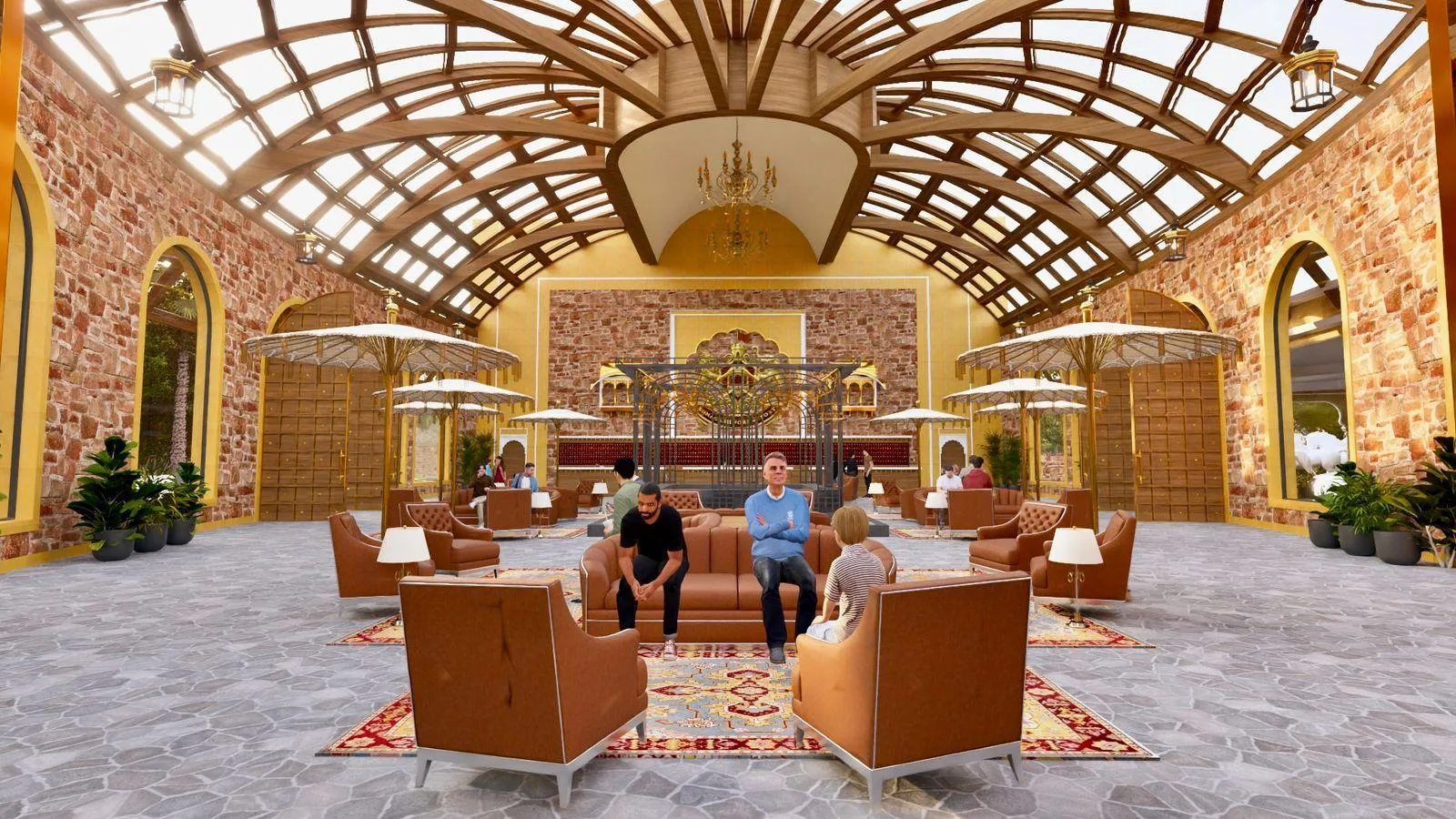
Architectural renderings may illustrate how the completed project is intended to look. They should not automatically be interpreted as photographs of completed facilities.
Sonagarh’s available material describes proposed event infrastructure that includes:
- A banquet area exceeding 12,000 square feet
- A palace garden of approximately 40,500 square feet
- A marriage garden of approximately 10,500 square feet
- A gazebo garden of approximately 10,500 square feet
- A mini banquet of approximately 2,500 square feet
Buyers should check whether these spaces appear in approved plans, which development phase includes them and when they are proposed for completion.
Conceptual images should be labelled as representational where appropriate. The final design may remain subject to approvals, construction and documented changes.
Verify Hospitality Management Claims
Management can influence how a resort ownership project operates after development. However, the presence of a recognised name in a presentation does not replace a signed management agreement.
Sonagarh Fort Resort has been presented as proposed to be managed by Lohagarh Group.
Buyers should request documentation explaining:
- Final management entity
- Agreement duration
- Scope of services
- Reservation management
- Staffing
- Maintenance
- Food-and-beverage operations
- Event management
- Owner reporting
- Management fees
- Replacement or termination conditions
- Dispute procedure
The term “professionally managed” should be understood through the actual contract.
Analyse Financial Claims Separately
Returns, rental income, discounts and personal-use benefits should not be combined into one broad promise.
Each claim should be evaluated separately.
Return or Income Claim
Ask whether it is fixed, assured, projected, revenue-linked or occupancy-dependent.
Personal Stay Claim
Check the number of nights, booking procedure, blackout dates, applicable charges and whether use affects financial benefits.
Discount Claim
Verify where it applies, whether it is transferable and how long it remains valid.
Referral or Event Privilege
Request written conditions, eligibility and limitations.
Every return, personal stay, discount, referral benefit or event privilege should remain subject to the executed agreement and applicable terms.
Buyers should not rely on guaranteed appreciation, occupancy or profit claims without clear and independently reviewed contractual support.
Verify the Total Cost
The advertised unit price may not represent the complete amount payable.
The buyer should request an itemised cost sheet covering:
- Base consideration
- Taxes
- Stamp duty
- Registration
- Maintenance deposit
- Management charges
- Corpus contribution
- Common-area charges
- Utility charges
- Fit-out or furnishing
- Parking, if applicable
- Other one-time charges
- Recurring payments
The payment schedule should identify due dates and construction-linked milestones where applicable.
Any amount collected should be supported by a receipt issued in the correct legal name.
Review Possession and Operational Opening Separately
Possession of a unit and commercial opening of a resort may occur at different stages.
Buyers should ask:
- What is the contractual possession date?
- What does possession legally mean?
- Which completion-related approvals are required?
- When will common amenities be available?
- When are hospitality operations expected to begin?
- Is a trial or soft-opening period proposed?
- What happens if unit possession precedes resort operations?
- When can owner-use privileges begin?
- When can any financial arrangement begin?
The answer should appear in the relevant agreements rather than remain a verbal explanation.
Research the Project Through Multiple Sources
Anyone researching Sonagarh Fort Resort Jaipur should compare information from several sources.
These may include:
- Rajasthan RERA portal
- Original project certificate
- Registered plans
- Agreement for sale
- Land-related documents
- Promoter disclosures
- Official project material
- Site inspection
- Independent legal review
- Independent financial review
- Written management terms
Third-party blogs can help explain concepts, but they should not be treated as legal verification.
Create a Written Claim-Verification Sheet
A simple claim-verification sheet can help buyers organise their research.
The sheet may contain:
Create a Written Claim-Verification Checklist
Buyers can maintain a simple checklist containing the following points:
- RERA registration: Check the project on the Rajasthan RERA portal and preserve a copy of the certificate.
- Project area: Compare the stated area with the registered disclosures and land documents.
- Selected unit area: Verify the carpet area, built-up area and layout through the unit plan.
- Proposed amenities: Confirm whether each important facility appears in the approved project layout.
- Possession timeline: Check the date and applicable conditions in the agreement for sale.
- Hospitality management: Request the proposed or executed management agreement.
- Financial benefits: Confirm every stated return, personal stay or discount through written and enforceable terms.
- Professional review: Ask an independent legal or financial professional to examine any information that remains unclear.
A buyer should mark a claim as verified only after matching it with the appropriate document. Repetition by a sales representative should not be treated as independent confirmation.
A buyer should not mark a claim as verified merely because the sales team repeated it.
Questions to Ask Before Making a Payment
Before paying a booking amount, buyers should ask:
- What is the exact registered project name?
- Who is the legal promoter?
- What is the project RERA number?
- Which number belongs to the agent?
- Is the selected unit part of the registered project?
- What is its legally recognised area?
- Which amenities appear in approved plans?
- What is the contractual possession date?
- What is the complete cost?
- Who will manage the resort?
- Where are owner benefits documented?
- What are the cancellation and refund conditions?
- What restrictions apply to resale or transfer?
All important answers should be requested in writing.
Conclusion
Marketing material can help buyers understand the proposed identity of Sonagarh Fort Resort, but it should not be used as the only basis for an investment decision.
Prospective purchasers should verify the project registration, promoter, unit details, location, amenities, management structure and financial representations through official records and executed agreements.
Project RERA Registration No. RAJ/P/2026/5257 and Agent Registration No. RAJ/A/2022/3380 must be checked separately and matched with the correct legal entities.
The safest approach is to convert every important marketing statement into a verification question. When buyers rely on documents rather than assumptions, they are better equipped to understand the project’s legal structure, proposed hospitality model and the responsibilities connected with resort villa ownership.