Artificial intelligence has become a driving force behind many modern technologies. It helps devices learn from user behavior, automate processes, and deliver more personalized experiences. Among global technology leaders, Samsung has been actively integrating AI across its products and services.
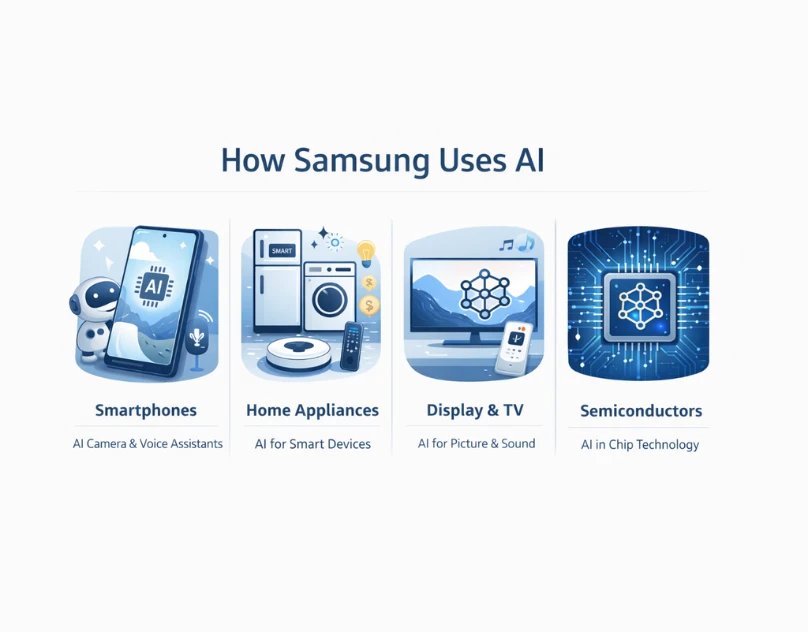
Today, Samsung Uses AI in a wide range of technologies such as smartphones, smart televisions, wearable devices, home appliances, and even manufacturing systems. By embedding AI throughout its ecosystem, Samsung aims to make devices more efficient, intelligent, and user-friendly.
This article explores the different ways Samsung Uses AI to enhance technology and improve everyday digital experiences.
Samsung Uses AI in Smartphones
Smartphones are one of the most common platforms where people interact with Samsung’s AI technology. AI works quietly in the background to optimize performance, improve camera quality, and manage device resources.
AI-Powered Photography
A major example of how Samsung Uses AI is in smartphone camera systems. AI technology can recognize scenes and objects instantly when a user takes a picture. It can identify environments such as landscapes, food, people, or pets and automatically adjust camera settings.
This allows the camera to optimize brightness, color balance, and contrast to produce high-quality photos without requiring manual adjustments. AI also improves low-light photography and portrait images by refining focus and depth effects.
Smart Performance Management
Another important way Samsung Uses AI is through device performance optimization. The system observes how users interact with their phones and identifies the apps they open most often.
Based on this information, the device allocates processing power more efficiently. Frequently used apps load faster, while background activity from rarely used apps is reduced, helping conserve battery life.
Samsung Uses AI for Voice Assistance
Samsung’s voice assistant, Bixby, demonstrates how artificial intelligence can simplify everyday tasks. Bixby allows users to control their devices using natural voice commands.
Users can ask Bixby to open applications, send messages, change device settings, or set reminders. Because the assistant uses machine learning, it gradually becomes better at understanding user preferences and patterns.
Over time, this makes interactions with devices faster and more convenient.
Samsung Uses AI in Smart Homes
Samsung is also applying artificial intelligence to home automation through its connected ecosystem powered by SmartThings.
SmartThings connects multiple devices within a home, including TVs, refrigerators, lighting systems, and security devices. AI allows these devices to communicate with each other and respond intelligently to daily routines.
For example, lights can automatically turn on when someone enters a room, or appliances may adjust settings depending on the time of day. AI also helps analyze energy usage and improve efficiency within the home.
Samsung Uses AI in Smart TVs
Samsung televisions use AI to enhance both picture quality and the overall entertainment experience.
AI Upscaling Technology
One example of how Samsung Uses AI is through video upscaling. The AI system analyzes video content frame by frame and enhances details so that lower-resolution videos appear sharper and closer to 4K or 8K quality.
Personalized Viewing Recommendations
Samsung TVs also use AI to study viewing habits and recommend content that matches the viewer’s interests. By analyzing watch history, the system can suggest movies, shows, or streaming platforms that users are likely to enjoy.
This helps viewers discover content more easily.
Samsung Uses AI for Battery Optimization
Battery performance is an important part of the smartphone experience. Samsung uses AI-based systems to manage energy consumption more effectively.
The AI system tracks how applications are used and adjusts background activity accordingly. Apps that are used frequently remain active, while those that are rarely opened are limited to reduce battery drain.
This intelligent resource management allows devices to run longer without sacrificing performance.
Samsung Uses AI in Wearables and Health Tracking
Samsung has also introduced AI-powered features in its wearable devices, such as smartwatches and fitness trackers.
These devices collect health-related information, including heart rate, sleep quality, and daily activity levels. AI analyzes the data and transforms it into insights that help users understand their health patterns.
Instead of simply presenting numbers, AI provides meaningful feedback that can support healthier habits and lifestyle improvements.
Samsung Uses AI in Manufacturing and Industry
Beyond consumer electronics, Samsung also applies artificial intelligence in its manufacturing operations. AI-powered systems are used in advanced factories to monitor production equipment and analyze operational data.
This technology allows manufacturers to detect potential issues before they cause disruptions. Predictive maintenance, automated inspections, and data analysis help increase efficiency and maintain product quality.
The Future of AI at Samsung
Artificial intelligence will continue to play a major role in Samsung’s future innovation strategy. The company is investing in research areas such as AI-powered chips, robotics, automation, and intelligent computing.
As these technologies evolve, Samsung aims to create a more connected ecosystem where devices can understand user needs and respond automatically.
Conclusion
Artificial intelligence has become a central part of Samsung’s technology development. From smartphones and televisions to wearable devices and smart homes, Samsung Uses AI to improve performance, automation, and personalization.
As AI technology advances, Samsung is expected to expand its intelligent ecosystem even further, bringing smarter features to everyday devices.
At the same time, companies within the AI space are also helping businesses leverage this technology. Platforms like Dilogs provide AI-powered solutions for automated content creation and digital innovation, highlighting how artificial intelligence is transforming industries across the world.