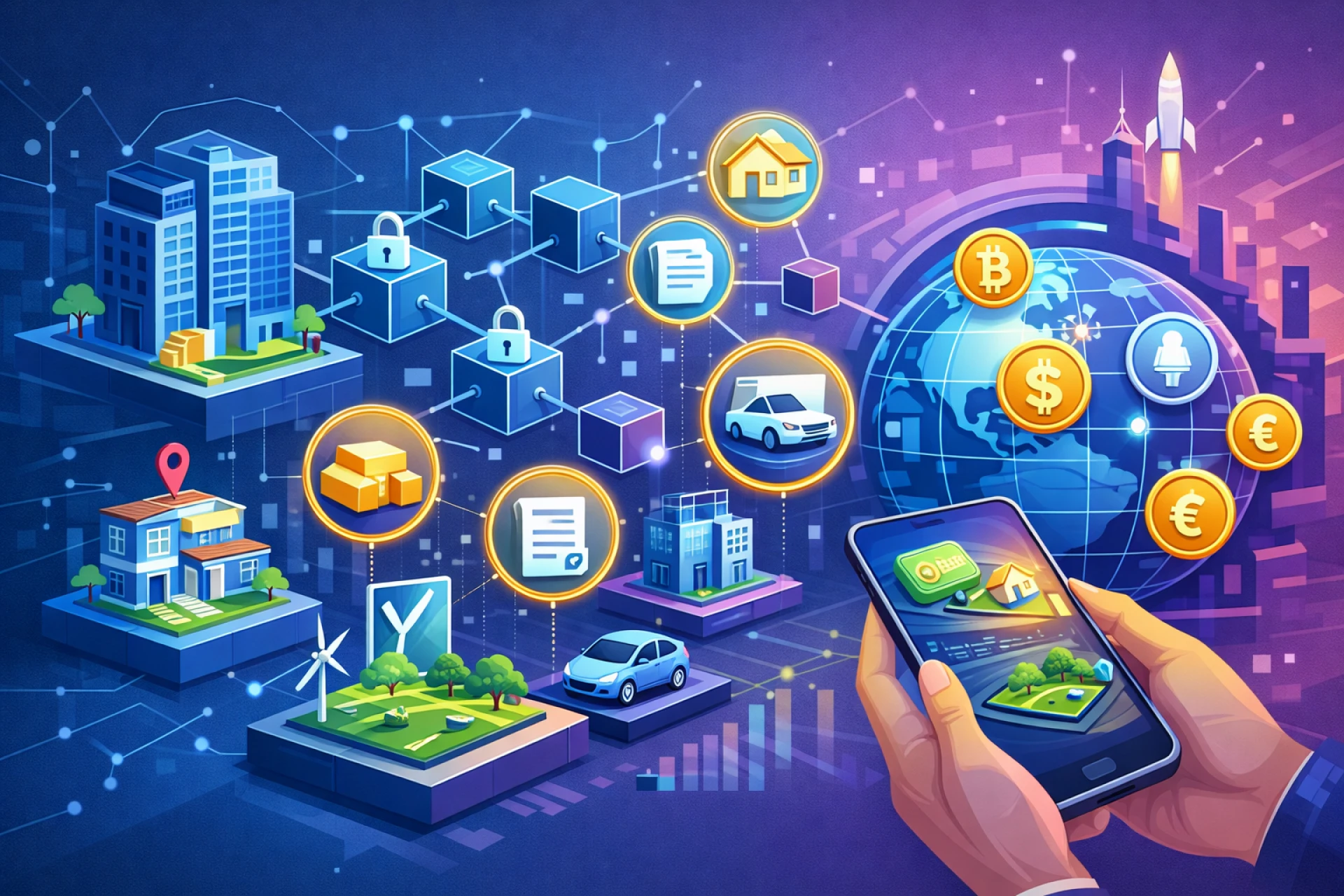
Ownership has always been a cornerstone of economic participation. Traditionally, owning assets such as real estate, commodities, equities, or infrastructure required significant capital, legal intermediaries, and geographic proximity. In the digital economy, these constraints are being challenged by technological innovation. Among the most transformative developments is real world asset tokenization, which is fundamentally changing how assets are created, divided, transferred, and valued.
Real world asset tokenization platform development is emerging as a powerful enabler of this shift. By converting physical and traditionally illiquid assets into blockchain based digital tokens, enterprises are redefining ownership as fractional, borderless, programmable, and transparent. This transformation is not just technical. It is reshaping financial access, investment models, governance structures, and the way value flows across global markets.
As businesses and governments explore this paradigm, the role of a specialized rwa tokenization platform development company becomes critical in ensuring scalability, compliance, and long term sustainability.
Understanding Real World Asset Tokenization
Real world asset tokenization refers to the process of representing ownership rights of physical or off chain assets as digital tokens on a blockchain. These assets may include real estate, private equity, debt instruments, commodities, intellectual property, carbon credits, art, or infrastructure projects.
Unlike purely digital assets, tokenized real world assets maintain a direct legal and economic connection to tangible or regulated assets. This connection is enforced through smart contracts, legal frameworks, and compliance mechanisms embedded within the tokenization platform.
Real World Asset Tokenization Services typically involve asset structuring, token issuance, custody integration, compliance automation, and secondary market enablement. Together, these components create a secure digital bridge between traditional asset ownership and decentralized financial systems.
Why Ownership Models Are Changing in the Digital Economy
The digital economy prioritizes speed, accessibility, and transparency. Traditional ownership models are increasingly misaligned with these priorities due to several limitations:
High entry barriers prevent retail and small institutional investors from accessing premium assets
Illiquidity locks capital for extended periods
Geographic restrictions limit cross border participation
Manual compliance processes increase cost and risk
Opaque valuation and settlement reduce trust
Real world asset tokenization platform development addresses these inefficiencies by enabling fractional ownership, near real time settlement, automated compliance, and immutable transaction records. Ownership becomes more fluid, divisible, and accessible, aligning better with digital native economic systems.
The Role of RWA Tokenization Platforms in Redefining Ownership
An rwa tokenization platform serves as the technological and operational backbone of tokenized asset ecosystems. These platforms are designed to manage the full lifecycle of asset tokenization, from onboarding and valuation to issuance, trading, and redemption.
Key capabilities typically include identity verification, smart contract orchestration, asset custody linkage, regulatory compliance controls, and integration with payment rails. A mature real world asset tokenization platform company ensures that ownership rights represented by tokens are enforceable, auditable, and transferable within legal boundaries.
Ownership on such platforms is no longer limited to a single deed or certificate. Instead, it becomes a programmable digital right that can be split, pledged, traded, or governed collectively.
Fractional Ownership and Democratized Access
One of the most visible impacts of RWA Tokenization is the rise of fractional ownership. High value assets that were previously accessible only to institutional investors can now be divided into smaller digital units, allowing broader participation.
This model enables:
Retail investors to gain exposure to premium assets with lower capital
Enterprises to unlock liquidity from underutilized assets
Asset owners to diversify their investor base
Markets to experience increased trading activity
Real World Asset Tokenization Offerings often focus on sectors where fractionalization delivers immediate value, such as commercial real estate, renewable energy projects, and alternative investments. Through rwa tokenization platform development, ownership is no longer binary but scalable.
Legal and Regulatory Foundations of Tokenized Ownership
Redefining ownership requires more than technology. Legal recognition and regulatory compliance are essential. A professional RWA Tokenization Company works closely with legal experts to ensure that tokenized ownership structures comply with jurisdiction specific laws.
This typically involves mapping token rights to legal agreements, ensuring investor protection, and embedding regulatory controls such as KYC, AML, and transfer restrictions. Smart contracts play a central role by enforcing ownership rules automatically.
A robust rwa tokenization development company designs platforms that adapt to evolving regulations, ensuring that digital ownership remains legally enforceable across markets.
Smart Contracts as the Engine of Digital Ownership
Smart contracts are programmable agreements that execute predefined rules without intermediaries. In real world asset tokenization, they act as the engine that governs ownership rights, transfers, dividends, and compliance.
These contracts define who can own tokens, under what conditions they can be transferred, and how returns are distributed. By automating these processes, ownership becomes more transparent and efficient.
RWA token development focuses heavily on secure and auditable smart contract design, as flaws can directly impact asset integrity. Leading rwa tokenization platform development companies prioritize rigorous testing, governance controls, and upgrade mechanisms.
Liquidity Transformation Through Tokenized Markets
Liquidity has long been a challenge for real world assets. Tokenization introduces new market dynamics by enabling secondary trading on compliant digital marketplaces.
Tokenized assets can be traded peer to peer or through regulated platforms, reducing settlement times and increasing price discovery. Ownership is no longer locked for years but can be adjusted dynamically based on market conditions.
This liquidity transformation benefits asset owners, investors, and issuers alike, creating more resilient and responsive financial ecosystems powered by Real World Asset Tokenization Services.
Methods Used in Real World Asset Tokenization Platform Development
Developing a scalable and compliant tokenization platform requires a structured approach. Common methods include:
Asset due diligence and valuation frameworks to establish trust
Legal structuring to align tokens with enforceable ownership rights
Blockchain selection based on security, scalability, and interoperability
Smart contract architecture for ownership logic and compliance
Integration with custody, identity, and payment providers
Governance mechanisms for upgrades and dispute resolution
An experienced real world asset tokenization platform company applies these methods systematically to minimize risk and maximize adoption.
Enterprise Adoption and Institutional Confidence
Institutional adoption is a key indicator of maturity in the tokenization space. Banks, asset managers, and corporations are increasingly exploring RWA Tokenization Services to modernize their offerings.
Enterprise grade platforms focus on security, auditability, and integration with legacy systems. By working with a trusted rwa tokenization platform development company, institutions can experiment with digital ownership while maintaining regulatory confidence.
This convergence of traditional finance and blockchain technology is accelerating the acceptance of tokenized ownership models.
Globalization of Asset Ownership
Tokenization removes geographic friction from asset ownership. Investors can participate in global markets without complex intermediaries or cross border settlement delays.
Real world asset tokenization platform development enables compliant access to international assets, expanding diversification opportunities and capital flows. Ownership becomes global by design, supported by digital identity and regulatory frameworks.
This globalization has profound implications for emerging markets, where tokenization can unlock investment in infrastructure and development projects previously constrained by capital access.
Governance and Community Driven Ownership
Tokenized assets introduce new governance possibilities. Ownership can be linked to voting rights, profit sharing, or decision making through on chain mechanisms.
Decentralized governance models allow token holders to participate in asset management decisions, aligning incentives and increasing transparency. This shift challenges traditional centralized ownership structures and introduces more participatory economic models.
RWA tokenization development companies increasingly incorporate governance modules to support these emerging ownership paradigms.
Risk Management and Trust Infrastructure
Trust remains central to ownership. Tokenization platforms must address risks related to custody, valuation, regulatory changes, and smart contract vulnerabilities.
Risk management strategies include:
Multi layer security architecture
Independent audits and compliance checks
Insurance and custody partnerships
Transparent reporting and monitoring tools
A credible RWA Tokenization Company builds trust not just through technology, but through governance, transparency, and accountability.
Economic Impact and New Value Creation
The economic implications of redefining ownership are significant. Tokenization unlocks dormant capital, increases market participation, and reduces friction across asset lifecycles.
New business models emerge around fractional investment, asset backed financing, and programmable revenue sharing. Enterprises can innovate faster, while investors gain more control and visibility over their assets.
Real World Asset Tokenization Offerings are becoming a strategic tool for economic growth in the digital era.
The Role of Specialized Tokenization Companies
Not all platforms are created equal. A specialized rwa tokenization platform development company brings expertise in blockchain engineering, financial regulation, and enterprise integration.
Such companies provide end to end solutions, from strategy and architecture to deployment and scaling. Their role is critical in translating the promise of tokenization into operational reality.
Choosing the right real world asset tokenization platform company often determines the success or failure of tokenized ownership initiatives.
Future Outlook: Ownership as a Digital Primitive
As digital economies mature, ownership itself is becoming a digital primitive. Tokenized assets will integrate seamlessly with decentralized finance, AI driven analytics, and automated compliance systems.
Real world asset tokenization platform development will continue to evolve, supporting more asset classes, jurisdictions, and use cases. Ownership will be defined less by paperwork and more by programmable rights embedded in secure digital infrastructure.
This shift represents not just a technological upgrade, but a fundamental reimagining of how value is owned, shared, and transferred.
Conclusion: Redefining Ownership for a Borderless Economy
Real world asset tokenization is reshaping the foundations of ownership in the digital economy. By combining blockchain technology with legal and financial frameworks, it creates a more inclusive, liquid, and transparent ownership model.
From fractional access and global participation to automated governance and liquidity transformation, the impact of RWA Tokenization is far reaching. As enterprises and investors navigate this transition, the importance of reliable RWA Tokenization Services and experienced development partners cannot be overstated.
In redefining ownership, real world asset tokenization platform development is not just digitizing assets. It is redefining economic participation for a borderless, digital future.