
Potassium is an essential mineral that plays a critical role in maintaining the body's electrolyte balance, nerve function, and muscle contractions. In pharmaceutical and nutraceutical formulations, potassium chloride (KCl) is widely used for its therapeutic properties. Whether it's incorporated into electrolyte supplements, medications for potassium deficiency, or even water softeners, this compound has diverse applications.
In this article, we’ll explore how potassium chloride enhances pharmaceutical and nutraceutical formulations, compare it to potassium citrate, and examine its widespread utility.
Why Potassium Chloride Matters in Human Health
Potassium is one of the body’s essential minerals, contributing to heart health, nerve signaling, and muscle function. The average adult requires around 2,500-3,000 mg of potassium per day. While potassium is naturally found in bananas, potatoes, and leafy greens, deficiencies can arise due to poor diet, excessive sodium intake, or chronic illnesses.
Key Functions of Potassium in the Body:
- Regulates blood pressure by counteracting the effects of sodium
- Supports nerve transmission and muscle contractions
- Helps maintain fluid and electrolyte balance
- Reduces the risk of kidney stones
- Aids in cardiovascular health
Potassium Chloride as a Supplement
Potassium chloride is a widely used supplement for individuals suffering from hypokalemia (low potassium levels). It is often prescribed to patients who experience potassium loss due to diuretic medications, kidney disorders, or excessive sweating. Unlike other potassium salts, potassium chloride is highly bioavailable, ensuring effective absorption into the bloodstream.
Benefits of Potassium Chloride as a Supplement:
- Easily absorbed and utilized by the body
- Helps replenish potassium levels in deficient individuals
- Supports muscle and nerve function
- Aids in preventing heart arrhythmias caused by low potassium levels
Potassium Citrate vs. Potassium Chloride: Understanding the Differences
Both potassium citrate and potassium chloride are used in supplements and medical treatments, but they serve different purposes:
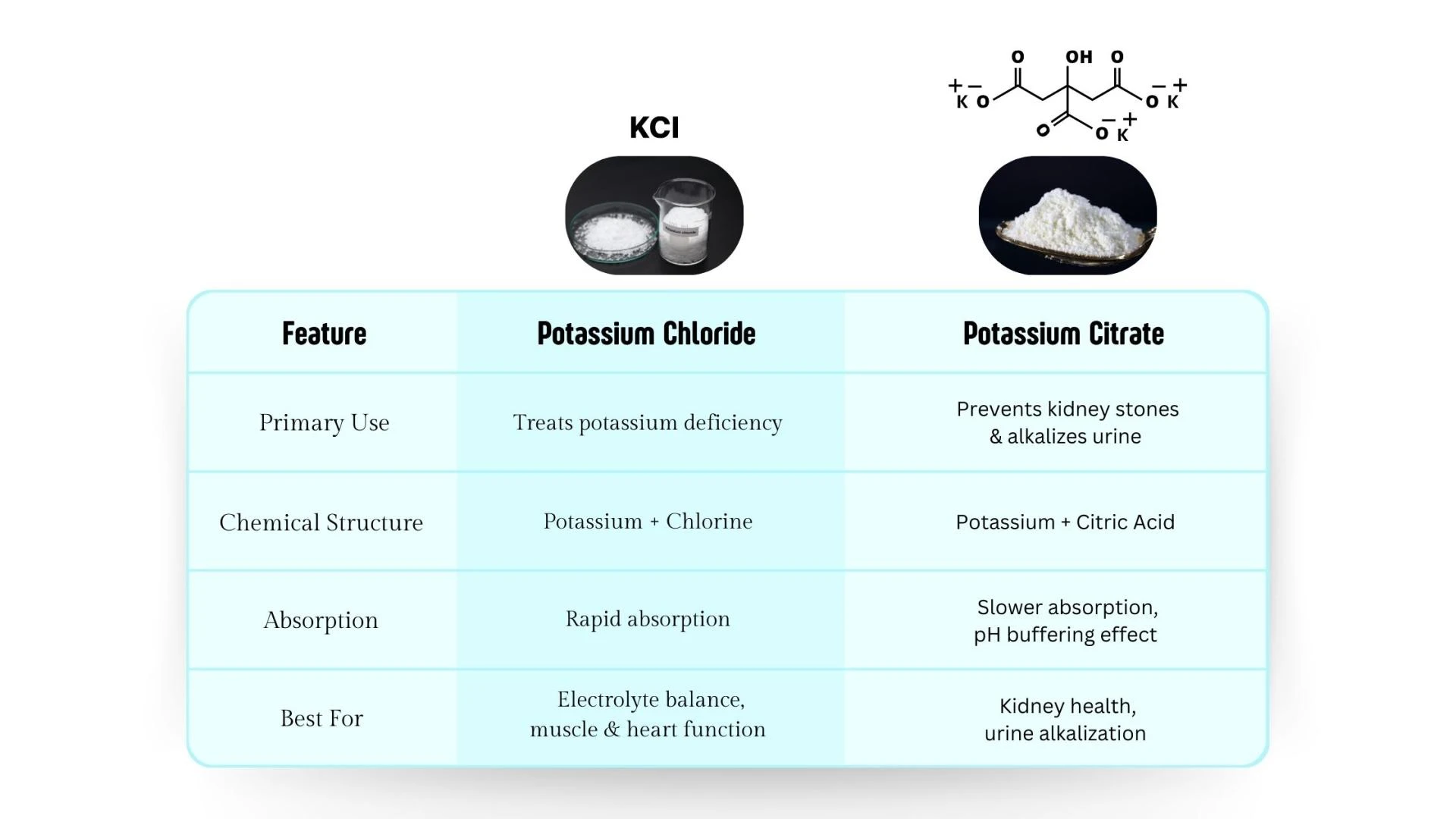
If the goal is to restore potassium levels quickly, potassium chloride is the preferred choice. However, for those dealing with urinary tract health or kidney stones, potassium citrate may be more suitable.
Potassium Chloride in Pharmaceutical Formulations
Pharmaceutical companies use potassium chloride in various forms, including:
- Tablets & Capsules: Used in prescription medications for hypokalemia.
- IV Solutions: Administered in hospitals to quickly restore potassium balance.
- Oral Liquids: Used for patients who have difficulty swallowing tablets.
Potassium chloride is often combined with other minerals and vitamins in multivitamin formulations, ensuring that individuals receive a balanced intake of electrolytes.
Safety & Side Effects:
While potassium chloride is essential for health, excessive intake can lead to hyperkalemia (high potassium levels), which can be dangerous for people with kidney disease. Side effects may include:
- Stomach irritation
- Nausea
- Diarrhea
- Heart palpitations (in severe cases)
Potassium Chloride for Water Softeners
Beyond human health, potassium chloride is commonly used as a water softening agent. It serves as an alternative to sodium chloride in water softeners, which helps remove minerals like calcium and magnesium that cause water hardness.
Benefits of Potassium Chloride in Water Softeners:
- Reduces sodium intake for individuals with hypertension
- More environmentally friendly than sodium-based softeners
- Prevents scale buildup in plumbing systems
Potassium Chloride in Nutraceutical Formulations
The nutraceutical industry relies on potassium chloride for its electrolyte-replenishing properties. Popular products include:
- Electrolyte Drinks & Powders (Sports and recovery formulas)
- Functional Foods (Fortified health foods and beverages)
- Dietary Supplements (Potassium-enriched capsules and tablets)
Athletes, fitness enthusiasts, and individuals following low-sodium diets often prefer potassium chloride to maintain electrolyte balance without excessive sodium intake.
The Future of Potassium Chloride in Health & Wellness
With the increasing demand for clean-label supplements and functional health products, potassium chloride is expected to remain a key player in pharmaceutical and nutraceutical formulations.
Trends in the Industry:
- Growing preference for potassium-based salt alternatives in food processing
- Increasing use in natural hydration solutions
- Expanding applications in functional beverages and wellness supplements
Conclusion
Potassium chloride is an indispensable component of pharmaceutical and nutraceutical formulations, offering a safe and effective means of maintaining electrolyte balance, supporting cardiovascular health, and improving hydration. Whether used as a supplement, in medical treatments, or even in water softening systems, its versatility and benefits are undeniable.
As research continues to highlight the importance of potassium in overall health, the demand for potassium chloride-based products will only grow, making it an essential ingredient in modern wellness solutions.