Social media has become an important communication and marketing channel for businesses. Companies use platforms such as Facebook, Instagram, LinkedIn, and other social networks to share updates, promote products, communicate with customers, and build brand awareness.
However, managing multiple social media accounts can become complicated as marketing activities grow. Teams may use separate tools for publishing, spreadsheets for content calendars, and different platforms to review campaign performance. This makes it harder to maintain a consistent publishing schedule and coordinate marketing activities.
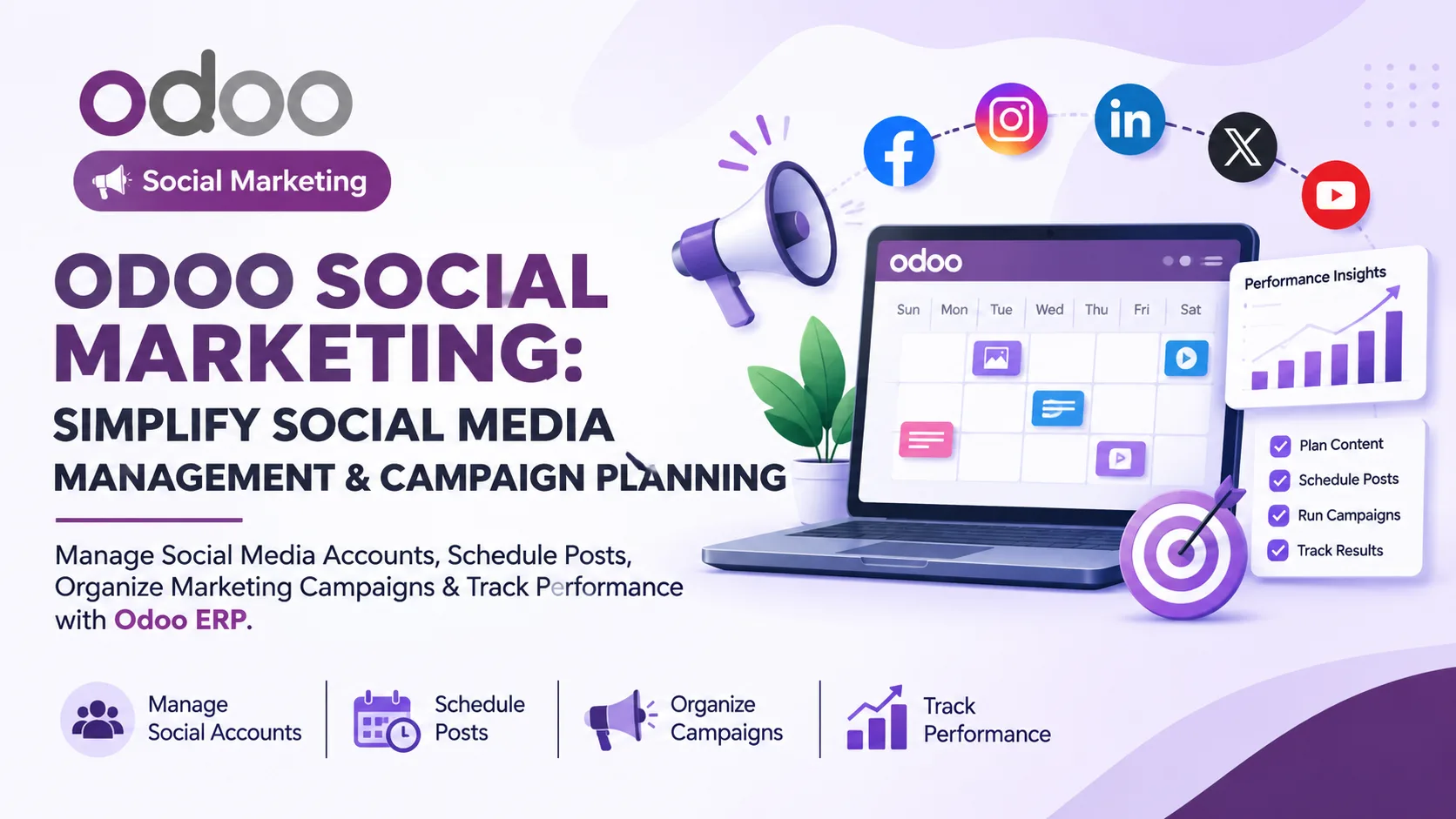
A centralized social media management process can help businesses organize these tasks more effectively. Odoo Social Marketing implementation and customization services provides a workspace for managing connected social accounts, planning posts, scheduling content, linking posts with campaigns, and reviewing available social insights.
With the right configuration, businesses can bring important social media activities into their broader marketing workflow.
What Is Odoo Social Marketing?
Odoo Social Marketing is a marketing application that helps businesses coordinate their social media activities through Odoo.
It allows marketing teams to connect supported social media accounts, plan and publish posts, organize content through a calendar, and review available post activity and insights.
Instead of switching between multiple disconnected tools, teams can use a centralized workspace to manage relevant social publishing activities.
Odoo Social Marketing can be useful for businesses that want to organize their social media presence, coordinate marketing campaigns, and improve visibility into their publishing activities.
Why Businesses Need a Centralized Social Media Management System
Managing social media manually may work when a business publishes only a few posts. As the number of accounts, campaigns, and marketing activities increases, coordination becomes more difficult.
Some common challenges include:
1. Managing Multiple Social Accounts
Marketing teams often manage several business profiles across different social platforms. Switching between accounts to prepare and publish content can consume time and make coordination difficult.
2. Inconsistent Content Publishing
Without a clear publishing calendar, businesses may miss planned posting dates or publish content inconsistently.
A structured content schedule helps teams plan their communication in advance.
3. Disorganized Content Planning
Post ideas, captions, creative assets, and publishing dates may be maintained in separate documents. This can make it difficult for team members to understand which content is planned, published, or still pending.
4. Limited Campaign Visibility
When social media posts are not connected with broader marketing activities, it becomes harder to review campaign-related content and understand how different posts contribute to a marketing initiative.
5. Manual Performance Tracking
Marketing teams may need to visit individual platforms to review post activity and available engagement information. This can make regular reporting more time-consuming.
Odoo Social Marketing helps organize these activities within a shared marketing workspace.
Key Features of Odoo Social Marketing
1. Connected Social Media Accounts
Odoo Social Marketing allows businesses to connect supported social media accounts to their marketing workspace.
This provides a more centralized way to manage social publishing activities and review connected account streams.
The available platforms and functions depend on the Odoo version, supported integrations, and the permissions provided by each social network.
2. Social Media Post Scheduling
Planning posts in advance helps marketing teams maintain a more consistent publishing routine.
Odoo Social Marketing supports post planning and scheduling across connected channels. Teams can prepare content ahead of time and organize publishing activities around campaign dates and business priorities.
This is especially useful for businesses managing multiple campaigns or maintaining regular social media communication.
3. Centralized Content Calendar
A content calendar gives marketing teams a shared view of planned and published social media content.
It helps users understand what is scheduled, identify gaps in the publishing plan, and coordinate content around important events, promotions, and announcements.
A centralized calendar also makes it easier for teams to review their upcoming social media activities.
4. Social Media Campaign Management
Social media posts can be linked to marketing campaigns, helping businesses organize related content under broader marketing initiatives.
For example, a company launching a new product may publish several posts covering product features, announcements, promotional messages, and customer information.
Organizing these posts around a campaign provides better context when reviewing marketing activities.
5. Social Streams and Activity Monitoring
Connected social streams help teams view relevant activity from their linked accounts within the Odoo workspace.
This can reduce the need to switch constantly between separate platforms when reviewing social media activity.
The exact interactions and stream capabilities depend on the supported platform integration and Odoo version.
6. Social Reporting and Insights
Reviewing social activity helps marketing teams understand which content is receiving attention.
Odoo Social Marketing provides access to available post activity and insights, supporting a more organized approach to campaign review.
Businesses can use this information to evaluate publishing activities and identify opportunities to improve future content.
How Odoo Social Marketing Helps Different Marketing Teams
Social media management involves several responsibilities, from preparing content to coordinating campaigns and reviewing performance.
Odoo Social Marketing can support different marketing roles.
For social media managers:
- Manage connected social accounts.
- Plan and schedule social posts.
- Organize publishing activities through a calendar.
- Review available post insights.
- Coordinate content around campaigns.
For content teams:
- Organize planned social media content.
- Coordinate post publishing dates.
- Maintain better visibility into publishing activities.
- Support consistent brand communication.
For marketing managers:
- Review campaign-related social posts.
- Monitor publishing progress.
- Understand available social insights.
- Coordinate social activities with broader marketing initiatives.
A shared workspace helps marketing teams maintain better coordination and reduce dependence on scattered content records.
Connecting Social Media with Broader Marketing Activities
Social media is only one part of a business's marketing strategy. Companies may also use email campaigns, customer segmentation, lead generation, events, and automated marketing workflows.
Connecting these activities can help businesses create a more consistent marketing process.
For example, a company promoting a new service may publish social media updates while also sending targeted email campaigns to relevant subscribers. Businesses can complement their social media activities with the Odoo Email Marketing application to organize mailing lists, email templates, campaign sends, and available performance metrics.
The exact connections between marketing applications depend on the selected Odoo version and business configuration.
Which Businesses Can Benefit from Odoo Social Marketing?
Odoo Social Marketing can be useful for organizations that actively use social media to communicate with customers and promote their products or services.
Examples include:
- Manufacturing companies promoting products and industry updates.
- Retail businesses announcing offers and new arrivals.
- eCommerce companies sharing product information and promotions.
- Professional service providers building brand visibility.
- Educational institutions communicating announcements and events.
- Startups developing their social media presence.
- Marketing agencies coordinating social content for business accounts.
It is particularly relevant for businesses that manage multiple social accounts and want a more organized approach to planning and publishing content.
Important Considerations Before Implementing Odoo Social Marketing
A successful social media management setup requires more than connecting accounts. Businesses should first understand their publishing process, marketing objectives, and reporting requirements.
Important considerations include:
Social account assessment: Identify the business social media accounts that need to be connected and verify their compatibility with the selected Odoo version.
Platform permissions: Review the required account permissions and authentication requirements for each supported social network.
Content planning: Define the types of posts the business publishes and how frequently content should be scheduled.
Publishing responsibilities: Decide who prepares, reviews, schedules, and publishes social media content.
Campaign organization: Establish how posts should be grouped and associated with marketing campaigns.
Reporting requirements: Identify which social metrics and insights are important for evaluating marketing activities.
Integration requirements: Determine whether social media workflows need to connect with CRM, email marketing, website, or other business applications.
User training: Help marketing team members understand how to manage connected accounts, schedule posts, and review available insights.
Planning these requirements helps businesses configure a system that supports their actual marketing workflow.
How SerpentCS Helps Businesses Implement Odoo Social Marketing
Every business has a different social media strategy. Some organizations focus on regular brand communication, while others manage multiple campaigns across several business accounts.
SerpentCS helps businesses assess their marketing workflows and configure Odoo Social Marketing around their operational requirements.
Our implementation approach can include:
- Reviewing existing social media management processes.
- Assessing supported social account connections.
- Configuring connected social media accounts.
- Organizing post planning and scheduling workflows.
- Setting up content calendar requirements.
- Linking social posts with relevant campaigns.
- Reviewing available reporting and insights.
- Migrating relevant campaign or content data where supported.
- Developing custom workflows and integrations where required.
- Training marketing teams on daily publishing activities.
- Providing ongoing support and workflow improvements.
Explore the Odoo Social Marketing implementation and customization services from SerpentCS to understand how your business can establish a more organized social media management process.
Conclusion
Managing social media across multiple platforms can become difficult when content planning, publishing, campaign tracking, and reporting are handled through separate tools.
Odoo Social Marketing gives businesses a centralized workspace for connected social accounts, scheduled posts, content calendars, campaign links, and available social insights.
With suitable configuration and implementation, organizations can improve publishing coordination, organize their marketing activities, and gain better visibility into social media performance.
For businesses looking to streamline their digital marketing operations, Odoo Social Marketing can be a practical step toward more structured and connected social media management.