In many factories, machines still work alone. A press shows one number, a conveyor shows another, and a boiler shows nothing at all. The shift supervisor has to walk the floor, look at each screen, and write the readings in a notebook. By the time the data reaches the manager, it is already old. Small faults become big breakdowns because no one saw them early.
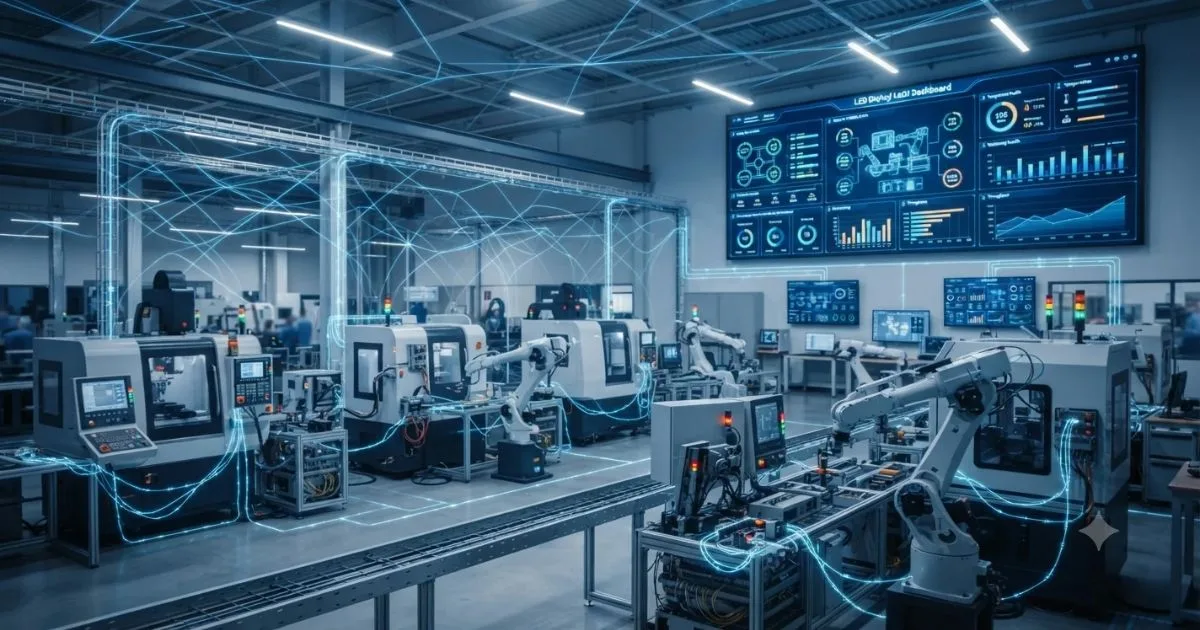
IoT software integration for industrial equipment fixes this gap by linking every machine to one software platform. Sensors pick up temperature, vibration, speed and energy use. Controllers and PLCs send that data to a dashboard. The whole plant can be seen in one view. When a motor heats up, when a line slows down, or when power use spikes, the team gets an alert in minutes, not at the end of the shift.
The first gain is clear visibility. The team no longer depends on manual checks. They can see which machine is running, which is idle, and which needs attention. Production count, downtime, and energy use are visible live. This helps the floor team make quick decisions and helps managers plan the day with real numbers.
The second gain is smarter maintenance. Instead of servicing machines on a fixed calendar, the team can service based on actual condition. If vibration rises, if heat crosses a limit, or if running hours cross a threshold, the system flags it. The team can schedule maintenance during a planned stop, not during an emergency breakdown. This cuts unplanned downtime and lowers repair bills.
The third gain is better quality and less waste. When machines are connected, the data shows patterns that are invisible otherwise. For example, the team may notice that one machine always produces more defects after lunch, or that one product causes higher vibration. Fixing these small issues improves quality, reduces scrap, and increases output without buying new equipment.
For integration to work, it must fit the real factory. Old machines and new machines use different protocols. The integration must connect them without stopping production. Data must be secure, clean, and shown in a simple way. If the dashboard is hard to use, operators will ignore it. The best system is one that the team actually opens every shift.
Texawave builds this type of connected system for factories. The focus is on practical use on the shop floor, not just on technology. The solution is designed around the machines you already have, the team you already have, and the targets you need to hit.
What is IoT software integration for industrial equipment?
It is the method of connecting machines, sensors and controllers to software so all equipment data can be seen, analysed and controlled from one place.
Can old machines be connected?
Yes. Old machines can be linked with sensors, gateways and protocol converters, without replacing the machine itself.
If you want less downtime, clearer data and a factory that talks to you, explore IoT software integration for industrial equipment and speak to the team about a solution for your plant.