Planning a new deck is exciting, but before choosing furniture, railings, or finishing touches, there is one important question to answer: how much decking material do you actually need? Ordering too little can delay your deck installation, while ordering far too much can unnecessarily increase project costs.
Accurate material estimates depend on more than measuring the length and width of your deck. Board dimensions, layout patterns, waste, stairs, and future additions can all affect the final quantity. Whether you are building from scratch or planning a backyard deck renovation, careful calculations can help keep your project organized and efficient.
Start With Accurate Deck Dimensions
The first step is determining the total square footage of the planned deck. For a simple rectangular deck, multiply the length by the width. For example, a deck measuring 20 feet long by 12 feet wide has an area of 240 square feet.
More complex deck shapes require additional calculations. L-shaped, multi-level, or angled decks can be divided into smaller rectangles, squares, or triangles. Calculate each area separately and then add the results together.
Measurements should be taken carefully before ordering materials. Experienced home deck builders typically verify measurements several times because even a small error can affect the quantity of decking required.
Consider the Size and Coverage of Deck Boards
Once you know the deck’s square footage, consider the dimensions of the boards you plan to use. Decking products come in different widths and lengths, and their actual dimensions may differ slightly from their advertised sizes.
Board spacing also matters. Small gaps are generally left between boards to support drainage and accommodate material movement. The amount of material required will therefore depend on the board dimensions, spacing requirements, and overall deck design.
A professional deck builder can help determine how many individual boards are necessary based on the specific decking product you select.
Always Account for Material Waste
Ordering exactly enough decking to cover the calculated square footage is rarely a good idea. Cuts, damaged boards, defects, pattern adjustments, and installation mistakes can all create waste.
For a straightforward rectangular deck, homeowners often plan for approximately 10% additional material. More complicated designs may require a larger allowance. Diagonal layouts, custom borders, herringbone patterns, and uniquely shaped decks generally create more offcuts than standard installations.
Your deck contractor can recommend an appropriate waste percentage based on the design. Adding a reasonable buffer can also prevent the inconvenience of trying to find matching boards later, particularly if a specific color or product line becomes difficult to source.
Think About Your Board Layout
The way decking boards are arranged can have a major impact on material requirements. A traditional straight layout is typically easier to estimate because it involves fewer complicated cuts.
Diagonal boards can create a visually dynamic appearance, but they usually produce more waste. Picture-frame borders, contrasting sections, and decorative patterns may also require extra boards.
During a backyard deck renovation, homeowners may be tempted to focus primarily on appearance. However, discussing the layout with a deck builder before ordering materials can help balance design goals with practical material requirements and budget considerations.
Don’t Forget Stairs and Other Deck Features
The main deck surface is only part of the material calculation. If your project includes stairs, built-in benches, multiple levels, or other features constructed with decking boards, these areas must be included in the estimate.
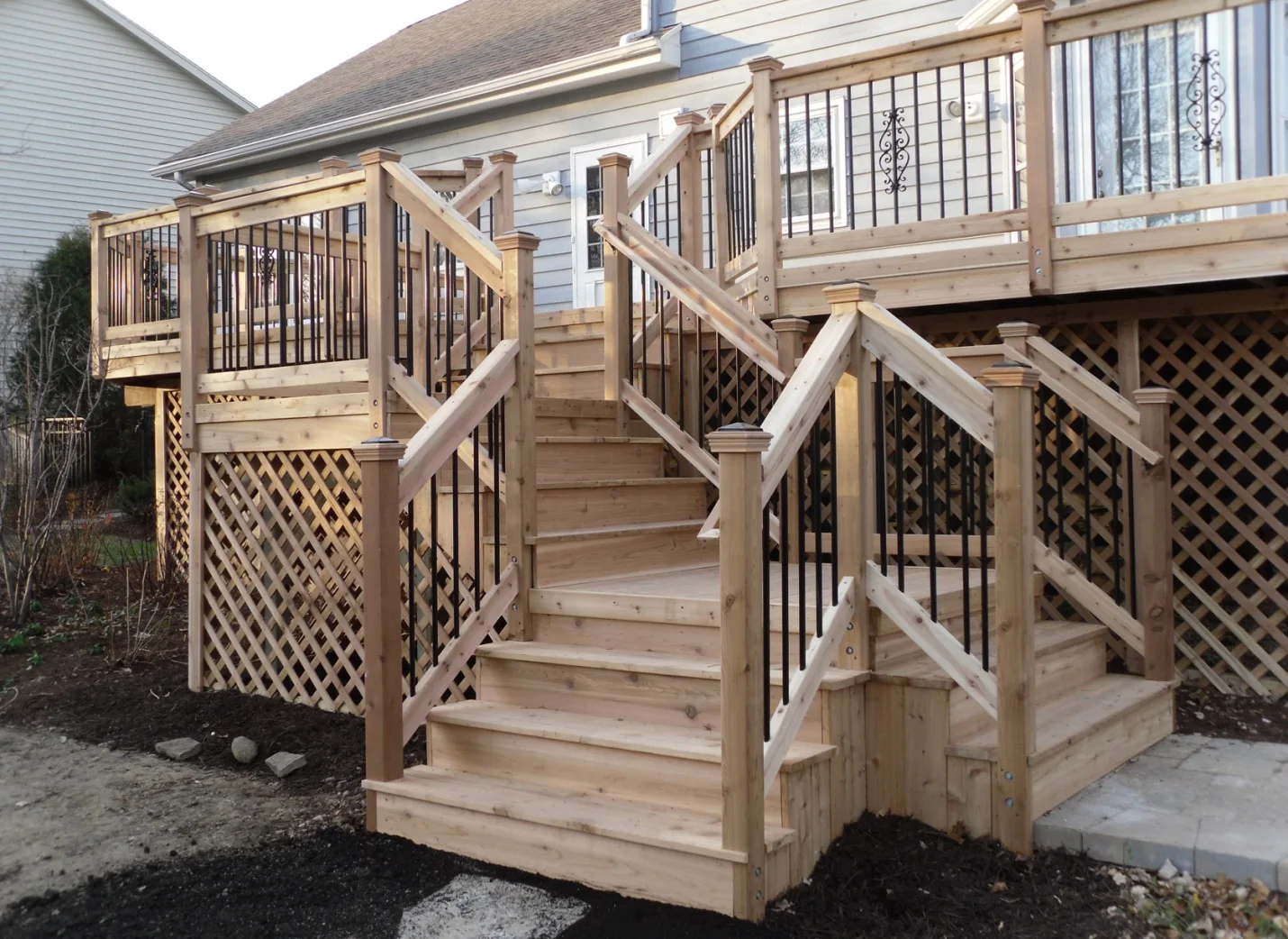
Stair treads can require a surprising amount of decking, particularly when a deck sits high above ground level. Fascia boards and decorative trim should also be calculated separately when they are part of the design.
Professional home deck builders typically prepare detailed material lists that account for these smaller areas so they are not overlooked during construction.
Plan for Future Repairs and Additions
Keeping a few extra deck boards after your deck installation can be worthwhile. Years later, you may need to replace a damaged board, repair a section, or make a minor modification.
Manufacturers occasionally update product lines, colors, textures, or dimensions. Having several original boards stored properly can make future repairs easier and help maintain a consistent appearance.
If you are considering a future deck expansion, pergola, privacy feature, or outdoor kitchen, discuss these plans with your deck contractor early. Planning ahead may influence the deck’s dimensions, framing, material quantities, or overall configuration.
Why Professional Material Estimates Matter
Online decking calculators can provide useful preliminary estimates, but they cannot always account for every detail of a custom project. Structural requirements, unusual deck shapes, stairs, board orientation, and decorative features can make calculations considerably more complicated.
Working with an experienced deck builder provides an additional level of accuracy. Professionals understand how specific materials behave during installation and can anticipate where additional boards may be needed.
Accurate estimating can also make the overall project smoother. Instead of stopping construction because materials run short, your deck installation can move forward with the necessary supplies already available.
Measure Carefully Before You Build
The right material estimate is the foundation of a well-planned deck project. Begin with precise dimensions, calculate board coverage, account for waste, consider your layout, and include stairs and special features. For a backyard deck renovation, remember to evaluate existing conditions and determine which materials can remain and which need replacement.
A little extra planning can help reduce unnecessary expenses, prevent delays, and ensure you have enough material to complete your outdoor space properly.
Turn Your Deck Plans Into a Space Built to Last
Your dream deck shouldn’t begin with guesswork. Whether you’re replacing an aging outdoor space or starting a completely new project, the right calculations and professional guidance can make every board count. Backyard Images provides comprehensive deck installation services in St. Charles and Geneva, IL, helping homeowners bring thoughtfully planned outdoor spaces to life.
Connect with the team and discover how professional planning, quality materials, and experienced craftsmanship can transform your backyard into a place you’ll enjoy for years.
Reach out to them today to learn more about their services.
About the Author
The author is an experienced deck contractor with a passion for helping homeowners better understand deck construction, renovation, and maintenance. Drawing on practical industry knowledge, the author likes to write informative blogs that simplify topics such as material selection, project planning, deck design, and long-term care. Through clear and useful guidance, the author aims to help homeowners make more confident decisions when working with home deck builders, planning renovations, or investing in new outdoor living spaces for their homes.