Introduction to Microsoft Data Fabric
What Is Microsoft Fabric?
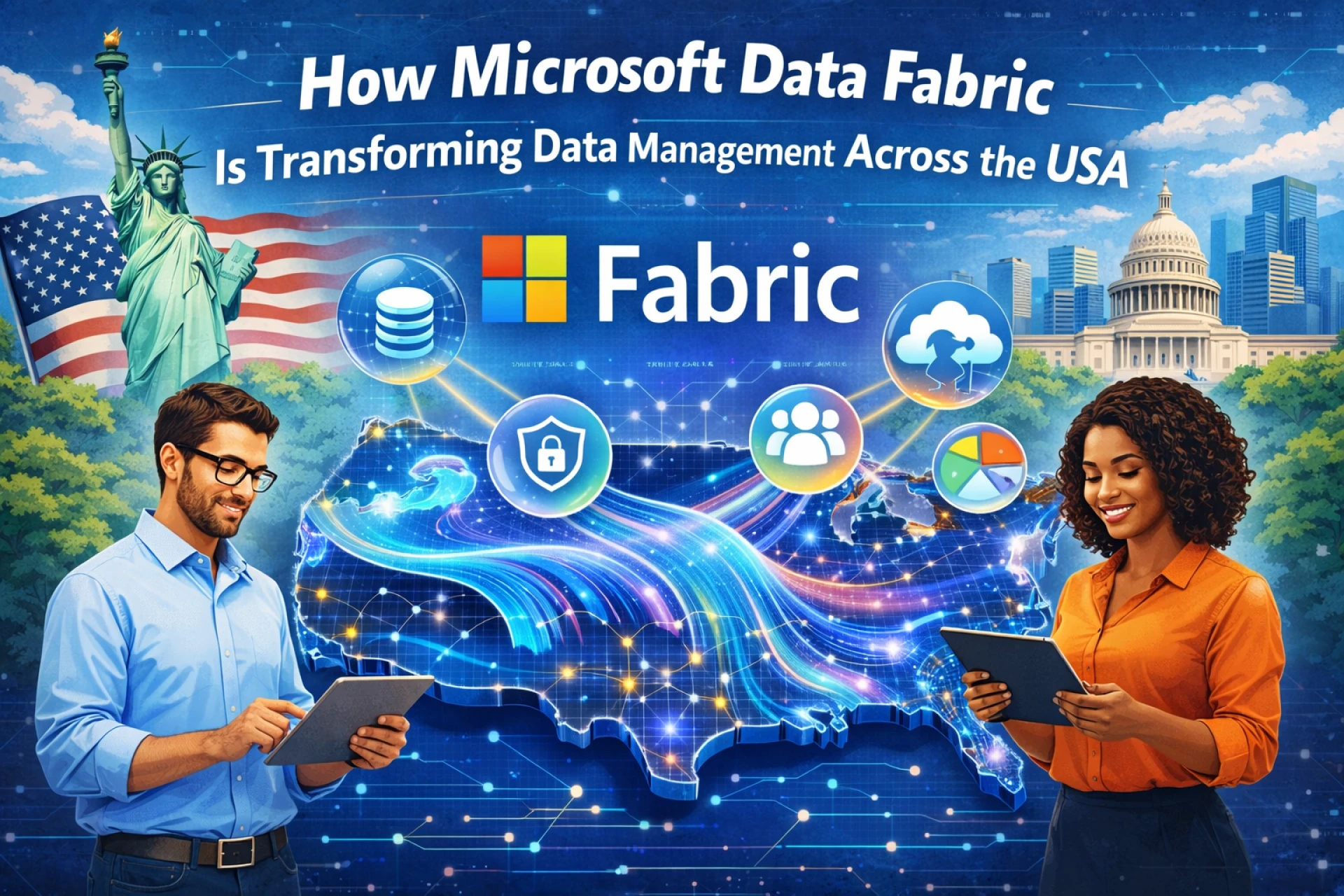
If you’ve been following the world of data management, analytics, and AI, you’ve probably heard about Microsoft Data Fabric. But what exactly is it, and why are so many businesses in the United States talking about it? Microsoft Fabric is an end-to-end data analytics platform that combines data integration, engineering, real-time analytics, data science, and business intelligence into a single unified platform. Instead of using multiple tools for data storage, transformation, analytics, and reporting, organizations can manage everything in one place. According to Microsoft, Fabric integrates services like data engineering, data factory, real-time intelligence, and data warehousing into a single environment operating on a shared storage system called OneLake.
Think of Microsoft Fabric like a central nervous system for data. In traditional systems, data is scattered across multiple platforms, making it difficult to analyze and use efficiently. Fabric solves this problem by centralizing data storage and analytics capabilities, making it easier for companies to transform raw data into actionable insights. This is especially important for U.S. companies dealing with massive volumes of data across cloud, on-premises, and hybrid environments.
Why Data Fabric Matters in Modern Businesses
Modern businesses generate huge amounts of data every day—from customer transactions and website visits to IoT devices and social media interactions. The challenge isn’t collecting data anymore; it’s managing and analyzing it efficiently. That’s where Microsoft Data Fabric comes in. It helps organizations unify their data environment, reduce complexity, and improve decision-making with AI-powered analytics tools.
In the United States, companies are investing heavily in data-driven decision-making, AI, and business intelligence. However, many organizations still struggle with data silos, inconsistent data quality, and slow reporting systems. Microsoft Fabric addresses these issues by providing a unified data platform with built-in governance, security, and analytics tools. This means companies can spend less time managing infrastructure and more time using data to drive growth and innovation.
The Rise of Data Challenges in the USA
Data Silos and Fragmented Systems
One of the biggest challenges facing U.S. enterprises today is data silos. Many organizations use different systems for CRM, ERP, finance, HR, and analytics, and these systems often don’t communicate with each other. As a result, data becomes fragmented, inconsistent, and difficult to analyze. This leads to poor decision-making, inaccurate reporting, and wasted time trying to reconcile data from different sources.
Microsoft Fabric solves this problem by creating a unified data lake where all data can be stored, accessed, and analyzed without duplication. This unified approach eliminates data silos and allows teams to work with the same data in real time. Instead of moving data between systems, Fabric allows different tools to access the same data directly from OneLake, reducing complexity and improving efficiency.
Growing Need for Unified Analytics Platforms
Another major trend in the United States is the growing demand for unified analytics platforms. Companies no longer want separate tools for data integration, analytics, and reporting. They want a single platform that can handle everything from data ingestion to visualization. Microsoft Fabric meets this demand by offering a software-as-a-service platform that integrates multiple data services into one environment.
This unified platform approach is transforming how organizations manage data. Instead of spending months integrating different tools, companies can deploy Microsoft Fabric and start analyzing data almost immediately. This reduces implementation time, lowers costs, and improves productivity across the organization.
Key Features of Microsoft Data Fabric
OneLake Unified Storage
One of the most important components of Microsoft Fabric is OneLake, which acts as a centralized data lake for the entire organization. All data stored in Fabric is accessible through OneLake, eliminating the need for multiple data storage systems. This unified storage approach makes it easier to manage, secure, and analyze data across the organization.
OneLake also supports zero-copy data sharing, which means different teams can access the same data without creating multiple copies. This reduces storage costs and ensures everyone is working with the same data. For large enterprises in the USA, this can result in significant cost savings and improved data consistency.
AI and Copilot Integration
Another powerful feature of Microsoft Fabric is its AI-powered tools and Copilot integration. These tools help users automate data tasks, generate insights, and even create reports using natural language. This makes data analytics more accessible to non-technical users, allowing business teams to analyze data without relying on IT departments.
AI integration also helps organizations identify trends, predict outcomes, and make better decisions faster. In a competitive market like the United States, this kind of AI-driven decision-making can provide a major competitive advantage.
Real-Time Analytics and Data Engineering
Microsoft Fabric also includes real-time analytics capabilities, which allow organizations to analyze data as it is generated. This is especially useful for industries like finance, healthcare, and e-commerce, where real-time data insights can improve customer experience and reduce risk.
The platform also includes data engineering tools that allow organizations to ingest, transform, and prepare data for analysis. With over 200 connectors available, companies can connect to various data sources, including cloud services, on-premises databases, and third-party applications.
Benefits of Microsoft Data Fabric for U.S. Organizations
Improved Decision-Making
One of the biggest benefits of Microsoft Fabric is improved decision-making. When all data is stored in a single platform and updated in real time, decision-makers can access accurate information whenever they need it. This leads to faster and more informed decisions.
For example, retail companies can analyze customer behavior in real time and adjust pricing or promotions instantly. Financial institutions can detect fraud faster by analyzing transaction data in real time. Healthcare organizations can improve patient outcomes by analyzing medical data more efficiently.
Cost Efficiency and Scalability
Microsoft Fabric is a cloud-based SaaS platform, which means companies don’t need to invest in expensive infrastructure. They can scale their data operations based on demand and only pay for what they use. This makes Fabric a cost-effective solution for both small businesses and large enterprises.
Scalability is especially important for U.S. companies dealing with large amounts of data. Microsoft Fabric allows organizations to scale storage and computing resources independently, ensuring optimal performance without overspending on infrastructure.
Data Governance and Security
Data governance and security are major concerns for organizations in the United States, especially in industries like healthcare and finance. Microsoft Fabric includes built-in governance tools that help organizations manage data access, compliance, and security policies.
These governance features ensure that sensitive data is protected and only accessible to authorized users. This helps organizations comply with data regulations and reduce the risk of data breaches.
Microsoft Data Fabric Use Cases in the USA
Healthcare Industry
In the healthcare industry, Microsoft Fabric can be used to integrate patient data from multiple systems, analyze medical records, and improve patient care. Real-time analytics can help hospitals monitor patient health and respond quickly to emergencies.
Retail and E-commerce
Retail companies in the USA use Microsoft Fabric to analyze customer behavior, manage inventory, and optimize supply chains. By analyzing data in real time, retailers can improve customer experience and increase sales.
Financial Services
Financial institutions use Microsoft Fabric for fraud detection, risk analysis, and customer analytics. Real-time data processing allows banks to detect suspicious transactions and prevent fraud.
Microsoft Fabric vs Traditional Data Platforms
FeatureMicrosoft FabricTraditional Data PlatformsData StorageUnified OneLakeMultiple storage systemsAnalyticsBuilt-inSeparate toolsAI IntegrationYesLimitedReal-Time AnalyticsYesLimitedData GovernanceBuilt-inExternal toolsDeploymentCloud SaaSOn-premises/Hybrid
Future of Data Management with Microsoft Fabric
The future of data management in the United States is moving toward unified, AI-powered data platforms, and Microsoft Fabric is leading this transformation. As companies continue to adopt AI, machine learning, and real-time analytics, the need for a unified data platform will continue to grow.
Microsoft Fabric is expected to play a major role in digital transformation across industries. By combining data integration, analytics, and AI into a single platform, Fabric is helping organizations become more data-driven and competitive in the global market.
Conclusion
Microsoft Data Fabric is transforming data management across the USA by providing a unified platform for data integration, analytics, and AI. It helps organizations eliminate data silos, improve decision-making, reduce costs, and enhance data security. As more companies adopt cloud-based data platforms, Microsoft Fabric is becoming an essential tool for modern data management and analytics.
Organizations that adopt Microsoft Fabric early will have a competitive advantage because they can analyze data faster, make better decisions, and innovate more quickly. In a data-driven world, platforms like Microsoft Fabric are not just useful—they are essential for business success.
FAQs
1. What is Microsoft Data Fabric?
Microsoft Data Fabric is an end-to-end data analytics platform that integrates data engineering, data science, real-time analytics, and business intelligence into one platform.
2. What is OneLake in Microsoft Fabric?
OneLake is a unified data lake that stores and manages all organizational data in Microsoft Fabric.
3. Is Microsoft Fabric cloud-based?
Yes, Microsoft Fabric is a SaaS cloud-based platform that runs on Microsoft Azure.
4. Which industries use Microsoft Fabric in the USA?
Healthcare, retail, finance, manufacturing, and technology industries use Microsoft Fabric.
5. What are the main benefits of Microsoft Fabric?
Unified data platform, real-time analytics, AI integration, cost savings, and improved decision-making.