In today’s digital era, libraries are rapidly adopting technology to improve efficiency and enhance user experiences. Managing books, members, issue-return records, and other library operations manually can be time-consuming and prone to errors. This is where Glibrary Library Management Software and modern Library Management Software solutions become essential. By automating daily tasks, educational institutions can simplify operations, improve accuracy, save valuable time, and create a smarter and more organized library environment. In this blog, we will explore how library automation improves efficiency and why every school and college should adopt a Digital Library Management Software.
In this blog, we will explore how library automation improves efficiency and why every educational institution should adopt a Digital Library Management Software.
What is Library Automation?
Library automation is the use of technology and software to manage library operations digitally. It includes implementing systems that automate tasks such as:
- Book cataloging and classification
- Member registration and management
- Book issue and return management
- Fine calculation and collection
- Alerts and reminders for due dates
Glibrary Library Management Software is an advanced solution that manages every aspect of library administration digitally. Automation not only increases operational efficiency but also improves the experience of both librarians and library users. Library Management System Software replaces manual record-keeping with a structured and automated approach, ensuring faster and more accurate resource management.
Why Educational Institutions Need Library Automation
Schools and colleges often manage thousands of books, journals, and reference materials. Handling these resources manually can create several challenges, such as:
- Misplaced or lost books
- Inefficient issue/return processes
- Errors in record-keeping
- Delayed alerts and reminders
- Limited reporting and analytics
With Library Software for Schools and Colleges, institutions can overcome these challenges and create an organized, efficient, and user-friendly library environment.
Key Ways Library Automation Improves Efficiency
1. Streamlined Book Cataloging
One of the biggest advantages of Digital Library Management Software is systematic book cataloging. Libraries can organize books based on:
- Subject or category
- Author or publisher
- Genre or edition
- Availability status
This makes it easier for both librarians and students to search and locate books quickly. Glibrary Library Management Software automates the cataloging process, reducing manual effort and minimizing errors.
2. Faster Issue and Return Process
Manual book transactions can become slow, particularly during busy hours. With Digital Library Management Software, librarians can issue and return books within seconds by using barcode or RFID technology.
- Scan barcodes or RFID tags for quick transactions
- Automatically update book status in the system
- Monitor due dates and overdue books
This significantly reduces waiting time and improves library workflow.
3. Automated Alerts and Notifications
One of the most useful features of Library Software for Schools and Colleges is automated communication. Library automation enables timely notifications for:
- Returning borrowed books
- Overdue books and fines
- Reserved books
- New arrivals and library events
Automated alerts reduce manual follow-ups and improve overall efficiency.
4. Efficient Member Management
Managing student and faculty information manually can be difficult. Library Management System Software simplifies member management by:
- Storing member profiles digitally
- Tracking borrowing history
- Assigning membership types and permissions
- Monitoring active and inactive users
This improves accuracy and reduces administrative workload.
5. Real-Time Tracking of Resources
Library automation enables librarians to track resources and member activities in real time. With Glibrary Library Management Software, libraries can:
- Check available and issued books
- Monitor reserved and overdue items
- Identify damaged or lost resources
- Analyze library usage trends
Real-time tracking improves resource utilization and reduces the chances of misplaced items.
6. Enhanced Data Accuracy
Manual records are more likely to contain errors or missing information. Library Management Software ensures accurate and reliable data management.
Accurate records are essential for:
- Planning book purchases
- Tracking library usage
- Managing fines and overdue items
Digital accuracy helps institutions make better decisions and avoid administrative conflicts.
7. Time-Saving Automation
Automation significantly reduces repetitive work for library staff. A Digital Library Management Software automates:
- Book issue and return
- Fine calculation and collection
- Notifications and reminders
- Report generation
With Library Management Software for Colleges, routine activities can be completed within minutes, allowing librarians to focus more on improving library services.
8. Advanced Reporting and Analytics
Another major benefit of Library Management System Software is access to reports and analytics. Educational institutions can analyze:
- Most issued books
- Borrowing patterns
- Peak library usage periods
- Fine collection summaries
These reports help improve resource planning and operational efficiency.
9. Improved Student Experience
Library automation creates a better experience for students by providing:
- Online book searches through OPAC
- Quick issue and return services
- Mobile access to library resources
- Notifications for due dates and new arrivals
A better user experience encourages students to utilize library resources more effectively.
10. Secure and Organized Record-Keeping
Digital systems provide secure and organized data management. Library Software for Colleges and Library Software for Schools offer:
- Cloud storage and backups
- Controlled access for staff and members
- Protection against data loss
Secure record management reduces administrative stress and improves trust.
11. Scalability for Growing Institutions
As institutions grow, manual systems become difficult to manage. Library Management Software for Schools and Colleges can easily scale to accommodate:
- Larger collections of books
- Increasing numbers of students and faculty
- Multi-branch library operations
Solutions like Glibrary Library Management Software ensure long-term efficiency and flexibility.
12. Eco-Friendly and Paperless Operations
Traditional libraries generate a large amount of paperwork. Digital automation significantly reduces paper usage through:
- Digital records instead of paper logs
- Online reminders and notifications
- Electronic reporting and documentation
This supports sustainability and reduces administrative expenses.
Why Glibrary Library Management Software is the Ideal Choice
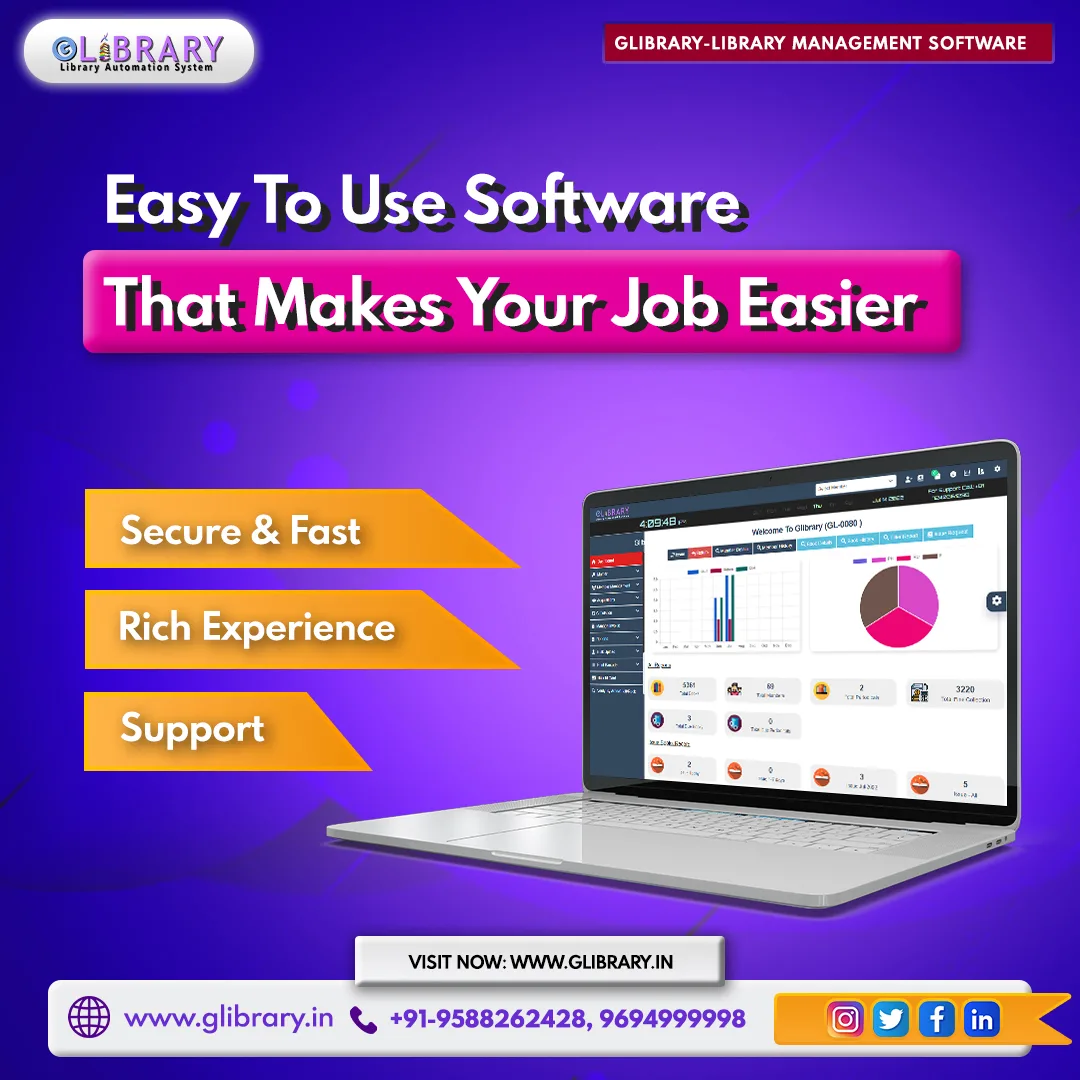
Glibrary Library Management Software is a complete solution for modern educational libraries. Its features include:
- Advanced cataloging and classification
- Member registration and management
- Barcode and RFID integration
- Automated alerts and notifications
- Detailed reports and analytics
- Multi-user and multi-branch support
With its user-friendly interface and powerful features, Glibrary helps educational institutions improve efficiency and focus more on learning outcomes.
Future of Library Automation
The future of Digital Library Management Software promises even more advanced capabilities, including:
- AI-based book recommendations
- Integration with e-books and digital resources
- Mobile applications for students and staff
- Cloud-based remote access systems
- Smart analytics for resource optimization
Educational institutions adopting automation today will be better prepared for future requirements.
Library automation is no longer an option; it has become a necessity for modern educational institutions. Digital Library Management Software, such as Glibrary Library Management Software, simplifies cataloging, book transactions, member management, reporting, and notifications. Automation not only saves time and reduces errors but also improves the overall experience for students, faculty, and staff. By implementing Glibrary Library Management Software, schools and colleges can:
- Streamline book cataloging and transactions
- Automate member and resource management
- Improve reporting and analytics
- Enhance student and staff experience
- Reduce administrative workload
Educational institutions adopting Library Software for Schools and Colleges are better equipped to manage growing resources and provide high-quality library services. Investing in reliable Library Management System Software and Digital Library Management Software is a smart step toward creating a more efficient and modern library system.