
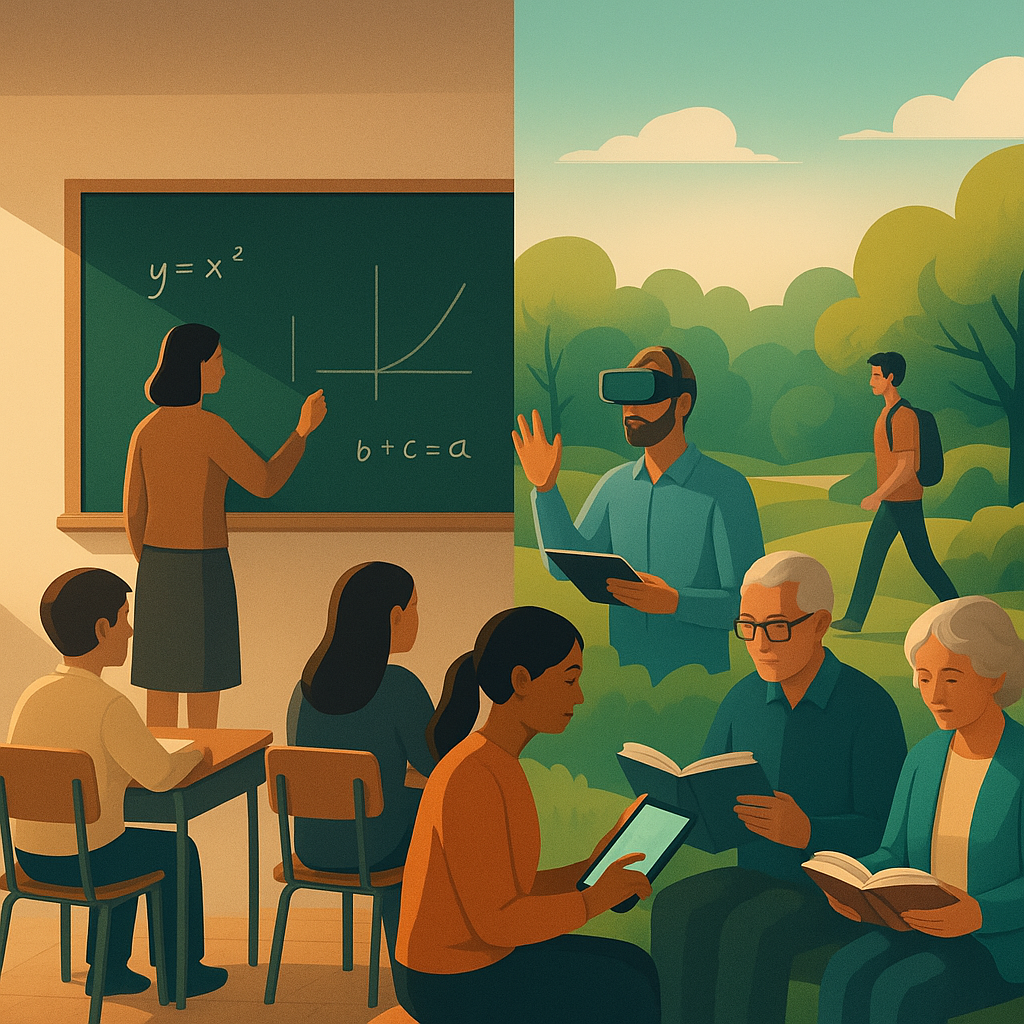
Opening the Door to New Educational Realities
On a crisp autumn morning in 2026, Noor, a 14-year-old student in Jakarta, logs into her virtual learning hub. Unlike traditional classrooms of the past, her lessons are tailored by an AI mentor that adapts to her strengths and weaknesses in real-time. Noor’s experience is emblematic of a global shift where education is no longer confined to rigid schedules or physical spaces. Instead, it embraces personalization, technology integration, and lifelong learning. This transformation is not incidental but the result of decades of innovation, policy reforms, and societal changes.
Education, a cornerstone of human development, is currently undergoing one of its most profound metamorphoses. From artificial intelligence-powered tutors to immersive virtual classrooms, the ways in which knowledge is delivered and absorbed have expanded dramatically. According to UNESCO’s 2025 Global Education Report, over 70% of schools worldwide incorporate AI-assisted learning tools, a figure that continues to rise sharply.
Yet, beyond technology, the core questions remain: How do these changes affect equity? How can education systems balance innovation with accessibility? And what does this mean for future generations preparing to enter an ever-shifting global economy?
“Education in 2026 is no longer just about access to information but the ability to foster critical thinking and adaptability in learners,” notes Dr. Elena Martinez, an education futurist based in Madrid.
Tracing the Path: From Traditional Models to Personalized Learning
The scaffolding of modern education has roots in centuries-old models—schools designed for mass instruction, uniform curricula, and standardized testing. The mid-20th century brought significant reforms to increase access and literacy globally. However, these systems often struggled to accommodate diverse learning needs and cultural contexts.
The dawn of the 21st century introduced digital technologies that began disrupting established norms. Early online courses and MOOCs (Massive Open Online Courses) emerged around 2010, democratizing access to elite knowledge. Yet, these platforms revealed limitations: high dropout rates and a lack of personalization. Educational theorists and technologists realized that one-size-fits-all models were insufficient.
By the early 2020s, data analytics and AI started to enable adaptive learning environments. These systems analyze student performance, engagement, and preferences to curate individualized pathways. The shift was driven by a growing understanding that learning is a deeply personal process influenced by cognitive, emotional, and socio-cultural factors.
Parallel to technological advances, global policy discussions increasingly emphasized inclusion and equity. The United Nations’ Sustainable Development Goal 4 (Quality Education) galvanized efforts to ensure education for all, including marginalized communities and persons with disabilities.
The convergence of these forces—technology, pedagogy, and policy—set the stage for the current educational landscape, where personalization and inclusivity are paramount.
Metrics and Trends: Analyzing Education’s Transformation
In 2026, education systems worldwide are characterized by several measurable trends. According to recent data from the International Education Consortium (IEC), the following stand out:
- Personalized learning adoption: Over 65% of secondary schools in OECD countries have integrated AI-driven personalized learning platforms.
- Hybrid learning prevalence: Approximately 80% of higher education institutions globally offer hybrid programs combining in-person and online modalities.
- Lifelong learner engagement: Adult participation in continuous learning programs has increased by 40% since 2020.
- Equity improvements: Gender parity in primary and secondary education has neared 98% in developing countries.
- Skill-based curriculum shifts: Nearly 70% of national curricula now emphasize critical thinking, digital literacy, and emotional intelligence over rote memorization.
These figures reflect a systemic pivot from traditional metrics of educational success—such as standardized exam scores—to broader competencies aligned with 21st-century demands.
"The integration of AI in education has not only personalized learning but also enabled real-time feedback loops that empower both students and educators," explains Professor Samuel Okoye of the African Institute of Education Technology.
However, challenges remain. Digital divides persist, especially in rural and low-income regions. Furthermore, there is ongoing debate about data privacy and the ethical use of AI in classrooms. Balancing innovation with responsible governance is critical.
Industry comparisons reveal that countries investing heavily in educational technology and teacher training—such as South Korea, Finland, and Canada—are achieving superior outcomes in both equity and learner satisfaction.
Education in 2026: Innovations and Shifting Paradigms
Some of the most striking developments in 2026 include the rise of immersive learning environments powered by virtual reality (VR) and augmented reality (AR). Schools and universities now deploy these technologies to simulate real-world scenarios, enhancing experiential learning in fields ranging from medicine to environmental science.
Moreover, AI-powered assessments have largely replaced traditional exams in many regions. These systems evaluate not only knowledge retention but also creativity, collaboration, and problem-solving skills through interactive tasks.
The expansion of micro-credentials and digital badges has transformed certification. Learners can now accumulate modular qualifications recognized by employers worldwide, facilitating flexible career pathways and lifelong skill development.
Government initiatives increasingly promote inclusive education frameworks. Countries like New Zealand have implemented policies guaranteeing adaptive learning resources for neurodiverse students, setting global benchmarks.
At the institutional level, educators are undergoing continuous professional development to master new pedagogical tools and methodologies. According to the Global Teacher Development Report 2026, 73% of teachers engage in regular upskilling programs focused on technology integration and inclusive practices.
These advancements are reshaping not only how knowledge is conveyed but also how learners engage, collaborate, and prepare for future challenges.
Expert Insights and Industry Impact
The education sector in 2026 is a nexus of innovation, policy, and societal expectations. Experts emphasize that successful transformation depends on multi-stakeholder collaboration. Governments, educators, technology providers, and communities must work cohesively to build systems that are both cutting-edge and equitable.
Dr. Maya Chen, Chief Innovation Officer at EduNext, states, "The future of education lies in hybrid ecosystems that blend human mentorship with AI's analytical capabilities. This synergy fosters deeper learning and emotional connection—elements neither can achieve alone."
Industry leaders are also attentive to the economic implications. The World Economic Forum highlights that education technology investments topped $200 billion globally in 2025, signaling a robust market poised to influence workforce development and economic competitiveness.
Moreover, the corporate sector increasingly partners with educational institutions to co-create curricula that reflect real-world skills and emerging industry needs. This alignment helps close the skills gap that many economies face.
The impact extends beyond formal education. Nonprofit organizations and community groups leverage technology to provide informal learning opportunities, addressing gaps in underserved populations.
As detailed in TheOmniBuzz’s Rethinking Education: How Innovation and Inclusion Are Shaping Learning Today, inclusion remains a central focus, ensuring that the benefits of educational advances reach all learners regardless of background.
Looking Ahead: Navigating the Future of Learning
As education continues to evolve, several key themes will shape its trajectory. Foremost is the concept of lifelong learning—a continuous, self-directed pursuit of knowledge and skills throughout life. This paradigm responds to rapid technological change and shifting labor markets.
Policymakers and educators must prioritize scalable models that integrate personalized learning with social-emotional development. The rise of AI also necessitates critical discussions around ethics, data security, and human agency in learning processes.
Future outlooks suggest the following focal points:
- Expansion of adaptive learning systems: More sophisticated AI tools will offer hyper-personalized content and mentorship.
- Global collaboration: Cross-border educational platforms will increase, breaking down linguistic and cultural barriers.
- Integration of soft skills: Communication, empathy, and resilience will become core curriculum components.
- Addressing equity: Targeted investments will be essential to close digital divides and support marginalized groups.
- Hybrid credentialing: Recognition of diverse learning experiences through modular certifications will grow.
Educators and learners alike must embrace flexibility and adaptability. As highlighted in Why Education’s Future Hinges on Personalized and Lifelong Learning, the ability to continuously evolve one’s skill set is no longer optional but imperative.
“Education’s future is a tapestry woven from technology, empathy, and human creativity—each essential to unlocking potential,” reflects Dr. Rajiv Malhotra, a global education strategist.
In conclusion, education in 2026 stands at an exciting crossroads. The fusion of advanced technology with inclusive pedagogy promises a more engaging, equitable, and effective learning journey for all. Yet, realizing this vision demands vigilance, innovation, and commitment to principles that place learners’ diverse needs at the center.