How Is Uterine Polyp Removal Done? Complete Guide
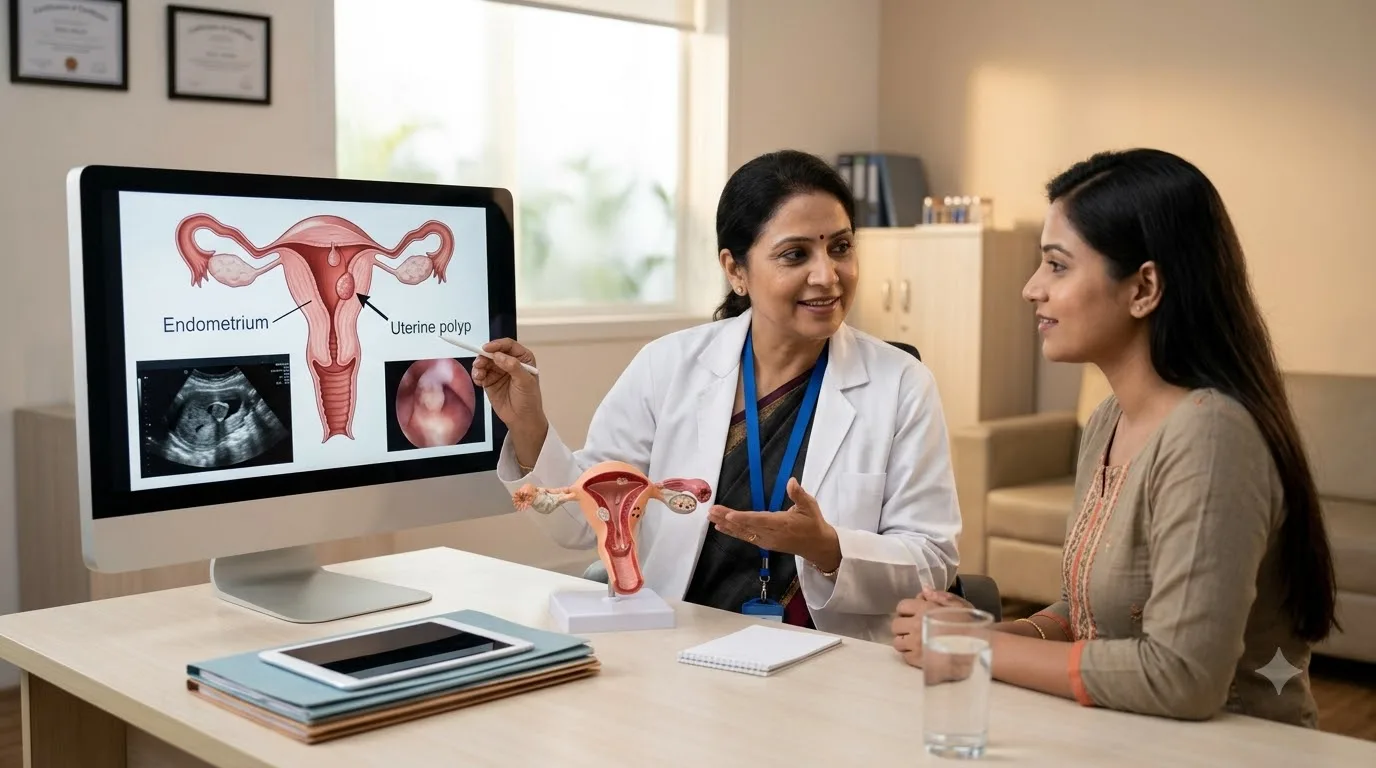
Uterine Polyp Removal is a procedure that may be recommended when a growth inside the uterine cavity causes abnormal bleeding, repeated spotting, or certain fertility concerns. Uterine polyps usually develop from the endometrial lining and are commonly benign.
Some women discover a polyp during a routine scan, while others are diagnosed during investigations for irregular bleeding or difficulty conceiving. Treatment is not automatically necessary in every case. The decision depends on the size and location of the growth, symptoms, age, medical history, and pregnancy plans.
What Is a Uterine Polyp?
A uterine polyp is an overgrowth of tissue from the inner lining of the uterus.
They can vary in size and may occur as one growth or several. Some women have no noticeable symptoms, while others experience changes in their menstrual pattern.
Possible symptoms include:
- Heavy or prolonged periods
- Irregular menstrual bleeding
- Spotting between periods
- Bleeding after sexual intercourse
- Bleeding after menopause
- Difficulty becoming pregnant in some cases
These symptoms can also occur with other gynecological conditions, so medical evaluation is important before deciding on treatment.
What Happens Before Removal?
The process usually begins with a consultation.
Your doctor may ask about your menstrual cycle, previous pregnancies, fertility history, medications, previous procedures, and any symptoms you have noticed.
An ultrasound is commonly used to assess the uterus and endometrial lining. If the scan does not provide enough information, additional testing may be recommended.
Depending on the situation, saline infusion sonography or hysteroscopy may be used to obtain a clearer view of the uterine cavity.
The purpose of these investigations is not only to identify the growth but also to determine whether treatment is actually appropriate.
Does Every Polyp Need to Be Removed?
No.
Some small polyps that are not causing symptoms may be monitored, depending on the individual's circumstances.
Removal may be considered when there is persistent abnormal bleeding, recurring symptoms, a larger growth, or a possible connection with fertility concerns.
Age and menopausal status can also influence the treatment decision.
If pregnancy is being planned, the doctor may consider the location of the growth and whether it could affect the uterine cavity.
What Is Hysteroscopy?
Hysteroscopy is commonly used to examine and treat abnormalities inside the uterus.
A hysteroscope is a thin, camera-equipped instrument that is passed through the vagina and cervix into the uterine cavity.
This allows the doctor to view the inside of the uterus directly rather than relying only on an external scan.
If a polyp is identified and removal is appropriate, specialized instruments can be used through the hysteroscope.
Because the procedure is performed through the natural vaginal and cervical passage, an abdominal incision is generally not required.
How Does the Removal Process Work?
The exact steps can vary depending on the patient's condition and the technique being used.
Generally, the process involves:
- Preparing the patient for the procedure.
- Providing the planned anesthesia or pain relief.
- Gently passing the hysteroscope through the cervix.
- Introducing fluid into the uterus when needed for better visibility.
- Identifying the polyp inside the cavity.
- Removing the growth using an appropriate instrument.
- Sending the tissue for laboratory examination when required.
- Monitoring the patient during the initial recovery period.
The procedure time varies according to the size, number, and position of the growth.
Is Anesthesia Required?
The choice of anesthesia varies based on the procedure and the patient’s individual needs.
Some procedures may involve local anesthesia or pain-relieving medication. Others may be performed with sedation or general anesthesia.
Your doctor will decide the most appropriate approach based on the planned procedure, medical history, and healthcare setting.
Before treatment, ask what type of anesthesia will be used and whether you need to follow preparation instructions such as fasting.
Is the Procedure Painful?
Everyone experiences discomfort differently.
Some women report mild cramping similar to period pain, while others may experience more noticeable discomfort.
After the procedure, temporary cramps or light vaginal bleeding can occur.
Pain that becomes severe or progressively worse should not be ignored. Your healthcare provider should explain which symptoms are expected and when you should seek medical attention.
How Long Does Recovery Take?
Recovery after an uncomplicated hysteroscopic procedure is often relatively short.
Some women return to normal activities quickly, while others may need additional rest.
Your doctor may temporarily advise avoiding strenuous exercise, heavy lifting, sexual intercourse, tampons, or certain other activities.
The recommended recovery period depends on the procedure and your individual condition.
Do not compare your recovery with someone else's. Follow the instructions provided by your own medical team.
What About Fertility Treatment?
A uterine polyp may be discovered during fertility investigations.
If pregnancy is being planned, your doctor may consider the growth's size, location, symptoms, and possible effect on the uterine environment.
For couples undergoing assisted reproduction, an IVF Clinic in Kozhikode can evaluate the uterine finding together with other fertility factors.
Depending on the circumstances, the medical team may recommend completing the treatment and allowing appropriate recovery before proceeding with fertility treatment.
Removing a polyp does not guarantee pregnancy because conception depends on several factors.
Can Removal Improve Fertility?
The relationship between polyps and fertility varies from one woman to another.
Some polyps may interfere with the uterine environment or implantation, while others may have little effect.
When a clinically significant growth is identified during infertility evaluation, removal may form part of the treatment plan.
However, pregnancy cannot be guaranteed after treatment.
Other factors may also need assessment, including:
- Ovulation
- Ovarian reserve
- Fallopian tube condition
- Sperm health
- Age
- Embryo development
- Other reproductive conditions
A complete fertility evaluation can help identify the factors that may be affecting conception.
Will the Removed Tissue Be Tested?
The removed tissue may be sent for histopathological examination.
A laboratory specialist examines the sample under a microscope to assess its characteristics.
Most uterine polyps are benign, but tissue examination provides useful diagnostic information.
Your doctor can explain the laboratory report and advise whether additional follow-up is needed.
What Are the Possible Risks?
Hysteroscopic treatment is generally considered safe, but no medical procedure is completely free of risk.
Possible complications include infection, bleeding, cervical injury, uterine perforation, fluid-related complications, and, rarely, scar tissue formation.
The actual risk varies according to the procedure and individual medical circumstances.
Before treatment, ask your doctor to explain the expected benefits, possible complications, and available alternatives.
What Should You Expect Afterward?
Mild cramping and light spotting may occur during the early recovery period.
You may also feel tired if sedation or anesthesia was used.
Follow the instructions regarding medication, physical activity, intercourse, hygiene, and follow-up appointments.
Contact your healthcare provider if you develop heavy bleeding, severe or worsening pain, fever, foul-smelling discharge, fainting, significant weakness, or breathing difficulty.
These symptoms require medical assessment.
Can a Polyp Come Back?
Removal treats the existing growth but does not guarantee that another polyp will never develop.
Recurrence is possible.
If abnormal bleeding or spotting returns after treatment, a follow-up assessment may be recommended.
New symptoms should not automatically be assumed to be part of your normal menstrual cycle.
Questions to Ask Your Doctor
Before scheduling the procedure, consider asking:
- How large is the polyp?
- Where is it located?
- Do I need removal or monitoring?
- Why is removal recommended?
- Which technique will be used?
- What type of anesthesia is planned?
- How long should recovery take?
- Will the tissue be examined?
- When can I return to normal activities?
- When can I try to get pregnant?
These questions can help you understand the recommendation and prepare for treatment.
Choosing the Right Medical Support
If you are considering a Best Fertility Centre in India, focus on the quality of medical evaluation rather than promotional claims alone.
A suitable fertility team should explain the diagnosis clearly, discuss reasonable treatment options, provide realistic expectations, and consider your complete reproductive history.
For couples planning pregnancy, both male and female fertility factors may need evaluation. Treating one uterine finding should not replace a broader assessment when conception has been delayed.
Conclusion
Hysteroscopy provides a commonly used way to examine the uterine cavity and remove a polyp when treatment is appropriate. The procedure, anesthesia, recovery period, and follow-up requirements can vary between patients. Although many procedures are uncomplicated, understanding the potential risks and warning signs is important.
If you have been diagnosed with a uterine polyp or have been advised to consider removal, Book an appointment with a qualified fertility specialist in Kozhikode to discuss your individual findings, treatment options, recovery, and pregnancy plans.