
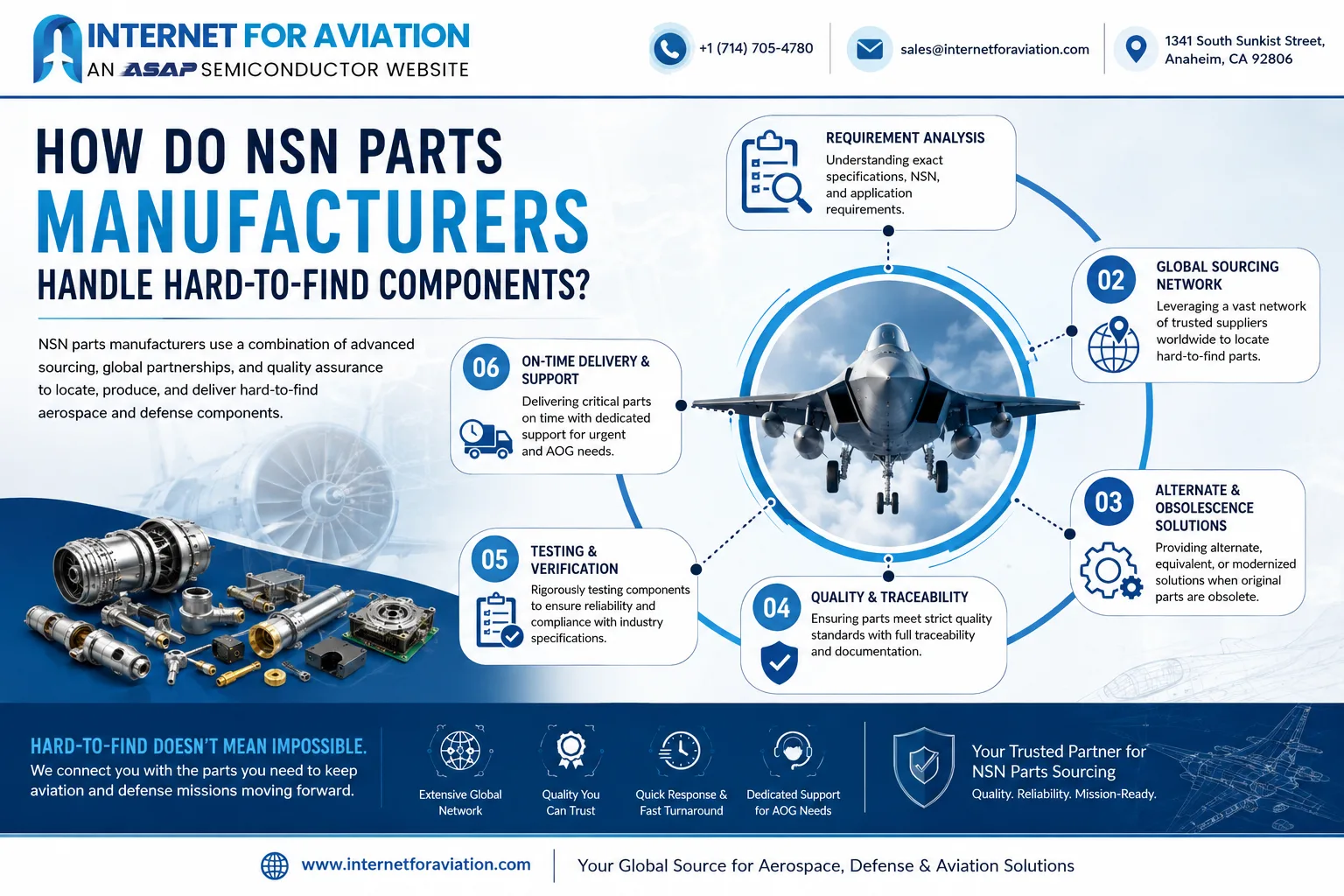
Finding hard-to-find aerospace, defense, and industrial components can be challenging when equipment depends on specific specifications, legacy designs, or strict procurement requirements. NSN Parts Manufacturers play an important role in helping organizations identify, source, and supply components that may not be readily available through standard channels.
From discontinued items to specialized hardware, experienced manufacturers use detailed part identification, inventory research, supplier networks, and quality checks to address difficult sourcing requirements.
What Makes a Component Hard to Find?
A component may become difficult to source for several reasons. It could be obsolete, discontinued, produced in limited quantities, or associated with older aircraft and defense systems. In other cases, customers may know only a part number, National Stock Number (NSN), drawing reference, or technical specification.
The NSN Part Type also influences the sourcing process. Different categories can include fasteners, electrical components, hydraulic parts, bearings, connectors, valves, and other specialized items. Correctly identifying the required part is essential before sourcing begins.
How Do NSN Parts Manufacturers Identify Specialized Parts?
The first step is accurate part identification. NSN Parts Manufacturers typically examine information such as the NSN, manufacturer part number, CAGE code, description, specifications, and applicable technical documentation.
This information helps match the requested component with the correct manufacturing source or an approved equivalent where applicable. Detailed identification also reduces the possibility of supplying a visually similar component that does not meet the required specifications.
For older or uncommon components, manufacturers may use historical records, archived product information, engineering references, and established industry contacts to locate additional sourcing information.
How Do They Locate Hard-to-Find Inventory?
Once a component has been identified, manufacturers and their sourcing partners can investigate available inventory through established supply networks. NSN Parts Distributors can also play an important role by connecting customers with stock held across multiple locations and suppliers.
This broader network can be particularly useful for obsolete or low-demand components. Instead of relying on a single warehouse, sourcing teams can review multiple inventory sources to determine availability, condition, quantity, and lead time.
For urgent maintenance requirements, this process can help organizations identify potential supply options more efficiently.
What Quality Checks Are Performed?
Hard-to-find does not mean quality requirements should be overlooked. Aerospace and defense components may require careful verification before shipment.
Depending on the component and procurement requirements, checks may include part-number verification, manufacturer information, documentation review, condition assessment, packaging inspection, and traceability verification.
Reputable suppliers also distinguish between new, used, refurbished, and surplus components so customers can evaluate the appropriate option for their application.
How Does a Request for Quote Help?
A Request for Quote (RFQ) provides suppliers with the information needed to evaluate a sourcing requirement. An RFQ can include the NSN, part number, requested quantity, delivery requirements, and any relevant specifications or documentation requirements.
Providing accurate information helps sourcing teams respond with more relevant availability and pricing details. For difficult components, an RFQ can also allow suppliers to investigate multiple sourcing channels rather than limiting the search to immediately available inventory.
Why Are Supplier Networks Important?
Strong supplier relationships are particularly valuable when dealing with components that are no longer commonly manufactured. NSN Parts Manufacturers and their distribution partners may maintain relationships with specialized manufacturers, authorized sources, inventory holders, and other industry suppliers.
These connections can expand sourcing possibilities and make it easier to investigate components that are unavailable through conventional procurement channels.
How Can Organizations Improve Hard-to-Find Parts Sourcing?
Organizations can make the process easier by providing complete and accurate part information. Including the NSN, manufacturer part number, CAGE code, quantity, and required delivery timeframe gives suppliers a stronger starting point.
It is also useful to work with experienced NSN Parts Distributors that have access to broad supplier networks and understand aerospace and defense procurement requirements.
Conclusion
Hard-to-find components require more than a basic inventory search. NSN Parts Manufacturers use part identification, technical information, supplier networks, inventory research, and quality verification to address challenging sourcing requirements.
Whether a component is obsolete, specialized, or difficult to locate, providing accurate information through a Request for Quote can help suppliers investigate available options. For organizations managing aircraft, defense equipment, or industrial systems, a structured sourcing approach can make difficult component procurement more efficient and reliable.