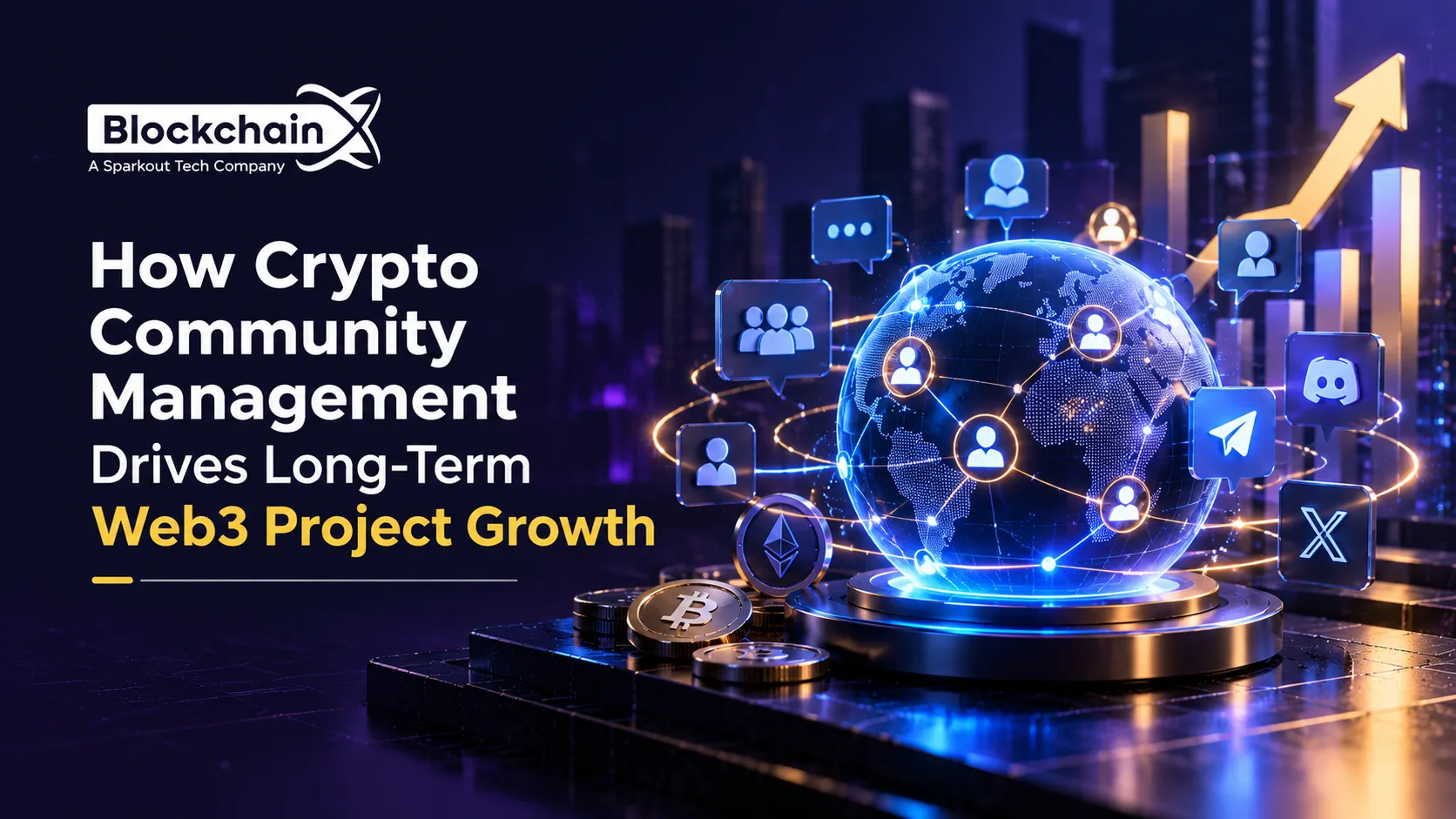
Technology is not necessarily the key to success in Web3 projects. While a great product and innovative token functionalities are essential, it is also crucial to have people that trust the project and actively engage in its ecosystem to ensure sustainable growth.
This is where the crypto community management comes in. Managing a community well can help a Web3 project to foster trust, increase engagement, educate users, gather valuable feedback, and even build brand advocates for future use. Successful projects do not view the community members as an audience, but engender an environment in which users feel part of the project.
Why Community Matters in Web3
Community has always been an integral component of the cryptocurrency industry. In contrast to business models which are based on centralized structures, numerous crypto projects use decentralized ecosystems where users, investors, creators, builders, and contributors converse directly with the brand.
Others like X, Telegram, Discord, Reddit and social media platforms enable projects to info their following quickly nearly instantaneously. But just putting these channels in place is not an assurance that the community will be engaged.
Sadly, there are thousands of followers, but little engagement. The key for long-term growth is to establish true relationships, stay in touch and provide community members with something to look forward to.
Effective Community Management for Crypto Projects helps turn passive followers into active participants who understand the project's purpose and contribute to its growth.
Building Trust Through Consistent Communication
Trust is a great deal in the crypto industry. It's a competitive market and users are constantly coming up with new projects, tokens, protocols and investment opportunities.
Good communication can build a project's credibility.
Leveraging these tools, community managers can inform users about product updates, milestones, partnerships and ecosystem developments, event updates, and key announcements. They are also able to answer questions and concerns in advance of the dissemination of misinformation.
It's especially vital during challenging times. Uncertainties can arise for delays, technical issues, market volatility, and changes to a roadmap. Open communication builds community trust for a project that is not eroded by a lack of clarity during times of trouble.
Increasing Community Engagement
Numerous communities are not the same as a large community. Engagement is a better measure of people's interest than anything else for a project.
Effective engagement can include:
- Responding to questions and comments
- Hosting community discussions
- Organizing AMAs and live sessions
- Sharing educational content
- Creating polls and feedback opportunities
- Recognizing active community members
- Running community-focused events
- Encouraging user-generated content
The goal should be to make meaningful activity, not meaningless. Rather, engagement is a platform where valuable discussions about technology, products, ecosystem, and vision of the project can take place.
People are more likely to continue to participate and to suggest the project to others if their ideas are considered.
Turning Community Members Into Brand Advocates
A great aspect of effective community management is being able to generate brand advocates.
Community members who are happy can become a lot more than just followers. They can introduce the project to new users, share information and education, engage in conversations, develop social posts, join events, or introduce users to the ecosystem.
Such organic marketing can be incredibly beneficial to Web3 projects as consumers tend to read reviews from their community when assessing the viability of a new tech or platform.
Rather than relying on full-paid promotion, projects can cultivate a community that organically helps with awareness and growth.
Using Community Feedback to Improve Products
Another valuable asset for a crypto community is its product intelligence.
Users directly access the website, application, protocol, token, or ecosystem of a project. Their experiences can render insights into usability issues, confusing features, absence of functionality, and potential improvements.
Community managers can capture and structure this feedback for the product and dev teams.
If certain questions are reoccurring in Discord, for instance, this could be a potential feature that could be better documented. A consistent problem with the user experience may indicate a product problem. Positive feedback can also demonstrate which characteristics users appreciate the most.
This establishes a cycle of feedback between the team and the users that enables more informed decisions to be made by the team.
Managing Different Community Channels
These crypto communities don't just live on one platform. Some people might like to get the information in a different way.
X can be helpful for public discussions, public announcements, thought leadership and accessing new audiences. Telegram can enable rapid community conversations, and Discord can offer more organized environments for distinct user communities, devs, contributors, and ecosystem participants.
Other online communities such as Reddit can offer channels for more in-depth education-related conversations.
It takes consistency to manage these channels well. While there may be different communication styles across each platform, the key messaging points should still be aligned throughout the project's ecosystem.
Protecting the Community From Misinformation and Scams
Another crucial duty for crypto community management is security.
Crypto impersonators, phishing attacks, fake giveaways, fraudulent links, and scam accounts are common targets of the crypto communities. Official communication channels and procedures should be well established in a strong community management strategy.
Community managers can send out notifications in a timely fashion to users who are engaged in suspicious activity, and direct traffic to trusted sources.
Projects should also not give rise to any confusion regarding consistency of branding, communications of official announcements.
Taking the initiative in community security will help to safeguard users and the good public image of the project.
Measuring Community Growth
The goals of a successful community management should be measurable.
Projects can track metrics such as:
- Community growth
- Engagement rate
- Active members
- Message volume
- Event participation
- Content interactions
- Response times
- Sentiment trends
- User retention
- Referral activity
Numbers are always to be read in context, though. It is better to have a community with 10,000 members who are active and engaged than to have 100,000 inactive followers.
The objective should be relevant rather than vanity metrics.
Why Community Management Supports Long-Term Web3 Growth
Web3 brands need to focus on more than just capturing short-term attention; crypto markets can move at a rapid pace.
There can be high visibility for a project, whether that's a token launch, influencer campaign or viral social post. But sustaining that attention depends on a continual process of communications and community involvement.
Good community management establishes a continuous connection between a project and their user base. It maintains trust throughout the market cycles, aids product adoption, builds advocacy, and offers great feedback.
Over time, this can create a stronger ecosystem that is less dependent on short-term promotional campaigns.
Final Thoughts
Community is one of the defining characteristics of Web3. Projects are not simply building products; they are building ecosystems made up of users, contributors, developers, creators, investors, and supporters.
Effective crypto community management brings these groups together around a shared vision. Through transparent communication, meaningful engagement, education, feedback collection, and proactive moderation, projects can transform online audiences into active communities.
For Web3 brands focused on sustainable growth, investing in Community Management for Crypto Projects is not simply a marketing activity. It is a long-term strategy for building trust, strengthening relationships, improving products, and creating an ecosystem that can continue to grow beyond short-term market trends.