
In an era where digital transformation is reshaping nearly every sector, the judicial system is also evolving to meet modern demands. One of the most impactful innovations in this space is the adoption of court case management systems. These systems are redefining how courts handle cases, documents, schedules, and communication, leading to greater efficiency, transparency, and access to justice.
What Are Court Case Management Systems?
Court case management systems are specialized digital platforms designed to manage the lifecycle of legal cases within courts. From case filing and document storage to hearing schedules and judgment tracking, these systems centralize all case-related information in one secure environment. By replacing manual paperwork and fragmented processes, courts can operate more smoothly and accurately.
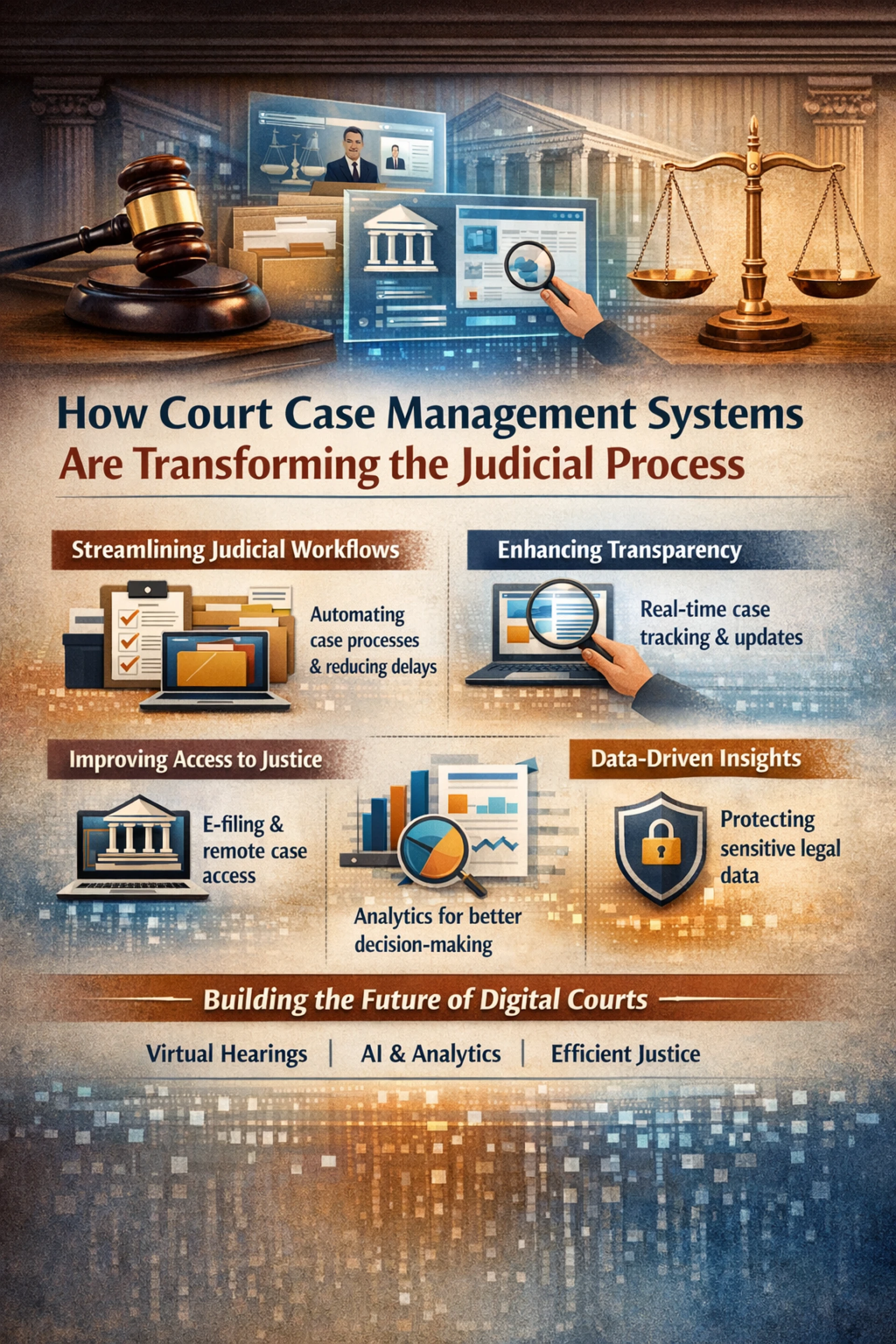
Streamlining Judicial Workflows
Traditional court processes often involve extensive paperwork, manual data entry, and time-consuming administrative tasks. Court case management systems automate many of these functions, allowing court staff to focus on higher-value responsibilities. Automated case registration, digital document uploads, and real-time status updates significantly reduce delays and administrative bottlenecks.
Judges also benefit from streamlined workflows. With instant access to case histories, evidence, and legal documents, decision-making becomes faster and more informed. This efficiency is especially critical in courts handling large case volumes.
Enhancing Transparency and Accountability
Transparency is a cornerstone of a fair judicial system. Court case management systems enhance transparency by maintaining accurate, time-stamped records of every action taken on a case. Case progress can be tracked easily, reducing the risk of lost files, unauthorized changes, or procedural errors.
For stakeholders such as lawyers and litigants, these systems often provide secure portals to check case updates, hearing dates, and court orders. This level of visibility builds trust in judicial processes and minimizes unnecessary follow-ups or confusion.
Improving Access to Justice
One of the most significant advantages of court case management systems is their role in improving access to justice. Digital case filing and online access to records reduce the need for physical visits to courts, which is particularly beneficial for individuals in remote or underserved areas.
By shortening case resolution times and minimizing procedural complexity, these systems help ensure that justice is not delayed due to administrative inefficiencies. Faster case handling also helps reduce case backlogs, a persistent challenge in many judicial systems worldwide.
Data-Driven Insights for Better Decisions
Modern court case management systems generate valuable data that can be used to improve judicial administration. Courts can analyze trends such as case duration, workload distribution, and resolution rates. These insights enable better resource allocation, policy planning, and performance evaluation.
For judicial administrators, data-driven reporting supports informed decisions about staffing needs, process improvements, and technology investments. Over time, this leads to a more resilient and responsive justice system.
Security and Compliance Considerations
Given the sensitive nature of legal data, security is a top priority. Court case management systems are designed with robust access controls, encryption, and audit trails to protect confidential information. Compliance with legal and regulatory standards ensures that digital records maintain their integrity and evidentiary value.
Regular system updates and secure backups further safeguard data against breaches or loss, providing peace of mind to courts and stakeholders alike.
The Future of Digital Courts
As technology continues to advance, court case management systems will play a central role in shaping the future of digital courts. Integration with e-filing platforms, virtual hearings, and AI-powered analytics will further enhance efficiency and accessibility.
Courts that embrace these systems are better positioned to meet public expectations for timely, transparent, and fair justice. By modernizing core operations, the judiciary can uphold its essential role while adapting to the demands of a digital society.
Conclusion
Court case management systems are more than just administrative tools—they are catalysts for meaningful judicial reform. By improving efficiency, transparency, security, and access to justice, these systems are transforming how courts function in the modern world. As adoption continues to grow, they will remain a key pillar in building smarter, more effective judicial systems for the future.