

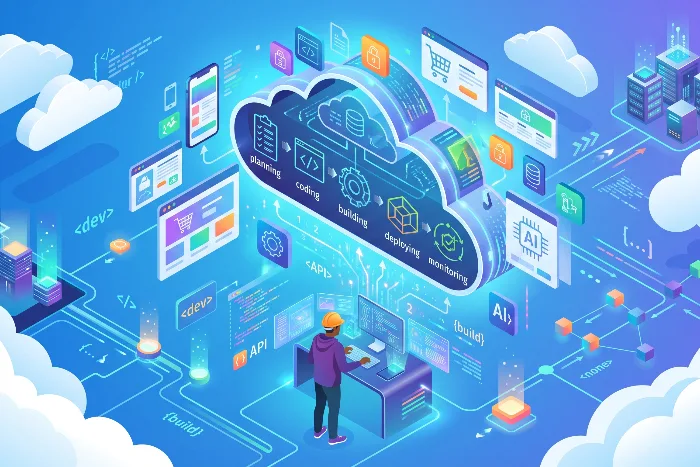
In 2026, businesses are under constant pressure to innovate faster, improve customer experiences, reduce operational costs, and respond quickly to changing market demands. Traditional software systems can make these goals difficult to achieve because they often require expensive infrastructure, lengthy deployment cycles, and ongoing maintenance. Cloud application development offers a more flexible approach by helping businesses build, deploy, and manage applications through scalable cloud environments.
From startups to large enterprises, organizations are increasingly adopting cloud-based applications to improve agility and support long-term growth. With the right technology strategy and Cloud Application Development Services, businesses can modernize their operations, streamline workflows, and create digital experiences that are easier to scale.
What Is Cloud Application Development?
Cloud application development is the process of designing, building, deploying, and maintaining software applications that operate within cloud computing environments. Unlike traditional applications that may depend heavily on physical servers or local infrastructure, cloud applications can use cloud resources to store data, process information, and deliver services through the internet.
Cloud applications can be built using modern technologies such as containers, microservices, APIs, serverless computing, artificial intelligence, and cloud-native architectures. Digisoft Solution creates applications that are more adaptable and capable of handling changing business requirements.
For example, an e-commerce company may use a cloud-based application to manage products, process orders, analyze customer behavior, and automatically scale resources during periods of high demand.
Why Cloud Applications Matter for Business Growth
Business growth depends on the ability to respond to customers, competitors, and market changes. Cloud applications provide the flexibility businesses need to make these changes without constantly rebuilding their technology infrastructure.
Here are some of the major ways cloud application development can accelerate business growth.
1. Faster Application Deployment
Speed is a major competitive advantage in today's digital marketplace. Businesses cannot afford to spend months launching every new feature or application.
Cloud development enables development teams to use automated deployment processes, reusable components, APIs, containers, and DevOps practices. These technologies can significantly simplify development and release cycles.
As a result, businesses can introduce new products, features, and services faster while responding to customer feedback more efficiently.
2. Easy Scalability
One of the biggest advantages of cloud applications is scalability.
Traditional infrastructure often requires businesses to purchase additional servers and hardware when demand increases. This can be expensive and time-consuming. Cloud platforms allow organizations to increase or decrease computing resources according to application requirements.
For example, an online retailer may experience significant traffic during a holiday sale. A scalable cloud application can handle increased demand by allocating additional resources when needed.
When traffic decreases, resources can be reduced, helping businesses avoid paying for unnecessary infrastructure.
3. Lower Infrastructure Costs
Maintaining physical servers can require significant investment in hardware, data centers, maintenance, security, and IT staff. Cloud-based applications can reduce the need for businesses to manage extensive physical infrastructure.
Instead, organizations can use cloud resources based on their requirements. This can help create a more flexible cost structure and allow businesses to invest more resources in innovation, marketing, customer service, and product development.
However, cloud adoption should be carefully planned because poorly managed cloud environments can also lead to unnecessary spending. Cost monitoring and optimization are therefore important parts of a successful cloud strategy.
4. Better Business Agility
Markets can change quickly. Businesses need technology that allows them to adapt rather than restrict them.
Cloud applications make it easier to modify features, integrate new technologies, connect with third-party services, and expand into new markets. Development teams can also experiment with new ideas without making large infrastructure investments upfront.
This flexibility helps businesses respond faster to opportunities and customer expectations.
5. Improved Collaboration
Modern businesses often have distributed teams working from different locations. Cloud applications make it easier for employees, managers, customers, and partners to access required information from different devices and locations.
For example, cloud-based project management software can allow teams to share files, track tasks, communicate, and monitor project progress in real time.
Improved accessibility and collaboration can increase productivity while reducing communication gaps between departments.
6. Stronger Data Management
Data has become one of the most valuable business assets. Organizations collect information from websites, mobile applications, customer interactions, transactions, connected devices, and other digital channels.
Cloud applications can provide centralized environments for storing, processing, and analyzing this information. Businesses can integrate analytics tools and dashboards to gain valuable insights into customer behavior and operational performance.
These insights can support better decision-making and help organizations identify opportunities for growth.
7. Easier Integration With Emerging Technologies
Cloud environments provide a strong foundation for integrating modern technologies such as artificial intelligence, machine learning, Internet of Things solutions, automation, and advanced analytics.
For example, a customer service application can integrate AI-powered assistants to answer common questions, while a retail platform can use machine learning to provide personalized product recommendations.
Businesses can gradually introduce these technologies into existing applications rather than completely replacing their digital infrastructure.
Cloud Applications Improve Customer Experience
Customer expectations continue to evolve. People expect websites and applications to be fast, reliable, personalized, and available across multiple devices.
Cloud applications can help businesses deliver consistent digital experiences by supporting scalable infrastructure and centralized data.
For example, a banking application can allow customers to access accounts, transfer money, receive notifications, and monitor transactions through a secure digital platform. Similarly, healthcare, education, logistics, retail, and manufacturing companies can use cloud applications to improve interactions with customers.
A better customer experience can lead to increased satisfaction, stronger loyalty, and higher customer retention.
The Role of Cloud Application Development Services
Building a successful cloud application requires more than simply moving existing software to the cloud. Businesses need to consider application architecture, security, scalability, integrations, performance, compliance, monitoring, and long-term maintenance.
Professional Cloud Application Development Services can help organizations plan and develop cloud-native applications based on their specific business objectives. Development teams can assess existing systems, select appropriate cloud technologies, design scalable architectures, develop applications, integrate APIs, and provide ongoing optimization.
A well-planned cloud strategy can help businesses avoid common challenges such as poor application performance, security gaps, unexpected cloud costs, and difficult maintenance.
Cloud Security Should Be a Priority
While cloud technology offers many advantages, security cannot be overlooked. Businesses handle sensitive customer, financial, operational, and employee information through their applications.
Cloud applications should therefore incorporate security throughout the development lifecycle. Important practices may include identity and access management, encryption, secure APIs, vulnerability testing, monitoring, backup strategies, and regular security updates.
Businesses operating in regulated industries should also consider applicable data protection and compliance requirements when designing cloud solutions.
Cloud-Native Development vs. Cloud Migration
It is important to understand that cloud application development and cloud migration are not always the same thing.
Cloud migration typically involves moving existing applications, data, or infrastructure to a cloud environment. Cloud-native development, on the other hand, focuses on creating applications specifically to take advantage of cloud capabilities.
Cloud-native applications can use technologies such as microservices, containers, serverless computing, and automated deployment pipelines. This approach can provide greater flexibility and scalability when properly implemented.
Businesses should choose an approach based on their existing technology environment, budget, business goals, and long-term roadmap.
How to Build a Successful Cloud Application Strategy
Before starting a cloud application project, businesses should clearly define what they want to achieve. A successful strategy typically includes:
- Identifying specific business and customer requirements
- Selecting the right cloud architecture
- Choosing appropriate development technologies
- Planning security and compliance requirements
- Designing for scalability and performance
- Establishing data management processes
- Integrating existing business systems
- Implementing monitoring and analytics
- Planning ongoing maintenance and optimization
Working with experienced technology professionals can make this process more structured and reduce potential development risks.
The Future of Cloud Application Development
Cloud application development will continue to evolve as businesses adopt AI, automation, edge computing, serverless technologies, and advanced data platforms.
In the coming years, organizations will increasingly focus on applications that can intelligently analyze data, automate repetitive processes, personalize customer experiences, and respond dynamically to changing demand.
Businesses that invest in flexible and scalable application architectures today can be better positioned to take advantage of these innovations tomorrow.
Conclusion
Cloud application development has become an important driver of modern business growth. By enabling faster deployment, flexible scalability, improved collaboration, better data management, lower infrastructure dependency, and easier integration with emerging technologies, cloud applications can help organizations compete more effectively in a digital-first economy.
Whether a company is modernizing an existing application or building a completely new digital product, choosing the right Cloud Application Development Services can make a significant difference. A strategic approach to cloud development can help businesses create secure, scalable, high-performing applications that support both current requirements and future growth.
In 2026, cloud technology is no longer simply an IT upgrade. For many businesses, it is a foundation for innovation, agility, and sustainable digital growth.


