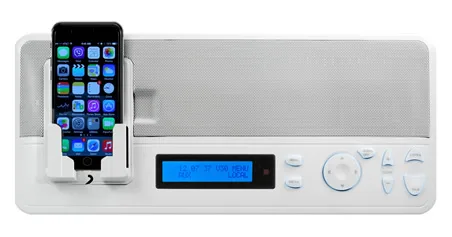
Walking from room to room without losing your playlist is one of the simplest pleasures of a connected home. Wireless streaming has made it easier than ever, with no need to drill walls or run cables to every corner. Still, the right approach depends on your house size, your Wi-Fi strength, and how you plan to use your audio. This guide explains the main options, including whole house bluetooth speakers, and shows how other systems, such as a wired intercom system for home, can complement them.
Understanding the Wireless Options
Wireless music generally travels in one of two ways: Bluetooth or Wi-Fi. Each has strengths, and knowing the difference helps you avoid frustration.
Bluetooth connects a device directly to a speaker over a short range, usually around 30 feet in open space. It is simple, requires no network, and works well for small areas.
Wi-Fi streaming uses your home network instead. Speakers join the network like any other device, which allows longer range, higher audio quality, and the ability to play in multiple rooms in sync.
How Whole House Bluetooth Speakers Work?
Early Bluetooth speakers could only pair with one phone and one speaker at a time. Newer whole house bluetooth speakers solve this with features like multi-speaker pairing, party mode, and mesh-style linking. A single source can send music to several speakers simultaneously, creating a unified soundscape from kitchen to patio.
Advantages include:
- Easy setup: Pair, place, and play within minutes.
- Portability: Move a speaker from the bedroom to the garden as needed.
- Low cost: Start with one speaker and add more over time.
- No rewiring: Ideal for renters or finished homes.
The trade-offs are range limits, occasional dropouts when walls interfere, and audio compression that may not satisfy critical listeners. Placing speakers within a reasonable distance of each other and keeping your phone nearby helps reduce hiccups.
Boosting Reliability at Home
Wireless audio is only as stable as the network behind it. A few habits make a big difference:
- Upgrade your router if it is several years old.
- Use a mesh Wi-Fi system in larger or multi-level homes to eliminate dead zones.
- Keep speakers away from interference such as microwaves and cordless phones.
- Update firmware regularly to benefit from performance and security improvements.
- Choose the 5 GHz band where possible, since it carries more data with less congestion.
Choosing Between Streaming Platforms
Most wireless speakers support popular music services and offer casting or AirPlay-style sharing. Check compatibility before buying, because not every speaker works with every app. Some systems include voice assistants, letting you say, “Play jazz in the living room,” without touching a screen. Multi-room grouping features also let you link or separate speakers on demand.
Where a Wired Intercom System for Home Fits In
You might wonder what an intercom has to do with music. Quite a lot, as it turns out. A wired intercom system for home offers reliable room-to-room communication, door-station access, and paging, all over dedicated cabling that doesn’t depend on Wi-Fi. Many modern versions also integrate background music, so the same in-wall or in-ceiling speakers that carry announcements can play your favorite playlists.
Combining both approaches is often the smartest strategy. Wireless speakers provide flexibility in living areas, while a wired intercom system for home gives rock-solid performance for communication and security. Families with young children or elderly relatives often value the ability to call “dinner’s ready” across the house without shouting or sending a text.
Planning a Hybrid Setup
Many households blend technologies rather than choosing one. Consider this approach:
- Use whole house bluetooth speakers in casual spaces like bedrooms, patios, and home offices.
- Install wired speakers in main living areas where sound quality matters most.
- Add a wired intercom system for home to handle announcements, visitor communication, and shared music zones.
This layered plan keeps costs manageable, reduces dependency on any single connection type, and lets you expand gradually.
Getting Professional Advice
If you are unsure which combination suits your property, a specialist can assess your layout, wall construction, and network, then recommend appropriate equipment. The team at Intrasonic Technology can guide you through options for wireless audio, wired infrastructure, and integrated control.
Final Thoughts
Streaming music wirelessly doesn’t have to be complicated. With dependable Wi-Fi, a few well-placed whole house bluetooth speakers, and perhaps a wired intercom system for home to handle communication, you can enjoy seamless sound in every room while keeping your setup flexible and ready to grow.
Frequently Asked Questions
1. Can I play the same song in every room wirelessly?
Yes. Multi-room speakers and whole house bluetooth speakers with group or party modes can play one track everywhere at once.
2. What is the range of Bluetooth speakers?
Roughly 30 feet in open space, though walls and appliances can shorten that distance.
3. Is Wi-Fi better than Bluetooth for whole-home audio?
Generally, yes. Wi-Fi offers longer range, better sound quality, and more reliable multi-room syncing.
4. Does a wired intercom system for home work without internet?
Most do. Because they use dedicated cabling, core functions like room-to-room calling continue even if your network is down.
5. Can an intercom also play music?
Many modern systems support background music through the same speakers used for announcements.
6. Can I add more speakers later?
Absolutely. Most wireless ecosystems are designed to expand one speaker at a time.