Video has become the language of the modern internet. From TikTok and Instagram Reels to YouTube Shorts, product demos, online ads, and educational clips, video is now one of the fastest ways to communicate an idea.
But creating good video content is still difficult.
A short video may only last 10 or 20 seconds, but it often requires planning, scripting, filming, editing, music, captions, visual effects, and formatting for different platforms. For creators and small teams, this process can be slow and expensive.
AI video generation is beginning to change that.
Instead of starting every project with cameras, locations, actors, and editing timelines, creators can now generate video clips from text prompts, images, or creative concepts. This makes video production faster, more accessible, and more flexible.
Why Video Creation Has Always Been Hard
Video is powerful because it combines motion, sound, emotion, and visual storytelling. But that power also makes it more complex than text or images.
To create a polished video, you usually need several steps:
- A clear idea
- A script or storyboard
- Visual assets
- Recording or animation
- Editing software
- Captions and formatting
- Export settings for different platforms
For large brands, this may be normal. They can hire production teams, editors, designers, and marketers.
For small businesses, solo creators, indie makers, and educators, the workflow can feel overwhelming.
This is why many people either avoid video or publish less often than they would like.
AI Makes Video Production More Accessible
AI video generation lowers the barrier.
A creator can start with a simple idea and turn it into a visual clip much faster than traditional production methods. Instead of needing a full filming setup, they can use AI to generate scenes, motion, transitions, and visual storytelling elements.
This does not mean every AI-generated video is perfect. Human direction still matters. But AI can help creators move from idea to draft much faster.
For many users, that speed is the main value.
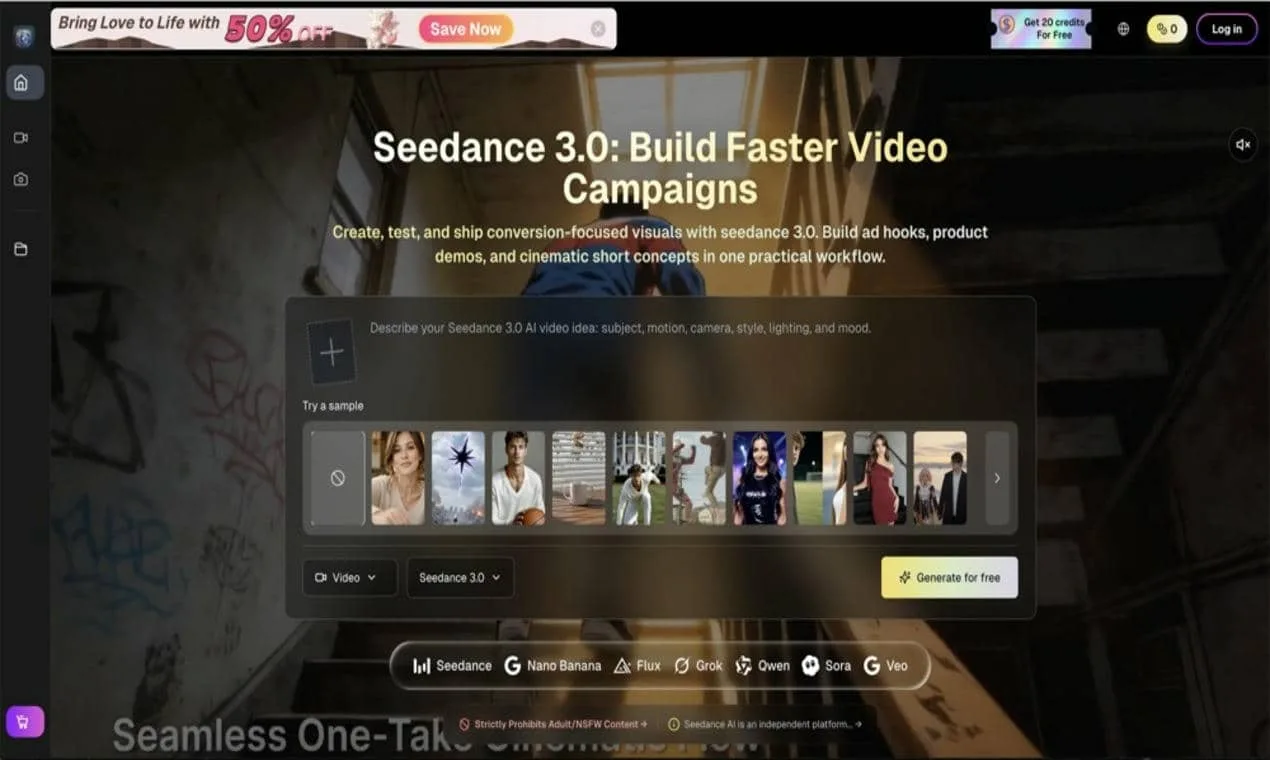
A tool like seedance 3.0 ai reflects this growing interest in AI-powered video creation, giving users a way to explore how text, images, and creative prompts can become dynamic video content online.
Why Short-Form Content Benefits Most
Short-form video platforms reward speed and experimentation.
A creator may need to test many hooks, visual styles, captions, and formats before finding what works. One video may fail, while a slightly different version may perform much better.
Traditional video production makes this kind of testing difficult. If every variation requires recording and editing from scratch, creators cannot move quickly.
AI video tools make testing easier.
A creator can generate multiple versions of a concept, compare different visual directions, and adapt content for different platforms. This is useful for:
- Social media clips
- Product teasers
- Ad creatives
- Storytelling videos
- Educational explainers
- Mood videos
- Concept previews
The ability to create more variations can help creators learn faster.
Useful for Creators and Small Teams
AI video generation is especially valuable for people without large production resources.
A solo creator can create visual content without appearing on camera. A small business can produce product videos without hiring a studio. A marketer can test ad ideas before investing in expensive production. A teacher can create visual explainers for lessons. A founder can make quick concept videos for a landing page or launch campaign.
This does not replace professional video production. High-end work still requires creative direction, editing skill, and production quality.
But for everyday content needs, AI can save time and reduce costs.
From Ideas to Visual Stories
One of the most exciting parts of AI video generation is how it helps people visualize ideas.
Sometimes a creator has a clear concept but cannot easily film it. Maybe the scene is too expensive, too abstract, too cinematic, or too hard to produce manually.
AI tools can help turn that concept into a visual draft.
This is useful for early-stage creative work. A marketer can test a campaign direction. A filmmaker can explore visual mood. A designer can create motion concepts. A content creator can generate engaging background visuals.
In many cases, the AI video does not need to be the final version. It can be a fast creative prototype.
AI Supports, Not Replaces, Creativity
A common misunderstanding is that AI tools remove creativity from the process.
In reality, the best results usually come from strong human direction. The user still needs to decide the idea, message, style, pacing, and purpose of the video.
AI can generate options, but people choose what works.
A good creator asks questions like:
What is the main message?
Who is the audience?
What emotion should the video create?
Does the visual style match the brand or story?
Is the final result clear and engaging?
AI makes production faster, but creative judgment still matters.
Better Content Workflows
AI video tools are also changing content workflows.
Instead of producing one video at a time, teams can think in systems. One idea can become multiple clips. One blog post can become several short videos. One product feature can become a demo, an ad, a tutorial, and a social post.
This is useful because modern content marketing requires consistent publishing.
Brands and creators need to appear across multiple platforms. AI can help them repurpose ideas more efficiently.
For example, a small team might turn a product announcement into:
- A 15-second teaser
- A vertical social video
- A short explainer
- A visual ad concept
- A launch countdown clip
- A background animation for a website
This kind of content multiplication is difficult with traditional workflows but easier with AI assistance.
Limitations Still Exist
AI video generation is improving quickly, but it still has limitations.
Some outputs may include strange motion, inconsistent details, unrealistic anatomy, awkward transitions, or visual artifacts. Complex scenes may require multiple attempts. Text inside videos may not always render correctly. Brand-specific content may still need manual editing.
This means creators should treat AI as part of the workflow, not the entire workflow.
A practical approach is to use AI for ideation, drafts, background visuals, short clips, and creative testing, then refine the best results with editing tools when needed.
Responsible Use Matters
As AI video tools become more powerful, responsible use becomes more important.
Creators should avoid misleading viewers, impersonating real people without consent, or presenting AI-generated scenes as real events when accuracy matters. For commercial use, they should also understand the tool’s terms, licensing rules, and platform policies.
AI video can be a powerful creative tool, but it should be used transparently and thoughtfully.
Trust matters in content creation.
The Future of AI Video
AI video generation is still in an early stage compared with traditional video production, but the direction is clear.
The tools will become faster, more realistic, and easier to control. Users will have more options for camera movement, character consistency, style control, editing, and platform-specific formatting.
This will make video creation more accessible to people who previously could not afford or manage complex production workflows.
For creators, the opportunity is not only to make more videos. It is to tell stories that were previously too difficult to produce.
Final Thoughts
AI video generation is changing the way people create content.
It helps creators move faster, test more ideas, reduce production barriers, and turn concepts into visual stories with less effort. For small teams, solo creators, educators, and marketers, this can make video content more practical and scalable.
The future of video will not be purely human-made or purely AI-made. It will likely be a collaboration between human creativity and AI-powered production tools.
That combination may make visual storytelling more open, flexible, and accessible than ever before.